Trip Planning
Best Age to Take a Kid Fly Fishing: A 2026 Honest Answer
 Daniel Bowman
Updated October 2, 2026
10 min read
Daniel Bowman
Updated October 2, 2026
10 min read

The short version
Age 8 is the threshold for fly fishing, and ages 8–12 is the sweet spot for first guided trips. Younger than 8 (5, 6, 7) is generally too early — attention spans, casting ability, and frustration tolerance are not ready. Ages 13–17 can handle full physical demands and often graduate to full-day trips quickly. Specific kid maturity varies — a mature 7-year-old can sometimes work, an immature 9-year-old sometimes cannot. Use the half-day Etowah private water trip ($550 for parent + kid) as the first format, regardless of age. Adjust based on attention span and outcome.
Why age 8 is the threshold
Parents ask the question every spring: "is my kid old enough to fly fish?" The honest answer most fishing brochures dodge is that age matters less than the four traits that age proxies for. Age 8 is the threshold because four specific developmental milestones tend to come together around that age.
- Attention span for a single activity. A guided fly fishing morning is roughly four hours. A 6-year-old cannot focus on a single activity for four hours. An 8-year-old typically can, with snack breaks every 45–60 minutes.
- Motor coordination for a fly cast. A fly cast is not a baseball throw — it is a forward-and-back rhythm with timing and pause. The motor pattern requires a kid who can isolate arm motion from body motion, which most kids develop around age 7–8.
- Frustration tolerance for tangles, missed strikes, and bad casts. A 6-year-old who tangles their line and breaks down crying is a real outcome, common enough that guides plan for it. By age 8, most kids can ride out the small frustrations of fishing without an emotional reset.
- Physical capacity to stand in cold-ish water and walk on uneven streambeds. A guided fly fishing trip involves wading, sometimes in knee-deep water that is in the 50s in spring. A small kid in oversized waders is uncomfortable; a kid who can wear youth-sized waders is fine.
A 7-year-old who has all four traits in unusual maturity can absolutely fly fish. A 10-year-old who lacks attention span or has low frustration tolerance will have a rough trip. The age threshold is a proxy, not a rule. The four traits are the actual question.
Age-specific guidance
The patterns Bowman sees by age, drawn from years of family bookings:
| Age | Recommendation | Format | Notes |
|---|---|---|---|
| 5 and under | Skip | n/a | Wait. Try fly fishing at a local pond at home, not a guided trip |
| 6 | Consider only if exceptional | Casting practice + 30 min wading | Most 6-year-olds will not enjoy a full half-day |
| 7 | Borderline | Half-day with parent | Highly kid-dependent. Mature 7-year-olds can work |
| 8 | Yes | Half-day with parent | The sweet-spot start age |
| 9–10 | Definitely | Half-day with parent | Full enjoyment, fish memories that stick |
| 11–12 | Definitely | Half-day or starting full-day | Can handle physical demands, attention is solid |
| 13–14 | Yes, often graduating | Half-day or full-day | Casting often advances quickly |
| 15–17 | Adult format | Half-day or full-day | Basically an adult on the water |
For families with multiple kids of different ages, default to the youngest-appropriate format and let the older kids ride the slower pace. A 13-year-old will not refuse a half-day if it means going with the family.
Why under-8 generally does not work
The patterns that cause under-8 trips to go sideways:
- The casting frustration arc. Fly casting requires repetition — most kids need 30–60 cast attempts before the rhythm clicks. A 6-year-old often gives up at 15. A guide can shorten the learning curve with roll casts and short-line techniques, but the frustration is real for very young kids.
- The cold-water tolerance issue. North Georgia's tailwaters run cold even in spring. Even with kids' waders, an extended morning in cold water tests adult tolerance, much less a 6-year-old's. Summer-fishing temperatures are more forgiving but trout activity is lower.
- The "I'm hungry / I have to pee / I'm bored" cascade. Kids under 8 cycle through these states faster than the trip pace can accommodate. By the third snack break in the first hour, the trip is no longer a fishing trip.
- The cost-vs-outcome math. A $400 half-day trip that produces a frustrated 6-year-old is a bad trip for everyone involved. The same $400 invested two years later in an 8-year-old produces a much better outcome.
The exception is the unusually mature 7-year-old who has been asking specifically about fly fishing, has watched videos about it, and has shown patience with related activities (regular fishing, watching the parent fly fish). Those kids occasionally surprise everyone. But they are exceptions, not the rule.
What to do with the under-8 kid who is interested
Parents of 5–7-year-olds who are showing fishing interest have better options than a guided trip:
- Cast in the backyard. A cheap kid-sized fly rod ($30–$80) and a target on the lawn. Lets the kid practice casting in 5–15 minute sessions without the pressure of a real trip.
- Catch panfish at a local pond. Bream, sunfish, and bass on local Atlanta-area ponds are easier and more reliable for very young kids. The success rate gets them hooked on fishing without the difficulty curve of trout.
- Watch a guided trip from the bank. Take the family up to North Georgia, watch dad or mom fish for a couple hours, lunch in Blue Ridge, drive home. The kid sees what fishing looks like without being on the rod.
- Build the wait into the calendar. Tell the kid: "We will book a real fly fishing trip when you turn 8." It becomes a milestone they look forward to. Most 7-year-olds will accept the wait if it has a defined end.
These approaches preserve the kid's interest without burning the magic of the first guided trip on an age that cannot quite handle it.
The 8–12 sweet spot
Ages 8–12 is where most family fly fishing trips Bowman runs land. The patterns:
- Attention is right. Four hours with snack breaks works. Most kids in this range remain engaged through the morning.
- Casting clicks. The motor pattern develops within 30–45 minutes of guide instruction. Most 8–12-year-olds are casting respectably by the end of the first half-day.
- Catch rate produces a memory. Kids in this age range who catch their first trout reference it for years. The fish becomes a touchstone story that gets retold at family dinners, teacher parent-conferences, "what did you do this summer" essays.
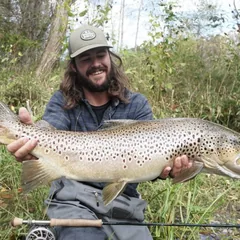
- Photos stick. A 9-year-old holding a rainbow trout is the iconic family fishing photo. The photo gets framed, posted on the family fridge, sent to grandparents.
- The trip becomes a recurring tradition. Kids who catch a trout at age 9 want to go again at 10, 11, 12. The first guided trip seeds an annual or semi-annual pattern.
The Etowah River suits this age group because the river is friendly to wading kids — moderate gradient and accessible banks, and Bowman calls it beginner friendly. A half-day Etowah trip for one parent and one child is $550, with every rod, fly, and wader supplied.
The 13–17 graduation tier
Teenagers can handle adult fishing, including full-day trips, in most cases. The patterns shift:
- Casting advances quickly. A 14-year-old learning to fly cast often outpaces a 40-year-old with similar instruction time. The motor learning is faster.
- Trip-type optionality opens up. Half-day, full-day, trophy beat, hosted travel — all become realistic for a 14–17-year-old. Teens often join the parent's full-day trip rather than booking a kid-specific format.
- The activity becomes social. Teenagers who get hooked on fly fishing often build it into a hobby they share with friends, school programs (Trout Unlimited youth programs and American Fly Fishing Trade Association youth resources at affta.com both run school-aged programs), or summer-camp activities.
- The parent-kid dynamic shifts. A 9-year-old fishing with mom is a parent-led trip. A 15-year-old fishing with mom is closer to two adults sharing a hobby. The trip changes character.
For 13–17-year-olds, default to the same trip format you would book for an adult. A full-day on the Soque with mom or dad is appropriate, and the photos at the end of it look adult.
Trip-format recommendations by kid age
Translating the age guidance into specific trip recommendations:
- Ages 8–10, first guided trip: half-day Etowah wade trip with a parent ($550 for two) or a Toccoa float ($425 per boat). Plan the day around 60–90-minute fishing intervals with snack breaks.
- Ages 10–12: half-day Soque private water with a parent. $550 for two. Bowman calls the Soque beginner friendly, and the fish average 18 inches or better.
- Ages 13–14, advancing kids: half-day or starting full-day. $550 half-day or $725 full-day for two. Trip becomes more like an adult trip with a teen along.
- Ages 15–17: adult format. Half-day, full-day, or trophy beat depending on the family's broader trip pattern.
- Family trips with multiple kids of different ages: default to the youngest's appropriate format. A 9-year-old + a 13-year-old + parent works as a three-person half-day with the older kid riding the younger pace.
What to bring for a kid's first fly fishing trip
The kid-specific prep list:
- Kid-sized waders or wading boots. Bowman has youth waders in standard sizes. Confirm the kid's shoe size and inseam at booking.
- Synthetic clothing layers, no cotton. Athletic shirts, fleece pullover, synthetic pants. Cotton stays wet and cold.
- Snacks. Granola bars, apple slices, trail mix. The 60–90-minute snack-break rhythm is non-negotiable.
- Water bottle. Kids dehydrate faster than adults, especially in summer.
- Sun protection. Hat with brim, sunscreen, sun shirt.
- Polarized sunglasses (kid-sized). Required for safety (hook protection) and visibility. Kid-sized polarized sunglasses run $20–$60.
- Patience cushion in the day's schedule. Build in 30 extra minutes for getting ready and 30 extra at the end. Kid pace is real.
What Bowman provides: youth-sized rod, reel, line, leader, flies, waders (in stocked sizes), wading boots, instruction. Parents bring nothing fishing-related.
How to know if your specific kid is ready
The four-question checklist:
Can the kid focus on a single activity for 60–90 minutes? Coloring, building Legos, watching a movie, reading. If yes, attention span is sufficient.
Has the kid expressed interest in fishing or fly fishing specifically? "I want to go fishing with you" or "I saw a fishing show on TV." If yes, motivation is there.
Can the kid handle a moderate hike or a similar physical activity? Walking on uneven ground, standing for periods. If yes, physical capability is sufficient.
Can the kid roll with small frustrations without emotional reset? Tangled shoelaces, dropped ice cream cone, lost game piece. If they handle those without spiraling, they can handle a fishing tangle.
If three or four of those are yes, the kid is ready. If only one or two are yes, wait a year and reassess.
What experienced parent-anglers do differently
Patterns we see from parents who have run multiple kid fishing trips:
- They start with a half-day, not a full-day. Always. A frustrated kid at the four-hour mark is the right outcome to plan for. A frustrated kid at the eight-hour mark is a disaster.
- They schedule snack breaks every 60–90 minutes. Build it into the trip plan from the start. The guide will accommodate.
- They photograph the first fish immediately. Even tiny fish. The catch photo becomes the kid's reference for years.
- They keep their own expectations low. The trip is about the kid, not the parent's fishing. A parent who fishes hard while the kid struggles teaches the kid that fishing is a parent activity, not a shared one.
- They book the second trip within 6 months. Riding the momentum of the first trip is what turns a one-off into a tradition.
- They tell the story afterwards. "Remember when you caught that rainbow on the Etowah?" becomes a recurring family story. The repetition is what makes the trip stick.
Common kid fishing trip mistakes to avoid
- Booking too young. Most under-8 trips do not produce the outcome the parent hoped for. Wait.
- Booking a full-day for the first trip. Always start with a half-day. Always.
- Forgetting snacks. A blood-sugar-low 9-year-old becomes a different person than a fed 9-year-old.
- Pushing through frustration. If the kid is melting down at hour 2, take a break or call the trip early. Forcing through ruins the experience.
- Comparing to adult fishing performance. A kid catching one fish in four hours is a great trip. Comparing to adult catch counts misses the point.
- Skipping the prep email. Synthetic clothes, snacks, sun protection — the prep list is the same as for adults but parents sometimes skip it for kids.
Frequently Asked Questions
What is the youngest age you take fly fishing?
Bowman trips work best for kids age 8 and up. We have run trips with mature 7-year-olds successfully, but the under-8 range is generally too early — attention span, casting motor coordination, and frustration tolerance are typically not ready until age 8.
What is the best age to take a kid fly fishing for the first time?
Ages 8–12 is the sweet spot. Attention span, motor coordination, and frustration tolerance all align. Kids in this age range catch fish, remember it, and often want to go back. The Etowah River is a natural first-trip water for this age group.
Should I bring my 6 or 7-year-old on a guided fly fishing trip?
Generally no. Better options for ages 5–7: backyard casting practice with a cheap kid rod, panfish at a local pond, watching a parent fish from the bank, or building the wait into a milestone ("we will book a real trip when you turn 8"). Save the guided trip for when the kid can fully enjoy it.
How do I know if my kid is ready for fly fishing?
Run the four-question checklist: 1) Can they focus on a single activity for 60–90 minutes? 2) Have they expressed interest in fishing? 3) Can they handle a moderate hike? 4) Can they roll with small frustrations without an emotional reset? If three or four are yes, they are ready. If only one or two, wait a year.
How long should the first kid fly fishing trip be?
Half-day, never full-day. Four hours is the right scale for the first trip regardless of age. Adjust based on outcome — kids who handle the first half-day well often graduate to full-day by the second or third trip.
What gear does my kid need for a fly fishing trip?
Bowman provides youth-sized rod, reel, flies, waders (in standard youth sizes), wading boots, and instruction. Parents bring synthetic clothes for the kid (no cotton), polarized sunglasses, hat with brim, snacks, water, and sunscreen. Confirm the kid's wader and boot size at booking.
What is the best river for a kid's first fly fishing trip?
The Etowah River is a natural first-trip water for kids ages 8–12. It's a short drive with easy wading, and Bowman calls it beginner friendly.
Plan your kid's [first guided trip](/blog/what-to-expect-first-guided-fly-fishing-trip)
Ages 8+ work great on Bowman trips. Use the trip finder or call (706) 963-0435.
Etowah River private water trip, from $400 · 4.9 stars on Google
See the trip or View Rates →