Trip Planning
Will I Catch a Fish on My First Guided Fly Fishing Trip?
 Daniel Bowman
Updated October 2, 2026
10 min read
Daniel Bowman
Updated October 2, 2026
10 min read

The short version
Very likely, yes, if you book the right water. Bowman Fly Fishing says its Etowah and Soque private water is beginner friendly, "with even first timers having great success catching both quantity and big fish." On that water the average fish runs 17 inches or more on the Etowah and 18 inches or better on the Soque. Bowman guides complete beginners, provides every piece of gear, and says it can teach someone who has never held a fly rod to cast in about 20 minutes. Nobody can promise a fish, because weather and water still decide some days. A half day on the Etowah or Soque starts at $400 for one angler.
What does Bowman say about first-timers?
Bowman's answer to "do I need experience?" is a flat no. It guides everyone from first-timers to experienced anglers, and it puts the promise in one line: "Never held a fly rod? We'll teach you in 20 minutes."
On private water specifically, Bowman splits its rivers by skill:
- The Etowah and the Soque are beginner friendly. In Bowman's words, even first timers have "great success catching both quantity and big fish."
- Noontootla Creek is technical water with wild fish, which Bowman says is better suited to anglers with some fly fishing experience.
- The Toccoa float is marked beginner friendly, and Bowman calls its floats one of its most beginner-friendly options for trout.
Bowman adds a line about the guides themselves: they are "patient teachers who'll have you casting in minutes—and catching fish shortly after." One of its senior guides, Kyle Cone, is described as a patient teacher who "puts beginners and experts alike on trophy fish." That matters more than it sounds. A first trip goes well when the person beside you enjoys teaching. You can see the beginner-friendly rivers side by side on Bowman's private water page.
So the first answer to "will I catch a fish?" is a question back: which water? Pick one of the beginner-friendly rivers and you start the day with the odds on your side.
What have first-time clients said?
Reviews from Bowman's clients come from people who had never fished with a fly rod before their trip:
- "First time fly fishing and we landed nearly 50 fish. Daniel and the guides made it easy—we brought zero gear and they handled everything." (Robert Centers)
- "I'd never fly fished before. Daniel was an outstanding guide and instructor. We caught several fish and loved every minute." (Ann Key)
- "My son and I had a great day on the river with Kyle. He made it so enjoyable even though we were novices." (Erin Weeks)
Those are good days, and good days are what the reviews remember. They show what is possible for a beginner, not a guarantee.
Why does private water help a beginner?
Three reasons, all from how Bowman runs its private water.
There are more fish that will eat. Georgia law lets a landowner own the bed of a stream that isn't navigable, so private water is closed to the public. Bowman leases access, keeps the number of anglers low, and releases every fish. Fish that are rarely bothered feed more freely, which gives a beginner more chances.
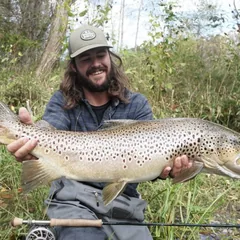
The fish are big. On Bowman's Etowah water the average is often 17 inches or more, with fish two feet long or bigger landed. On its Soque water the average is 18 inches or better. A first-timer's first fish there can be bigger than many experienced anglers catch on public water.
The water is quiet. With no crowds, the guide can put you on the best spot without waiting, and you can learn without an audience.
What actually decides how many fish you catch?
Even on good water, a handful of things move the count up or down on a given day.
The water the guide chooses
This matters most, and it's the guide's job. A guide who knows the river picks the runs that suit the day's flow and the angler's skill. Your part is choosing a beginner-friendly river when you book.
The season
Bowman names spring (March to May) and fall (October and November) as peak seasons on its private water, when water levels and temperatures keep the fish most active. Winter is slower but can bring some of the year's biggest fish. In summer, Bowman rests the Etowah from June 15 and the Soque from June 10, both until September 20, and the Toccoa float is the summer trout trip.
The weather and water that day
Some days are simply harder. A hard cold front can put fish off their food for a day or two. A storm can push the river up and muddy it. Bright sun on low, clear water makes fish wary. A guide reads all of this and adjusts the flies, the depth and the spots. You don't need to understand any of it.
How closely you follow the guide
This is the part you control. Anglers who cast where the guide points, mend when the guide says mend, and set the hook when the guide calls it tend to catch more than anglers who freelance. First-timers are often good at this precisely because they're new and willing to listen.
Basic casting
You don't need a good cast. You need one that lands roughly where the guide points, at short range. The guide's lesson at the start of the day covers it. If you can borrow a rod and practice for half an hour in a yard beforehand, the first hour on the water goes more smoothly.
How does the guide help you catch fish?
A guided day is built around giving a beginner the most chances. Here is what that usually looks like:
- A short lesson first. Holding the rod, the basic cast, and how to tell when a fish has taken the fly.
- The rig is set for you. The guide brings and ties the flies, leaders and tippet for the day's conditions.
- Good spots first. The guide starts you where a fish is likely, so the first chance comes early.
- Coaching on every drift. Where to cast, when to mend, when to lift.
- Netting and photos. The guide lands the fish and takes the picture; Bowman lists photos as included.
- Moving when it's slow. If a run isn't producing, the guide moves you to the next one.
For the full shape of the day, from meeting the guide to the drive home, see what to expect on your first guided trip.
What should you expect from the first hour?
The first hour is the learning hour, and it helps to know that before you start.
- Tangles are normal. Fly line behaves differently from spinning line. Expect a few knots, and let the guide untie them.
- The first takes are often missed. A trout can take and spit a fly in a second. Most beginners lift too late a few times before the timing clicks.
- The cast gets better fast. Short, simple casts are all you need, and most people feel the rhythm within the first stretch of water.
- The guide talks constantly. "Cast there. Mend. Now lift." That running commentary is the lesson, and following it is how the first fish happens.
By the second hour, most first-timers have stopped thinking about the mechanics and started watching the water, which is when fishing becomes fun.
Is a float or a wade trip better for catching your first fish?
Both work, and the choice depends on the person more than the odds.
A wade trip on the Etowah or Soque puts the guide right beside you. Bowman calls wade trips "more hands-on and great for focused instruction," which suits someone who wants to learn the cast properly. You stand in the river in waders and boots Bowman provides.
A float trip on the Toccoa puts you in a drift boat while the guide rows. Bowman calls its floats "excellent for beginners" because the boat is a stable, comfortable platform away from the trees on the bank, and notes that first-timers often prefer them. On the Toccoa tailwater, browns of 12 to 15 inches are common, with fish up to 26 inches possible. A float also suits anyone who would rather not wade, and it runs all year.
How should a group of beginners plan?
Fishing with a friend or family member is a good way to start, because you learn together.
- Two anglers per guide is the sweet spot. Bowman pairs one to three anglers with each guide, with two as the ideal, so each person still gets plenty of coaching.
- Three works too, and it's the best value per person on a wade trip: $675 for a half day, or $225 each.
- Larger groups get more guides. For four or more, Bowman's group pricing starts at $190 per person for a half day.
- Mixed skill is fine. The guide coaches the beginner closely and lets the experienced angler work more on their own.
What does a slow day look like?
A day with few fish, or none, can happen even with a good guide on good water. The usual causes:
- A severe cold front. A sharp drop in temperature can shut the bite down for a day or two.
- High, muddy water. After heavy rain, the river can be too dirty for fish to see a small fly.
- Heat. When the water gets warm, trout stress and stop feeding, which is why Bowman rests its private water in summer.
- Plain bad luck. Some days the conditions look right and the fish still don't cooperate.
Rain alone doesn't cancel a Bowman trip. The only weather that does is the dangerous kind: lightning, floods or severe cold. The trip price pays for the guide's time and the water, not a fish count. Bowman doesn't publish a policy for a slow day, so if that's a worry, ask when Bowman confirms your trip.
Which first-timer mistakes cost fish?
These are the common ones, and the guide will catch most of them in real time:
- Lifting the rod on a streamer strike. With a streamer, pull the line with your other hand to set the hook instead of raising the rod.
- Setting too gently on a dry fly. A trout's take on the surface can look soft, but the hook set needs to be quick and firm.
- Setting too hard on light tippet. A violent yank can snap fine line. Firm, not wild.
- Casting too far. A short, accurate cast beats a long, sloppy one.
- Letting the fly drag. A fly pulled sideways by the line looks wrong, and fish ignore it. Mend when the guide says.
- Wading into the spot you're about to fish. Fish from the bank or from below until the guide moves you in.
- Looking away from the indicator. The take is quick. Keep your eyes on it and listen for the guide's call.
Which trip gives a first-timer the best chance?
From Bowman's rates page:
| Trip | Why it suits a first-timer | Half day | Full day |
|---|---|---|---|
| Etowah private water | Shortest drive from Atlanta of Bowman's trout rivers, beginner friendly, average fish 17"+ | $400 / $550 / $675 | $550 / $725 / $900 |
| Soque private water | Beginner friendly, average fish 18"+ | $400 / $550 / $675 | $550 / $725 / $900 |
| Toccoa drift boat float | A stable boat, no wading, runs all year | $425 per boat | $575 per boat |
| Noontootla Creek | Technical wild-trout water, better with some experience | $450 / $585 / $725 | $600 / $780 / $980 |
Prices are for one, two or three anglers on private water, and per boat (one or two anglers) on the float. Full days include a riverside lunch.
For a first trip, a half day is usually enough: four hours of learning and fishing without wearing out. The Etowah is a common first pick because of the short drive.
Can you keep a fish?
Not on Bowman's private water. Every fish on its leased Etowah and Soque water is released, which is part of why the fish there are so big. The guide handles the fish carefully and takes a photo before it goes back.
On public water, Georgia allows harvest within creel and length limits, with special rules on some streams. Noontootla Creek, for example, is artificial lures only with a 16-inch minimum. Check the Georgia Wildlife Resources Division before you keep anything.
Licenses are your one job: anyone 16 and up buys Georgia's fishing license and its trout license online ahead of time, while kids under 16 fish without one. For a deeper look at trout conservation in the state, Georgia Trout Unlimited is the group to know.
Frequently Asked Questions
Will I catch a fish on my first guided fly fishing trip?
On beginner-friendly water, very likely. Bowman says its Etowah and Soque private water gives even first-timers great success catching both quantity and big fish. Weather and water can still make a day slow, so nobody can promise a fish.
How many fish should I expect?
Bowman doesn't publish catch counts, and honest guides avoid promising a number. What it does publish is size: the average fish runs 17 inches or more on its Etowah water and 18 inches or better on the Soque.
What if I don't catch anything?
It can happen. The trip price covers the guide's time and the water, not a fish count. Bowman doesn't publish a slow-day policy, so ask when Bowman confirms your trip.
Do beginners catch big fish?
Yes. On Bowman's private water the average fish is big to begin with, so a beginner's fish can be a large one.
Which water is best for a first trip?
The Etowah or the Soque private water, or a Toccoa drift boat float. Bowman says Noontootla Creek is technical and better with some experience.
How can I improve my odds?
Book a beginner-friendly river in spring or fall, listen to the guide, and practice the basic cast for half an hour before the trip if you can.
Is a half day long enough for a first trip?
Usually, yes. A half day is 4 hours on the water: enough for the lesson, plenty of fishing, and a few fish, without the fatigue that sets in for many beginners later in the day. A full day is 8 hours with a riverside lunch, and suits someone who already knows they love it.
Do I need my own gear?
No. Bowman provides rods, reels, waders, boots and flies. Bring polarized sunglasses, sunscreen, layers and your license.
Ready to catch your first trout?
Use our trip finder to lock in the right trip for a first-timer — or call (706) 963-0435.
Etowah River private water trip, from $400 · 4.9 stars on Google
See the trip or View Rates →