North Georgia Rivers
The Best Trout Rivers in North Georgia, Ranked (2026)
 Daniel Bowman
Updated October 2, 2026
14 min read
Daniel Bowman
Updated October 2, 2026
14 min read

The short version
If you want the biggest trout in North Georgia, fish the Soque, where Bowman's private water averages 18-inch-plus fish with trout up to 28 inches. If you want the most versatile day with a drift-boat option, fish the Toccoa tailwater. If you want a pure wild-trout experience, fish Noontootla Creek. If you want the shortest drive from Atlanta and an easy first day, fish the Etowah. And if you want the highest catch numbers on a float, cross into North Carolina for the Tuckasegee. There's no single "best" river — there's the best river for what you want today. This ranking sorts North Georgia's trout water by trophy potential, then tells you which one actually fits you. Not sure? Use the trip finder and we'll match you.
What makes a trout river the "best" in North Georgia?
The best trout river in North Georgia depends entirely on what you're after — but four factors separate the genuinely great water from the rest: average fish size, trout density, water quality, and access. A river that produces 28-inch browns but is locked behind private leases ranks differently than one full of stocked 11-inchers you can wade for free. This ranking weighs all four, then sorts by the thing most anglers ask first: how big are the fish, and can I actually get to them.
North Georgia sits at the southern tail of the Appalachian trout range. That's both the charm and the limiting factor. Summers run hot, so the rivers that fish well year-round are the ones with a cold-water engine behind them — a bottom-release dam (the Toccoa) or high-elevation shade (Noontootla). The rivers without that engine warm up and the trout disappear by July. Understanding why a river stays cold tells you more about its quality than any stocking-truck schedule.
A quick note on what this list is not: it's not a "secret spots" guide. The waters here are well known, and several of the best beats are private and accessed only through a guide service. What this ranking gives you is honest expectations — fish size, difficulty, drive time, and the kind of angler each river rewards — so you book the right trip the first time instead of learning the hard way.
The North Georgia trout rivers ranked at a glance
Here's the full ranking with the numbers that matter, before we break down each river. Use it to find your fit, then read the section for your top pick.
| Rank | River | Realistic trophy | Typical fish | Type | Drive from Atlanta | Best for |
|---|---|---|---|---|---|---|
| 1 | Soque River | Trout to 28" | 18"+ average on Bowman's water | Private freestone | ~100 min | Trophy hunters |
| 2 | Toccoa Tailwater | Browns to 26" | 12–15" common | Tailwater (float/wade) | ~110 min | Versatility, floats |
| 3 | Noontootla Creek | 18–20" wild browns | 7–13" | Wild freestone | ~90 min | Purists, technical anglers |
| 4 | Tuckasegee (NC) | 18–20" holdovers | 10–14" | Tailwater float | ~90 min from Blue Ridge | High catch numbers |
| 5 | Etowah River | Trout to 28" on Bowman's private water | 17"+ average on Bowman's water; smaller on public water | Small freestone | ~75 min | First-timers, short drive |
| 6 | Chattahoochee DH | 16–18" holdovers | 10–14" | Tailwater | ~45–75 min | Closest to the city |
| 7 | Chattooga River | 14–16" wild/stocked | 8–13" | Wild & Scenic freestone | ~120 min | Scenery, solitude |
Sizes and difficulty are from years of guiding these waters; stocking schedules and regulations change, so always confirm current rules at the Georgia Wildlife Resources Division trout regulations page before fishing on your own. If you're fishing one of these tailwaters or freestones on your own, the regional patterns, hatches, and tailwater tactics covered in Game & Fish magazine’s freshwater fly-fishing section translate directly to North Georgia water and will sharpen how you read these rivers.
1. Soque River — the best trophy trout water in Georgia
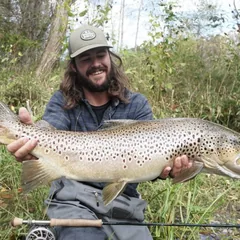
The Soque River is the best trout river in North Georgia for one reason: it produces the largest trout in the state, consistently. Bowman's leased Soque water in Habersham County has an average fish of 18 inches or more, and its biggest trout reach 28 inches.
Three things stack to make the Soque exceptional. First, access: under Georgia law a non-navigable river's bottom belongs to the landowner, so nearly the whole Soque is closed to the public. Second, Bowman releases every fish it catches on its leases. Third, few anglers fish those leases, and Bowman credits that low traffic for fish far bigger than public water grows. (Bowman pauses the Soque from June 10 to September 20, when it warms.)
The catch — literally and figuratively — is access. The trophy water is almost entirely private, fished through outfitters with leased rights. You're paying for the guide and the water together. Bowman calls it great for all skill levels: a first-timer can land a 20-inch trout with a guide adjusting the rig, on the standard water or the premium Dragonfly.
- Realistic trophy: trout up to 28", browns of 27"+ possible
- Typical fish: 18"+ average on Bowman's water
- Peak season: March–May and October–November; winter can bring the largest fish (closed June 10 to September 20)
- Best for: anglers who want the biggest fish in Georgia; Bowman calls it great for all skill levels
- Heads up: private access only; the premium Dragonfly property costs more and isn't covered by gift certificates
The full breakdown — beats, hatch chart, and the standard-vs-Dragonfly decision — is in the Soque River guide. If a personal-best brown is the goal, this is the river.
2. Toccoa River — the most versatile trout fishery
The Toccoa is the best trout river in North Georgia for anglers who want options. Its cold release carries trout through summer (only the Chattahoochee below Buford Dam does the same in Georgia), it offers both wade and drift-boat fishing, and it holds everything from eager stocked rainbows to genuine 24-inch wild browns. If you can only learn one North Georgia river, this is the one that teaches you the most.
The engine is the Blue Ridge Dam. TVA releases cold water from the bottom of Lake Blue Ridge, creating 13-plus miles of trout habitat that would otherwise be too warm for trout in summer. The Georgia DNR stocks the tailwater several times a year, and holdover and wild browns grow large in the deep runs.
The trade-off is logistics. TVA's generation schedule changes daily, and wading during a release is dangerous — the river can rise about 3 feet within an hour. Check the schedule the morning of, fish early before generation starts, or take the drift boat (you can fish a float safely straight through a release). The Toccoa float, with guided half-days at $425 per boat for one or two anglers, is also among the most affordable guided options per angler on this list.
- Realistic trophy: 20–26" wild browns in the trophy section
- Typical fish: 12–16" stocked and holdover rainbows and browns
- Peak season: late April–May (caddis and sulphurs); October–November (streamers for big browns)
- Best for: first-time guided anglers, drift-boat fans, anyone wanting variety
- Heads up: never wade during generation — check the TVA schedule first
For the generation logistics, access points, and the float-vs-wade decision, see the Toccoa River guide. If you're weighing the state's two heavyweights against each other, the Toccoa vs Soque breakdown settles it.
3. Noontootla Creek — the best wild-trout experience
Noontootla Creek is the best North Georgia water for anglers who care more about how they catch a fish than how many. It holds mostly wild browns and rainbows, with the occasional stocked fish, in cold, clear mountain water on Forest Service land in the Blue Ridge Wildlife Management Area. Bowman describes it as technical water and not for beginners.
The marquee stretch is managed under special regulations: artificial lures only, a 16-inch minimum size, and year-round fishing. The creek runs 8–25 feet wide through hemlock and rhododendron, and it fishes more like a small Western tailwater than a typical Southern freestone — which is to say it's technical, intimate, and unforgiving of a sloppy approach. Wild trout in clear water spook at footsteps and shadows. The difference between a slow day and a good one is mostly about how low and slow you move.
Don't come for numbers or size. Most fish run 7–13 inches; a genuine 20-inch wild brown is the trophy of the year, and only a few are caught annually. Density is modest. But a 14-inch wild brown that ate your dry on the first drift, in that setting, is worth more than a stringer of stockers. Bowman runs Noontootla as a half day ($450 for one angler) or a full day ($600).
- Realistic trophy: 18–20" wild brown (rare; the fish of the year)
- Typical fish: 7–13" wild browns and rainbows
- Peak season: April–early June (hatches); October–November (pre-spawn streamers)
- Best for: experienced anglers, technical-cast lovers, purists who value the experience
- Heads up: fewer and smaller fish than the trophy waters; expect 3–4 hours of careful wading
This is the right step-up trip after you've fished the Toccoa or Etowah and want a harder, more authentic day.
4. Tuckasegee River — the best for catch numbers
The Tuckasegee ("the Tuck") technically crosses the line into Western North Carolina, but it's a 90-minute drive from Blue Ridge and it's the best float trip in the region for sheer numbers, so it earns a spot. The draw is delayed-harvest management: North Carolina stocks designated stretches heavily and runs them catch-and-release, single-hook-artificial, from October 1 until the evening before the first Saturday in June. A single mile of that water can hold 2,000-plus trout.
That density makes the Tuck the high-action choice. Plan on 15–40 trout on a strong delayed-harvest day, with most fish in the 10–14 inch range and the occasional 18-plus-inch holdover from the previous summer. It's wide enough for genuine full-day drift-boat floats — you cover 5–12 miles instead of the few hundred yards a small-stream wade trip gives you — which keeps two anglers busy all day. That's why it's the go-to for bachelor parties, birthday weekends, and group floats where everyone wants to bend a rod.
Two things to plan for. A North Carolina fishing license is required — separate from any Georgia license, with trout water included — and the delayed-harvest window (October to early June) is the prime season; once harvest opens in early June, trout density in the regulated stretches drops and smallmouth bass become the lower-river target.
- Realistic trophy: 18–20" holdovers (deeper runs and tributary mouths)
- Typical fish: 10–14" delayed-harvest rainbows and browns
- Peak season: October–May (delayed harvest); smallmouth June–September on the lower river
- Best for: groups, high-numbers days, drift-boat floats
- Heads up: NC license required; it's a 3-plus-hour haul from Atlanta — many overnight in Bryson City
5. Etowah River — the best for first-timers and short drives
The Etowah is the best North Georgia river for a first guided trip, mostly because it's the easiest to get to and the gentlest to learn on. The trout water sits about 75 minutes from Atlanta near Dahlonega — often the closest guided trout fishery for the north suburbs — and it fishes as classic small-stream Eastern water: shorter rods, shorter casts, and reading pocket water rather than launching long line.
Bowman's marquee Etowah beat is two miles of private water alongside a working vineyard north of Dahlonega. Bowman says the fish there often average 17 inches or more, with fish two feet long or bigger landed, and trophy rainbows and browns up to 28 inches. Limited pressure means a typical week sees a fraction of the angler traffic the public access points get.
The Etowah rewards the right gear: a 7'6" to 8'6" rod in 3 or 4 weight, short leaders, and a careful approach. It's the ideal river to find out whether guided fly fishing is for you — enough fish to learn on, a short commitment, and the Soque, also beginner friendly by Bowman's description, for another trip.
- Realistic trophy: rainbows and browns up to 28" on Bowman's vineyard water
- Typical fish: 17" or more on Bowman's private water; smaller on public water
- Peak season: April–early June (hatches); October–November (streamers)
- Best for: first-timers, Atlanta suburbanites, small-stream lovers, short drives
- Heads up: bring less rod, not more — a 9-foot 5-weight feels overpowered here
The Etowah is also a centerpiece of the best fly fishing near Atlanta conversation for exactly this reason — it's the closest quality trout water to the city.
6. Chattahoochee River (delayed harvest) — the closest to the city
The Chattahoochee earns an honest mention as the most accessible trout water to metro Atlanta. The tailwater below Buford Dam stays cold thanks to bottom-release flows from Lake Lanier, and the delayed-harvest section is stocked and managed catch-and-release through the cold months. For an after-work session or a quick DIY outing inside the perimeter's reach, nothing beats the drive time.
It's a fine fishery, not a destination one. The delayed-harvest stretch produces 10–14 inch stocked rainbows and browns with the occasional 16–18 inch holdover, but it sees enormous pressure — it's the trout water for several million people. Buford Dam generation, like the Toccoa's, swings flows hard and fast, so wading anglers must check the schedule before stepping in. If you live in Atlanta and want trout without a half-day of driving, the Hooch is the answer; if you want the best fish, keep heading north.
7. Chattooga River — the Wild & Scenic wildcard
The Chattooga rounds out the list for the angler who values where they're standing as much as what they catch. As a federally designated Wild & Scenic River straddling the Georgia–South Carolina line, it offers a remote, rugged freestone experience with wild and stocked trout in a roadless-feeling setting. The trout run 8–13 inches with the occasional better fish in the upper reaches.
This is solitude water. Access often means a hike, the wading is rocky and serious, and you trade fish size and numbers for scenery and the sense that you've left everything behind. It's not a beginner's river and it's not a numbers river — it's the one you fish when the experience is the point. Most anglers fish it after they've already worked through the rivers above it.
How to pick the right North Georgia trout river for you
The fastest way to pick: decide what you want most, then match it to the river. Use this as a decision shortcut.
- You want the biggest fish possible → Soque River. Budget for private water.
- You want versatility and a drift-boat option → Toccoa River. Just respect the generation schedule.
- You want a pure wild-trout experience → Noontootla Creek. Bring patience and small-stream gear.
- You want the most fish in the net → Tuckasegee (in the delayed-harvest window). Get the NC license.
- It's your first guided trip → Etowah River. Easiest to learn on, shortest drive.
- You want trout closest to Atlanta → Chattahoochee delayed harvest. Quick, crowded, cold.
- You want scenery and solitude → Chattooga River. Earn it with a hike.
A worked example: say it's a milestone birthday, you've fly fished a handful of times, and you want a real shot at a trophy. Skip the Tuckasegee (numbers, not size). Book the standard Soque private water in May — you'll get sight fishing at its peak and a legitimate chance at a 20-plus-inch fish on water where Bowman's average fish is 18 inches or better. That's the kind of match the trip finder makes automatically when you tell it your experience and what you're after.
For the deepest dive across all of this water — every river, every section, all the access and seasonal detail in one place — the North Georgia rivers — the ultimate guide is the master resource.
Frequently Asked Questions
What is the best trout river in North Georgia?
For trophy fish, the Soque River is the classic pick: on Bowman's private water the fish average 18 inches or better, with trout up to 28 inches. (Bowman's private Etowah water also runs big, with fish often averaging 17 inches or more.) But "best" depends on your goal: the Toccoa is best for versatility and drift-boat floats, Noontootla for a wild-trout experience, the Etowah for first-timers and short drives, and the Tuckasegee for high catch numbers. There's no single best river — there's the best one for what you want out of the day.
Which North Georgia river has the biggest trout?
The Soque River, without question. Bowman's Soque fish average 18 inches or better, and Bowman lists trout up to 28 inches. The reasons, in Bowman's account, are private access, catch and release, and light fishing pressure on the leases. The Toccoa tailwater also turns up some big browns, but not at the density or consistency the Soque does.
What's the best trout river near Atlanta?
For the shortest drive, the Etowah River near Dahlonega (about 75 minutes) is the closest quality guided trout water, and the Chattahoochee delayed-harvest section below Buford Dam is the closest of all (45–75 minutes) for a DIY outing. For the best fish within a reasonable drive, the Toccoa and Soque are roughly 100–110 minutes north. The Etowah is the usual recommendation for a first Atlanta-area trip.
Do I need a license to fish for trout in North Georgia?
Yes. Anyone 16 or older needs a valid Georgia fishing license plus a trout license to fish trout waters. Licenses are available online or at most outdoor retailers. The Tuckasegee requires a separate North Carolina inland license, which includes trout water; a Georgia license does not cover NC water. Buy your license online before the trip, and check current regulations with the Georgia Wildlife Resources Division.
Which North Georgia trout river is best for beginners?
The Etowah River. It's the closest to Atlanta, fishes as forgiving small-stream water with short casts, and has enough stocked and holdover fish to let a first-timer learn the mechanics and actually catch trout. The Toccoa is the strong second choice — especially as a drift-boat float, where a guide can put a beginner on stocked rainbows without demanding perfect wading. Save Noontootla for after you have a few trips under your belt; Bowman says it's technical and not for beginners.
When is the best time of year to fly fish North Georgia rivers?
Two windows stand out across nearly every river: late April through early June for dense hatches and active fish, and October through November for fall streamer fishing and aggressive pre-spawn brown trout. May is the single best month on most of this water. The Tuckasegee runs on a different calendar — its delayed-harvest season peaks October through May. Winter fishing is real and uncrowded on the tailwaters and the Soque but turns technical and midge-focused.
Are the best North Georgia trout rivers private or public?
A mix. The very best water — the trophy Soque beats and the Etowah vineyard lease — is private and accessed only through outfitters with leased rights, which is part of why the fish are bigger and less pressured. Noontootla and the Chattooga are public Forest Service water. The Toccoa tailwater and the Chattahoochee delayed-harvest section have solid public access alongside guided options. For the private trophy water, booking a guide is the only practical way in.
Can I fly fish North Georgia rivers in the summer?
Yes, but choose the right water. The cold-water fisheries hold up through summer heat: the Toccoa stays cold from the dam release, and the upper Noontootla from shade and cold inputs. Bowman rests its Etowah and Soque private water in summer. Fish early and late in the day, lean on terrestrials (hoppers, ants, beetles), and avoid mid-day on the smaller, lower-elevation stretches that warm up. Freestone rivers without a cold-water engine are best left until fall.
Not sure which river fits you?
Tell us your skill level and what you want out of the day — we'll route you to the right water. Use the trip finder or call (706) 963-0435.
Private water trophy trout trip, from $400 · 4.9 stars on Google
See the trip or See Trophy Water Trips →