North Georgia Rivers
Etowah River Hatch Chart: What's Hatching by Month
 Daniel Bowman
Updated October 1, 2026
10 min read
Daniel Bowman
Updated October 1, 2026
10 min read

The short version
The Etowah River's hatches are varied but rarely dense, so timing matters more than waiting for a blanket emergence. April is the richest dry-fly month — Quill Gordons (size 14), Hendricksons (12–14), Blue Quills (16–18), and Grannom caddis (14–16). May brings Sulphurs (14–18) and March Browns (12); June adds Light Cahills and Yellow Sallies; summer (July–Aug) is terrestrial season (hoppers, beetles, ants, inchworms); September has early-morning Tricos (20–24); October–November is streamer season for pre-spawn browns (size 4–6); and winter is midges and small nymphs (18–24). Match the month and you'll be on the right fly. Full river detail in the Etowah River guide.
What's the Etowah River hatch chart by month?
The Etowah's bug life is diverse but seldom heavy, so it rewards anglers who match the season rather than waiting for the kind of blanket hatch you'd see out West. There's almost always something coming off — the question is which bug, and what size. Here's the month-by-month, with the fly sizes that match each window:
- Feb–March — black stoneflies and early midges; nymph the bottom, with small dries on warm afternoons.
- April — the richest dry-fly month (Quill Gordons, Hendricksons, Blue Quills, Grannom caddis).
- May — Sulphurs, March Browns, and continuing caddis; late-evening spinner falls.
- June — Light Cahills, Yellow Sallies, summer caddis; terrestrials begin.
- July–Aug — terrestrial season (hoppers, beetles, ants, inchworms).
- Sept — Tricos in the early morning; renewed caddis as nights cool.
- Oct–Nov — streamer season for pre-spawn browns.
- Dec–Jan — midges and small mayflies; slow nymphing.
April is the Etowah's richest dry-fly month — Quill Gordons, Hendricksons, Blue Quills, and Grannom caddis all come off in the same few weeks.
Etowah hatch chart with fly sizes
The specific bugs and sizes by month. This is the table to screenshot before a trip — it tells you what to tie on and what to leave in the box:
| Month | Hatches | Fly sizes |
|---|---|---|
| Feb–March | Black stoneflies, midges | Small nymphs; midges 18–22 |
| April | Quill Gordon, Hendrickson, Blue Quill, Grannom caddis | 12–18 |
| May | Sulphurs, March Browns, caddis | Sulphur 14–18, March Brown 12 |
| June | Light Cahills, Yellow Sallies, summer caddis | 14–16 |
| July–Aug | Terrestrials (hopper, beetle, ant, inchworm) | 12–18 |
| Sept | Tricos, caddis | Trico 20–24 |
| Oct–Nov | Streamers (pre-spawn browns) | Streamer 4–6 |
| Dec–Jan | Midges, small mayflies | 18–24 |
A hatch chart is a starting point, not a guarantee. Southern Appalachian emergences slide a week or two earlier in a warm spring and later in a cold one, and the Etowah's guided trout water sits in the cooler upper-middle river near Dahlonega, so its bugs often run slightly behind the warmer downstream reaches. Treat the chart as a calendar of probabilities: in mid-April, lead with Quill Gordons and Hendricksons; in late July, lead with terrestrials. Then let the water tell you the rest.
Why the Etowah's hatches are subtle — and why that's good news
Anglers coming off the Madison or the Henry's Fork sometimes look at the Etowah and decide "nothing's hatching." That's a misread. The Etowah's hatches are real and fishable; they're just sparser and more staggered than the conveyor-belt emergences out West. A productive Etowah hatch might be a dozen Hendricksons drifting through a run over twenty minutes, not a snowstorm of bugs.
The upside is that selective, technical anglers do well here precisely because the fish aren't gorged on one bug. A well-presented size-14 Parachute Adams that loosely suggests a Quill Gordon will often outfish a perfect imitation, because the trout aren't keyed to a single silhouette the way they are during a heavy Western blanket hatch. The skill that matters most isn't entomology — it's a drag-free drift and a quiet approach. For the mechanics of identifying what fish are actually eating, see matching the hatch; for spotting the takes that tell you which bug is working, see how to read a rise.
When is the best dry-fly fishing on the Etowah?
April is the standout, with strong support from May and the summer terrestrial season:
- April — the richest hatches of the year. Quill Gordons (14) and Hendricksons (12–14) bring fish up through the afternoon; Blue Quills (16–18) and Grannom caddis fill in the edges.
- May — Sulphurs (14–18) and March Browns (12), with productive late-evening spinner falls. Fish the last hour of light when the spinners drop to the surface film.
- June — Light Cahills (14–16) and Yellow Sallies (14) before the heat builds; caddis continue.
- Summer — terrestrials (hoppers, beetles, ants, inchworms) fish well early and late, when water temps are coolest.
- Match the rise — see matching the hatch and how to read a rise to dial in presentation.
A practical April-to-June game plan: arrive late-morning, nymph the runs with a Pheasant Tail (14–18) or Hare's Ear (14–18) until you see surface activity, then switch to the matching dry once fish start working. Don't put the dry on too early — the Etowah's trout will eat subsurface for hours before they commit to the top, and burning the morning waiting for a hatch that comes at 1 p.m. costs you fish.
Fishing terrestrials in summer — the Etowah's hidden season
By July, the mayfly hatches thin out and the Etowah turns into a terrestrial river. This is the window most visiting anglers underrate. Beetles, ants, inchworms, and small hoppers blow or fall into the water all summer, and the trout — especially the wild fish in the cooler upper reaches and tributary mouths — learn to look up for them.
- Beetles and ants (14–16) — fish a foam beetle tight to the bank, under overhanging hardwoods, where bugs drop off the leaves. Ants get eaten subsurface too; a sunk ant in the film is deadly.
- Inchworms — a simple green inchworm pattern is one of the most overlooked summer flies on North Georgia freestones. Drift it under the canopy.
- Hoppers (12–14) — useful in the more open, grassy stretches, less so in deep forest cover.
- Timing — fish terrestrials in the cool windows: first two hours after dawn and the last two before dark. Midday heat slows the trout zone, and on hot days the cooler upper river out-fishes the middle.
A hopper-dropper rig earns its keep all summer here: a buoyant beetle or small hopper up top as both an attractor and a strike indicator, with a Pheasant Tail or small bead-head trailing 18–24 inches below. The Etowah's holding water is shallow — often only 18–24 inches in the pocket water — so resist the urge to hang the dropper four feet deep. You'll snag bottom and drift over fish, not through them.
What about fall and winter on the Etowah?
The cold months shift from dries to streamers and small nymphs:
- Oct–Nov — streamer season; browns get aggressive ahead of the spawn, so fish larger streamers (size 4–6) like a Woolly Bugger on slow strips through deeper runs. Vary the retrieve until you find the day's mood. See how to strip a streamer.
- Dec–Jan — midges and small mayflies (18–24); slow nymphing with smaller flies for fewer but quality bites. Warm afternoons can bring a brief midge dry window.
- Match the flow — streamers fish best in higher, off-color water (400 to 550 cfs on the GA 9 gauge), while the technical winter midge game wants lower, clearer water in the good range of 140 to 400 cfs.
- Know the water — pair the chart with the Etowah access points and wild vs stocked trout breakdown.
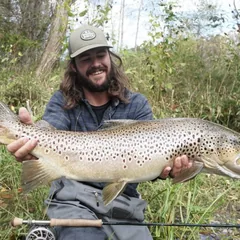
Fall is the trophy window. The Etowah's bigger browns, including fish of 20 inches and more on the private vineyard water, where Bowman says the average often runs 17 inches or more, are most catchable in October and November, when pre-spawn aggression overrides their usual caution. A streamer swung or stripped slowly past a deep undercut bank is the play. Fewer, bigger fish is the trade you're making versus April's numbers.
How flow changes which fly works
Hatches don't happen in a vacuum — water level dictates which bugs are active and which flies present well. The gauge for the middle Etowah is USGS station 02389150, at the GA 9 crossing near Dawsonville. Check it before you drive up, and remember it reads the main river, not the small headwater creeks.
| Flow (GA 9 gauge) | Condition | Best fly approach |
|---|---|---|
| Below 140 cfs | Low, clear, spooky | Small dries and light nymphs; 6X tippet, careful approach |
| 140 to 400 cfs (prime 200 to 340) | Good range | Match the hatch chart — dries, nymphs, hopper-dropper |
| 400 to 550 cfs | High, off-color | Streamers and heavier nymphs; presentation over delicacy |
| Over 550 cfs | Blown out | Skip the trip |
Use real-time flow data from the USGS Etowah River gauge, and cross-reference regional hatch timing through Hatch Magazine and the stream reports published by Trout Unlimited's Georgia chapters, which post emergence updates for North Georgia freestones including the Etowah.
Common hatch-matching mistakes on the Etowah
The river's subtlety trips up anglers used to bolder fisheries. The recurring errors:
- Putting the dry on too early. Fish eat subsurface for hours before committing to the top. Nymph until you see consistent rises, then switch.
- Over-imitating. With sparse, mixed hatches, a suggestive pattern (Parachute Adams 12–18, Elk Hair Caddis 14–16) usually beats a perfect match. Carry searching patterns, not a fly-shop's worth of exact imitations.
- Fishing the dropper too deep. Etowah pocket water is shallow — 18–24 inches in many runs. A four-foot dropper drifts under the fish.
- Ignoring the tributary mouths. Cool feeder seams concentrate bugs and trout, especially in summer. Worth a careful cast every time.
- Skipping the spinner fall. May evenings produce the best dry fishing of the month in the last hour of light, and anglers who quit at dinner miss it.
- Drifting too long. Short, controlled drifts of 3–6 feet beat long mended drifts that drag in pocket water.
How does the Etowah hatch chart compare to other rivers?
The Etowah's Southern Appalachian hatches mirror the region's other freestones, but differ sharply from the nearby tailwaters:
- Similar to Noontootla — both freestones share Quill Gordons, Hendricksons, Sulphurs, and a strong terrestrial season; match one and you can largely match the other.
- Different from tailwaters — the Toccoa and Tuckasegee lean more on midges and consistent year-round bugs because the cold dam release evens out water temps and bug timing.
- Terrestrials matter more here — summer beetles, ants, and inchworms drive the Etowah and Noontootla in a way they don't on a big tailwater.
- Streamers in fall — the pre-spawn brown window is region-wide, but the Etowah's holdover browns make October–November especially worth it.
- Compare the rivers — see the North Georgia rivers guide for choosing where to fish on a given week.
The practical takeaway: a freestone like the Etowah is seasonal — its character changes month to month, so the hatch chart is your most important tool. A tailwater is steadier — you can fish midges most of the year. If you want a river that fishes the same way every visit, pick a tailwater. If you want spring dry-fly fishing, summer terrestrials, and fall streamer hunting all on one piece of water, the Etowah delivers all three.
Frequently Asked Questions
What is the best month to fly fish the Etowah River?
April is the best month for dry-fly fishing — it's the richest hatch period, with Quill Gordons (size 14), Hendricksons (12–14), Blue Quills (16–18), and Grannom caddis (14–16). May (Sulphurs and March Browns) and the summer terrestrial season are also strong, while October–November is prime for streamer fishing pre-spawn brown trout.
What flies hatch on the Etowah River in spring?
Spring brings the best hatches: April has Quill Gordons (size 14), Hendricksons (12–14), Blue Quills (16–18), and Grannom caddis (14–16), and May adds Sulphurs (14–18) and March Browns (12). June carries Light Cahills (14–16) and Yellow Sallies (14). These are the richest dry-fly weeks of the year on the Etowah.
What do you fish on the Etowah in summer?
Terrestrials dominate the Etowah in July and August — hoppers (12–14), beetles and ants (14–16), and inchworms outfish almost everything else. Fish them tight to overhanging banks early morning and late evening when the water is coolest; midday gets too warm on the middle-river trout reaches, so the cooler upper river fishes better in the heat.
When is streamer season on the Etowah?
October and November, when brown trout get aggressive ahead of the spawn. Fish larger streamers (sizes 4–6) like a black or olive Woolly Bugger on slow, methodical strips through the deeper runs. It's the best window of the year for a bigger brown on the Etowah — the holdover fish run 14–18 inches, with the occasional 20-incher on the private vineyard water.
Are the Etowah's hatches heavy?
No — the Etowah's bug life is varied but rarely dense, so anglers used to thick Western hatches sometimes overlook the subtler Eastern emergences. A productive hatch here might be a dozen mayflies over twenty minutes, not a blizzard. Matching the specific bug and size for the month, fishing a drag-free drift, and reading the rise matters more than waiting for a blanket hatch.
What size tippet should I use to match Etowah hatches?
5X for general dry-fly and nymph work, 6X for technical dry-fly fishing in low, clear water, and 4X for streamers and high-water conditions. The smaller mayfly and midge patterns (sizes 18–24) call for 6X to drift naturally; the larger streamers (4–6) and terrestrials need the heavier 4X to turn over and resist break-offs.
Do the Etowah's hatches change with water level?
Yes. In the good range, 140 to 400 cfs on the GA 9 gauge, the hatch chart fishes as written: dries, nymphs and hopper-droppers all produce. Below 140 cfs the water gets low and spooky, which favors small dries, light nymphs and 6X. From 400 to 550 cfs the river runs high and off-color, so streamers and heavier nymphs beat delicate dries. Over 550 cfs it is blown out, so move the trip.
How does the Etowah hatch chart compare to the Toccoa?
The Etowah is a freestone, so its hatches are strongly seasonal — April mayflies, summer terrestrials, fall streamers. The Toccoa is a tailwater, so the cold dam release evens out temperatures and supports midges and steadier year-round bugs. If you want classic spring-and-fall dry-fly windows on a small stream, fish the Etowah; if you want a more consistent river that fishes similarly most of the year, the Toccoa tailwater is the pick.
Fish the Etowah on the right week
We match the fly to the day. Gear and flies included — just show up and fish.
Etowah River private water trip, from $400 · 4.9 stars on Google
See the trip or Reserve Your Trip →