North Georgia Rivers
Etowah River Wild vs Stocked Trout: Where the Fish Are
 Daniel Bowman
Updated October 1, 2026
11 min read
Daniel Bowman
Updated October 1, 2026
11 min read

The short version
The Etowah River is a mixed fishery, and the type of trout you catch depends almost entirely on where you stand. Stocked rainbows and browns dominate the middle river around Dahlonega and are stocked roughly weekly during trout season — they hold in obvious water (runs, pool heads, riffle edges) and eat eagerly for 2–3 weeks after stocking before turning selective. Wild rainbow trout (typically 7–11 inches, a 13-incher is a genuine trophy) live in the upper headwaters and the cool feeder creeks, and two feeder creeks hold native brook trout (5–9 inches) — the southernmost native brookies in the system. Holdover stocked fish carry over in the cooler tributary mouths and deeper pools, reach 14–18 inches on the protected vineyard water, and behave like wild fish. Full river context in the Etowah River guide.
Does the Etowah River have wild or stocked trout?
Both — the Etowah is a mixed fishery, and the question isn't really "wild or stocked" so much as "which water am I standing in." The trout-holding portion of the river breaks into distinct zones, and each holds a different fish. Get the zone right and the presentation question mostly answers itself.
- Stocked trout — rainbows and browns in the middle river near Dahlonega, stocked roughly weekly through the season.
- Holdover trout — stocked fish that survive a full year, hold tight to structure, and fish like wild trout.
- Wild rainbows — in the upper headwaters and the cold feeder creeks above the stocked stretches.
- Native brook trout — in two named feeder creeks, the southernmost wild brookies in the system.
Stocked fish sit in the obvious, accessible middle-river water; the wild trout live up high in the headwaters and cold feeders, where the water stays cool and the foot traffic thins out.
The practical takeaway: if you're fishing roadside access near Dahlonega in April, you're almost certainly fishing for stocked rainbows. If you've hiked into a 12-foot-wide headwater feeder in July, you're fishing for wild fish that have never seen a hatchery truck. Same river, two completely different games.
Where do stocked trout hold on the Etowah?
Stocked rainbows and browns dominate the middle Etowah from spring through early summer and are by far the most accessible fish on the river. The Georgia Wildlife Resources Division stocks several access points on a rotation through the trout season, so the population near Dahlonega is continually refreshed.
- The middle river — stocked roughly weekly during the stocking season at several access points between Dahlonega and Dawsonville.
- Obvious water — runs, the heads of pools, and the deeper edges of riffles. Fresh stockers school in the easy-to-read seams rather than the technical pocket water wild fish prefer.
- Eager early — stocked fish eat dries, nymphs, and small streamers willingly for the first 2–3 weeks after they go in.
- Then selective — after a few weeks of pressure they wise up and start refusing sloppy drifts.
- Best access — see the Etowah access points (Castleberry Bridge, Auraria Road) for where the stocking trucks actually reach.
Because stocking is roughly weekly, the population near the access points reads in waves. The first few days after a stocking are the most forgiving fishing of the season — recently released hatchery fish key on movement and color before they ever key on a natural drift. By the second and third week the survivors have learned, spread into the better lies, and started demanding the drag-free presentations that wild fish always have. Reading where you are in that cycle matters as much as fly choice: a Squirmy worm or egg pattern that crushes on stocking day can get ignored two weeks later, when a size 16 Pheasant Tail on a clean dead drift is the better bet. Verify the current open seasons, length limits, and creel limits on Georgia's public trout water at the Georgia DNR trout fishing page before you fish public stretches on your own.
Where do the wild trout live?
The Etowah's wild fish hold in the colder, less-pressured water away from the stocked stretches — the upper headwaters in Lumpkin County north of Dahlonega and the cool spring-fed feeder creeks that enter the trout zone. These streams often run only 10–20 feet wide, drop fast, and stay cool enough through summer to hold trout that reproduce naturally rather than ride in on a truck.
| Wild fish | Where | Size |
|---|---|---|
| Wild rainbow trout | Upper headwaters + cool feeder creeks | 7–11" (a 13-incher is a trophy) |
| Native brook trout | Two named feeder creeks | 5–9" (occasional 11") |
| Holdover trout | Cooler tributary mouths + deeper pools | 14–18" on protected water; behave like wild fish |
These wild fish run smaller than the stockers, but they're the more interesting catch by a wide margin. The brook trout are the only trout native to Georgia, and the Etowah's populations are the southernmost native brookies in the system — fish living at the very bottom edge of the species' historical range, surviving in pockets of cold water that haven't warmed past their tolerance. A 9-inch wild brookie out of a headwater feeder is a more meaningful fish than a 14-inch stocker out of the main stem, and most anglers who fish both come to feel that way.
Wild rainbow trout occupy a middle tier. They aren't native — rainbows were introduced to Georgia generations ago — but the populations in the headwaters and feeders reproduce on their own and are genuinely wild fish, not hatchery escapees. They're spookier, brighter, and harder-earned than the stockers in the main stem, and they fish like it. Much of this water sits inside the Chattahoochee-Oconee National Forest, so the public can legally access it; the national forest's recreation pages cover which roads and trailheads stay open and where the gates close seasonally.
What's a holdover, and why does it matter here?
A holdover is a stocked trout that survives from one season to the next instead of getting caught, eaten, or killed by summer heat. On most of the public Etowah, holdover rates are modest — summer water temperatures in the exposed middle river climb high enough to thin the survivors. But in the cooler tributary mouths and the deeper pools, and especially on protected water with cold spring inputs, a meaningful percentage of stocked fish carries over and puts on size.
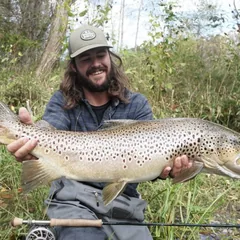
This is where the wild-vs-stocked line blurs. A holdover started life in a hatchery, but after a year in the river it has learned to hold tight to structure, feed selectively, and spook off heavy footsteps and bad drifts — exactly like a wild fish. On Bowman's private vineyard beat near Dahlonega, only Bowman clients fish the water and every fish is released, which lets fish carry over and grow. Bowman says the average fish there is often 17 inches or more. Holdovers in the 14–18-inch range are common on that beat, and the occasional 20-plus-inch fish gets caught. For practical fishing purposes, treat a holdover like a wild fish: refined presentation, careful approach, and respect for the structure it's holding behind.
How do you fish for wild vs stocked Etowah trout?
The approach shifts with the fish, and the single biggest mistake anglers make is fishing fresh stockers and wild trout the same way. Match the method to where you are:
- Fresh stockers — in the first weeks after stocking, fish dries, nymphs, or small streamers; they're forgiving, and an egg pattern or Squirmy worm will often outfish everything. This is the time to bring a beginner.
- Pressured stockers — slow down and refine the drift. Drop to a smaller, more natural pattern (a size 16–18 Pheasant Tail or Hare's Ear) and clean up your mends; the survivors have learned what a hatchery pellet doesn't drift like.
- Holdovers — fish tighter to structure with careful presentations. These fish sit in the better lies and won't tolerate drag; treat them like wild fish.
- Wild trout — go light and stealthy in the small headwater and feeder water. A 7'6" to 8'6" rod in 3 or 4 weight, a short leader, and a low, slow approach from downstream. These fish spook off pushed water and a skylined silhouette before they ever see your fly. See reading water for trout for where they actually hold.
- Match the hatch — the Etowah's bugs are varied but rarely dense. A Parachute Adams, Elk Hair Caddis, and a couple of nymph droppers cover most days; see matching the hatch for the seasonal specifics.
One worked example. Say it's a 70-degree afternoon in late April and the GA 9 gauge reads 300 cfs, inside Bowman's prime range. On the public middle river you'd start with a two-fly nymph rig under a small indicator, set roughly 18–24 inches deep (not the 4–5 feet many anglers default to, which sails the flies over fish in shallow pocket water), and swing it through the runs and pool heads where fresh stockers stack. If the dries come off mid-afternoon — Quill Gordons and Hendricksons are on in April — switch to a size 12–14 dry and target the same seams. Now move to a headwater feeder the same day: leave the indicator on the bank, fish a single dry or a dry-dropper on a 7.5-foot leader, approach each plunge pool from below, and make your first cast count. Wild trout in clear, low water rarely give you a second.
When is the Etowah trout fishing best for each fish?
Timing follows both the stocking schedule and the natural season, and the best window depends on whether you're after numbers of stockers or quality wild fish.
- Spring (April–May) — peak for stocked fish. The trucks are running, the population is high, and the richest dry-fly hatches of the year are on (Quill Gordons, Hendricksons, Sulphurs).
- Right after stocking — the easiest, most-eager fishing of the year on the middle river, and the best time for a first-timer to build confidence.
- Summer (June–August) — the middle river warms, so fish it early and late only; midday gets too hot for the stockers. This is when the headwaters shine — wild rainbow and brook trout in the cold upper feeders stay willing through July, often eating terrestrials (beetles, ants, inchworms). See summer fly fishing North Georgia.
- Fall (October–November) — streamer season for the browns, which turn aggressive ahead of the spawn. Larger streamers on slow strips through the deeper runs.
- Winter — technical midge and small-nymph fishing on warmer afternoons; fewer bites, but the holdovers are still catchable.
A useful seasonal rule: chase stockers in the spring shoulder and chase wild fish in the summer. When the middle river gets too warm to fish responsibly midday, the headwater feeders are exactly when and where the wild trout are most cooperative.
How flows change which fish you target
Water level reshapes the wild-vs-stocked question as much as the calendar does. The middle Etowah is read off USGS station 02389150, at the GA 9 crossing near Dawsonville. It reads the main river; the headwater creeks where the wild fish live carry far less water than the number shows. Bowman's river conditions page uses these ranges:
- Below 140 cfs: low. Easy wading, but fish spook. The wild headwaters fish well while the exposed middle river gets tough.
- 140 to 400 cfs: good, and fishable for both stocked and wild fish.
- 200 to 340 cfs: prime.
- 400 to 550 cfs: high. Streamers for browns and holdovers get better, wading gets harder, and fish slide to the slower edges. It is a main-river streamer day, not a headwater day.
- Over 550 cfs: blown out. Move the trip.
The connection to wild vs stocked is direct: high, off-color water pushes you toward the deeper main-stem runs where holdovers and browns sit and away from the small, clear feeders where wild fish need a stealthy low-water approach to even be catchable.
Common mistakes fishing the Etowah's two fisheries
A handful of errors cost visiting anglers fish on this river, and most come from treating it like one uniform fishery instead of two:
- Bringing too much rod for the wild water. A 9-foot 5 weight feels heavy in tight headwater cover. Short rod, light line, accurate casts — that's the wild-trout tool.
- Fishing the indicator too deep. Etowah pocket water is often only 18–24 inches deep. Anglers who set indicators 4–5 feet down sail their flies over the fish entirely.
- Wading too aggressively for wild fish. Wild trout in low, clear feeders spook from heavy footsteps and pushed water. Approach from below, stop walking before you cast.
- Ignoring the tributary mouths. The seams where cool feeders enter the main stem hold holdovers and wild fish both — worth a careful presentation every time.
- Skipping the upper river in summer. When the middle gets warm, anglers quit; the headwater wild fish are eating dries through July.
- Drifting too long. Pocket water rewards short, controlled drifts of 3–6 feet. Long mended drifts just build drag.
Anyone planning a do-it-yourself trip should check a local Georgia Trout Unlimited chapter for current stream reports and access notes, and confirm a valid Georgia fishing and trout license through the state's Go Outdoors Georgia portal — anyone 16 or older needs both for trout water. On a guided Bowman trip the guide handles regulatory compliance and supplies the gear, so the only homework is showing up. Compare the Etowah against its neighbors in the North Georgia rivers guide.
Frequently Asked Questions
Does the Etowah River have wild trout?
Yes. Wild rainbow trout live in the upper Etowah headwaters and cool feeder creeks (typically 7–11 inches), and two feeder creeks hold native brook trout (5–9 inches) — the southernmost native brookies in the system. The middle river around Dahlonega is primarily stocked, but the wild fish hold in the colder water up high.
Is the Etowah River stocked?
Yes — the middle Etowah is stocked roughly weekly with rainbow and brown trout during the stocking season at several access points between Dahlonega and Dawsonville. Stocked fish hold in obvious water like runs and pool heads and eat eagerly for the first 2–3 weeks after stocking, then become more selective as they get pressured.
How big do wild trout get on the Etowah?
Wild rainbows typically run 7–11 inches, and a 13-inch wild rainbow is a genuine trophy on this water. The native brook trout in the feeder creeks run 5–9 inches with the occasional 11-inch fish. Stocked rainbows and browns and their holdovers run larger — holdovers reach 14–18 inches on the protected vineyard water.
What is a holdover trout?
A holdover is a stocked trout that survives from one season to the next, particularly in the cooler tributary mouths and deeper pools. Holdovers behave more like wild fish — they hold tighter to structure and require more refined presentations than fresh stockers. On Bowman's cold, low-pressure vineyard beat they commonly carry over into the 14–18-inch range.
Where is the best place to catch wild trout on the Etowah?
In the upper headwaters and the cool feeder creeks, away from the stocked middle-river stretches. These small, cold waters hold the wild rainbows and the native brook trout. Go light and stealthy and approach from below — wild fish in small clear water spook easily.
How do I fish for stockers differently from wild trout?
Fresh stockers are forgiving in the first weeks — dries, nymphs, egg patterns, and small streamers all work, and they hold in obvious seams and pool heads. Wild trout demand a stealthy approach, a short light rod, a drag-free drift, and a careful read of small pocket water. The same casual approach that catches stockers will empty a headwater pool of wild fish before you make a cast.
When is the best time for wild trout vs stocked trout?
Stocked fishing peaks in spring (April–May) when the trucks are running and the hatches are on. Wild-trout fishing is best in summer — when the middle river warms and the stockers slow down, the cold headwater feeders fish well into July, and the wild rainbows and brookies stay willing on dries and terrestrials.
Do holdover trout count as wild fish?
Not biologically — a holdover started in a hatchery. But after a year in the river it behaves like a wild fish: it holds tight to structure, feeds selectively, and spooks off bad presentations. For practical fishing purposes, treat a holdover exactly as you would a wild trout, with refined drifts and a careful approach.
Find the Etowah's best fish
Our guides know which water holds wild trout vs stockers. Private vineyard beat, all gear included.
Etowah River private water trip, from $400 · 4.9 stars on Google
See the trip or Reserve Your Trip →