North Georgia Rivers
Etowah River Fly Fishing Access Points (Public & Private)
 Daniel Bowman
Updated October 2, 2026
10 min read
Daniel Bowman
Updated October 2, 2026
10 min read

The short version
The Etowah River has several public access points worth knowing — Edge of the World rapids (Dawson Forest WMA, pocket water, trout in the cold months), Castleberry Bridge (roadside, stocked, crowded on weekends), and the Auraria Road bridges (fish above the bridges) — while the lower Etowah below Dawsonville is warmwater bass water, not trout. The middle river is stocked roughly weekly in season; wild rainbows (7–11") live in the headwaters and feeder creeks, and a couple of feeders hold native brook trout (5–9"). Bowman guides its private vineyard beat (no crowds, and fish that often average 17 inches or more). Always verify open seasons and limits with the Georgia DNR before fishing public water. Full river detail in the Etowah River guide.
Where can you fly fish the Etowah River?
The Etowah offers a mix of public access — good for scouting, learning the river, and second-choice days — and Bowman's private vineyard water, where the guided trips run. The key thing to understand is that the Etowah is a genuinely mixed fishery: parts of it are stocked trout water, parts hold wild trout, and parts are warmwater bass water, so where you go determines what you catch. Knowing which stretch is which saves you a wasted drive and puts you on the fish you're actually after.
- Public access — several roadside and WMA stretches, some stocked with trout, some warmwater.
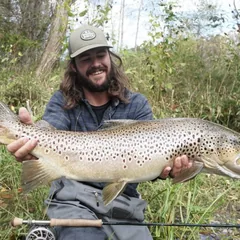
- Private vineyard beat: Bowman's marquee Etowah water, no crowds, trophy rainbows and browns up to 28 inches.
- Mixed fishery — stocked rainbows/browns in the middle river, wild trout in the headwaters and feeders.
- Verify the regs: special rules and limits vary by reach, so confirm before you fish public water.
Public access lets you scout the Etowah and fish second-choice days; Bowman's private vineyard beat is where the guided trips run, crowd-free.
What are the Etowah's public access points?
Four public stretches are worth knowing, and each fishes differently:
| Access point | What it is | Best for |
|---|---|---|
| Edge of the World rapids (Dawson Forest WMA) | Shoals, rapids, pocket water | Trout in cold months; bass in summer |
| Castleberry Bridge | Roadside parking, short walk, stocked | Stocked-trout days (crowded weekends) |
| Auraria Road bridges | Multiple bridges; fish above the bridges | Spread-out access, less pressure up top |
| Lower Etowah below Dawsonville | Warmwater | Bass on streamers/poppers — not trout |
Edge of the World sits inside the Dawson Forest Wildlife Management Area. It is a stretch of shoals, rapids, and pocket water that holds trout in the colder months before bass take over as it warms in summer; the wading is rocky and demands felt or studded soles. Castleberry Bridge is the easy-access option: roadside parking, a short walk to the water, and a stocked stretch. But that convenience means high pressure on weekends. The Auraria Road bridges give you several ways in along the road. Walk upstream from them: the runs above each bridge see fewer anglers and fish better than the water below. The lower Etowah below Dawsonville is warmwater, so it's a bass fishery on streamers and poppers rather than trout water.
Which access points actually hold trout?
Not all of the Etowah is trout water, so match the reach to your target:
- Stocked trout: the middle Etowah (Castleberry Bridge, Auraria Road) is stocked roughly weekly during the stocking season. Fresh fish sit where the current carries food to them: the top of each pool, the main run, and the deeper side of a riffle.
- Edge of the World — trout in the colder months, but bass take over in summer as the water warms.
- Wild rainbows — in the upper headwaters and cool feeder creeks (typically 7–11"; a 13-incher is a trophy).
- Native brook trout — in two feeder creeks (5–9").
- The lower Etowah below Dawsonville is warmwater bass water, not trout.
For the deeper breakdown of where each fish lives and how to target it, see Etowah wild vs stocked trout.
When do the public stretches fish best?
Timing matters more on public water, where pressure and stocking schedules shape the fishing:
- Right after stocking: newly stocked fish take almost any reasonable fly for two or three weeks. After that, the ones still in the river have seen every angler at the bridge and get choosy.
- Spring (April–May) — the richest dry-fly window (Quill Gordons, Hendricksons, sulphurs, caddis); see the Etowah hatch chart.
- Cold months — Edge of the World holds trout; warmer stretches slow down.
- Summer — early and late only on the trout reaches; midday gets too warm. See summer fly fishing North Georgia.
- Avoid weekend crowds — Castleberry Bridge gets high pressure; go midweek or fish above the Auraria bridges.
How do you fish the public Etowah well?
Because the public stretches see pressure, a few adjustments make a real difference. On freshly stocked water, keep it simple — a nymph rig or a dry-dropper covers the eager fish in the first weeks after a stocking. As those fish get pressured and selective, slow down and refine your drift; drag-free presentations and lighter tippet start to matter. The wild fish in the headwaters and feeder creeks are a different game entirely: they're small, wary, and spook easily in the clear, low water, so a stealthy approach and accurate casts beat distance. Reading the water is the through-line — fish the seams, runs, and pool heads where trout hold rather than the obvious flat water. See how to read water for trout for the fundamentals that apply across the river.
Why fish the private Etowah with a guide?
Public access is fine for scouting, but the guided private water is a different experience:
- No crowds — your group has the vineyard beat to itself, versus jockeying for runs at Castleberry on a Saturday.
- Regulatory compliance handled — Bowman manages seasons and limits; on your own you must verify them at the Georgia DNR.
- All gear + instruction — rods, reels, flies, waders, and boots, plus a guide who knows which reaches are fishing.
- The closest guided trout to Atlanta — about 75 minutes from Buckhead; see fly fishing the Etowah from Atlanta.
How do you reach each access point?
Each access point is reached differently, and that shapes how you plan the day. Castleberry Bridge and the Auraria Road bridges sit right off the county roads around Dahlonega: you park by the road and walk a short way down to the water. Edge of the World is inside Dawson Forest WMA, and its rock calls for felt or studded soles before you step in. The lower Etowah below Dawsonville is warmwater, which makes it a bass outing rather than a trout one. Bowman's vineyard beat is separate from all of these; its directions come with a booking, and the drive from the city is covered in fly fishing the Etowah from Atlanta. Before any public stretch, buy a Georgia fishing license and the trout license at Go Outdoors Georgia, then check the river level, since rain changes every one of these spots.
What should you bring to public Etowah water?
On public water nothing is handed to you, so the rod, the flies and the boots are yours to sort out. Pack for the season rather than for one big hatch. Spring means dries such as Quill Gordons, Hendricksons, sulphurs and caddis. Summer means hoppers, beetles and ants. Fall brings streamers for browns, and winter comes down to midges and small nymphs. On the stocked bridge reaches, a nymph rig or a dry-dropper is plenty in the weeks after a stocking. A 4- or 5-weight rod covers the main river; go shorter and lighter if you plan to explore a feeder creek. Add felt or studded wading boots if Edge of the World is on the list. The Etowah hatch chart has the month-by-month fly list. On the vineyard beat, Bowman supplies rods, reels, flies, waders and boots.
How do you check whether the Etowah is fishable?
Check the flow before you leave the house, because the Etowah changes fast after rain. The U.S. Geological Survey gauge on the Etowah at GA 9, near Dawsonville, posts the river's flow in cubic feet per second (cfs). Bowman's river conditions page reads that gauge live and sorts it into bands:
- Below 140 cfs: low. Fish spook easily and the bridge runs get thin.
- 140 to 400 cfs: good, and the range to aim for.
- 200 to 340 cfs: prime.
- 400 to 550 cfs: high. Wading gets harder, and Edge of the World gets risky.
- Over 550 cfs: blown out. Stay home or pick another river.
If the reading is high on the morning you planned to go, the bridges will be muddy too.
Which access point suits a beginner?
Castleberry Bridge is the easiest public start. The walk from the road is short and the water is stocked, so a new angler gets to cast at fish that are there. The cost is company: weekends get busy, so a midweek morning is kinder to someone still learning. The Auraria Road bridges spread people out, which helps once you can make a basic cast. Edge of the World is a poor first choice, because shoals, rapids and slick rock reward experience and the right soles. If the goal is a first trout rather than a first scouting trip, the guided vineyard beat is the surer path: the guide works on the cast before the fishing starts, and nobody else is on the water. What to expect on your first guided trip walks through that day.
What are the rules on the Etowah?
The regulations vary by reach, which is why verifying them matters before you fish public water:
- Open all year: Georgia ended its closed trout season in 2015, so all trout water is open year-round.
- Special rules on some reaches: some stretches carry lure, size or delayed-harvest rules, so check the regulations for the stretch you fish.
- Length and creel limits apply and differ by reach and species.
- Verify before you go — check the Georgia DNR trout regulations for the current boundaries and rules.
- Guided trips handle it — on a Bowman trip, regulatory compliance is managed for you.
Public stretch or guided beat: how does the day differ?
On a public stretch, you plan every part of the day yourself. You pick the bridge and the hours, read the stocking pattern, choose the flies, and check any special rules for that reach, including what you may keep. On the vineyard beat, you meet the guide near the river in the morning and the rest is taken care of. That covers the gear, the regulations and the choice of runs, and no other anglers share the water. On the water, a half day is about four hours. A full day adds more river time and a riverside lunch. Bowman's Etowah half day starts at $400 for one angler, and the rates page lists every party size. When you are ready, booking a guided trip takes a few minutes.
Frequently Asked Questions
Where can you fly fish the Etowah River?
Public access includes Edge of the World rapids (Dawson Forest WMA), Castleberry Bridge, and the Auraria Road bridges for trout, plus the lower Etowah below Dawsonville for warmwater bass. Bowman runs guided trips on its private vineyard beat. Verify open seasons and limits with the Georgia DNR before fishing public water on your own.
Is the Etowah River stocked with trout?
Yes — the middle Etowah is stocked roughly weekly with rainbow and brown trout during the stocking season, at access points like Castleberry Bridge and along Auraria Road. Stocked fish are eager for the first 2–3 weeks, then become more selective. The headwaters and feeder creeks also hold wild rainbows and a few brook trout.
What is the best public access on the Etowah for trout?
The stocked middle-river stretches around Castleberry Bridge and the Auraria Road bridges are the most reliable for trout during the season — fish above the Auraria bridges, which fish better than below. Edge of the World holds trout in the colder months but turns to bass in summer. Go midweek to avoid weekend crowds.
Does the Etowah have wild trout?
Yes — wild rainbow trout live in the upper Etowah headwaters and cool feeder creeks (usually 7–11 inches), and two feeder creeks hold native brook trout (5–9 inches) — the southernmost native brookies in the system. The middle river is primarily stocked.
How far is the Etowah from Atlanta?
The private vineyard water is about 75 minutes from Buckhead and 90 from downtown Atlanta, via GA-400 north to Dahlonega, and often just 30–60 minutes from the north suburbs (Cumming, Alpharetta, Roswell, Dawsonville). That makes the Etowah the closest guided trout fishery for the north metro.
Can you wade the Etowah River?
Yes — the public stretches like Edge of the World and the bridge accesses are wadeable, though the rocky pocket water at Edge of the World demands felt or studded soles for footing. Always check the river level before you go, since flows rise after rain and change the wading.
Do you need to check regulations to fish the Etowah?
Yes. Some Etowah stretches are stocked under Georgia's general trout regulations and some reaches carry special rules, so verify those, plus length and creel limits, at the Georgia DNR regulations page before fishing public water. On guided trips, Bowman handles regulatory compliance.
What's the difference between the public Etowah and the private vineyard beat?
The public stretches are free to fish but crowded (especially Castleberry on weekends), mostly stocked, and you're on your own for access and reading water. The private vineyard beat is guided, crowd-free, includes all gear, and has regulatory compliance handled — a higher-quality, more productive day for anglers who want it.
When is the best time of year to fish the Etowah?
Spring (April–May) is the best all-around window, with the richest hatches and abundant stocked fish. Summer fishes early and late only on the trout reaches, since the freestone water warms midday; fall is streamer season for browns; and winter holds up on the colder stretches like Edge of the World. Time a trip right after a stocking for the easiest fishing.
Can you catch brook trout on the Etowah?
Yes, but only in two specific feeder creeks that hold native brook trout (5–9 inches) — the southernmost native brookies in the system. They're small but a special catch. The main river is rainbow and brown trout, stocked and wild.
Skip the crowded bridges
Fish Bowman's private Etowah vineyard water — your group, no crowds, all gear included.
Etowah River private water trip, from $400 · 4.9 stars on Google
See the trip or Reserve Your Trip →