Seasons & Conditions
Best Time to Fish Noontootla Creek by Season
 Daniel Bowman
Updated October 2, 2026
14 min read
Daniel Bowman
Updated October 2, 2026
14 min read

The best time to fish Noontootla Creek is April through early June for hatches and dry-fly action, and October through November for the wild brown trout streamer bite. Those two windows produce the most fish and the best fish on this small wild-trout fishery on the Blue Ridge Wildlife Management Area. But Noontootla holds catchable wild trout in every month of the year, and the "right" season depends on what you want — surface eats, big browns, solitude, or easy wading weather.
The short version
Spring (April–early June) is the all-around best window — the richest hatches, the most willing fish, and comfortable wading temps. Fall (October–November) is the trophy window — pre-spawn brown trout get aggressive and the year's biggest fish move to the streamer. Summer (late June–September) fishes early and late around terrestrials and stays cool because of the canopy and high-elevation flow, but midday on the upper stretches gets warm. Winter (December–March) is technical, low-pressure midge-and-nymph fishing with a real shot at a quality fish on the right day. If you only fish Noontootla once, go in late April or May.
When is the best time to fish Noontootla Creek overall?
Late April through May is the single best stretch of the year on Noontootla Creek. Water temperatures sit in the low-to-mid 50s — the sweet spot for trout metabolism — the spring mayfly hatches are layered and reliable, and the wild browns are feeding hard after a long, lean winter. You get surface activity, willing fish, and wading weather all at once, which is a rare combination on a small Southern Appalachian freestone.
That said, "best" is not one answer. A self-serve angler chasing a 20-inch wild brown should plan a fall trip. An angler who wants dry-fly eats and high catch numbers should target spring. Someone who wants the creek to themselves should fish a weekday in February. The table below sorts the seasons by what each one actually delivers so you can match the trip to the goal.
| Season | Months | Best for | Primary tactic | Typical catch (good day) | Water temp range |
|---|---|---|---|---|---|
| Early spring | Mar–early Apr | First dries, fewer crowds | Nymphing, midday dries | 3–8 fish | 44–52°F |
| Peak spring | Late Apr–May | Best all-around fishing | Dry fly, dry-dropper | 6–12 fish | 50–58°F |
| Early summer | Jun | Terrestrials begin, evening dries | Dry-dropper, terrestrials | 5–10 fish | 56–62°F |
| Midsummer | Jul–Aug | Early/late windows, solitude | Terrestrials, tight nymphing | 4–8 fish | 58–66°F |
| Early fall | Sep | Cooling water, fish reactivate | Nymph, small streamers | 4–9 fish | 54–62°F |
| Peak fall | Oct–Nov | Biggest browns of the year | Streamers, swung wets | 2–6 fish (bigger) | 46–56°F |
| Winter | Dec–Feb | Solitude, technical quality fish | Midges, slow nymphing | 1–5 fish | 38–46°F |
Water temperatures above are typical for the middle special-regulations stretch and shift colder as you climb toward the headwaters. The creek is spring-influenced and shaded by a dense hemlock and rhododendron canopy, which keeps it fishable in summer when bigger, more exposed rivers push past trout-safe temperatures.
Spring on Noontootla: the best dry-fly window (April–early June)
Spring is when Noontootla fishes the way most anglers hope a wild-trout creek will fish. The hatches arrive in a predictable, layered progression, the browns are aggressive coming off winter, and the dry-fly fishing peaks. This is the window to plan around if catching fish on top is the goal.
Here is how the spring progression typically unfolds on the middle creek:
- Late March–early April. Quill Gordons (size 12–14) and early Blue Quills (size 16–18) start the dry-fly season. Fishing is best on the warmest part of the afternoon — roughly 1 to 4 p.m. — when water temps push past 50°F. Mornings still favor a nymph.
- Mid-April. The richest dry-fly window opens. Quill Gordons and Hendricksons (size 12–14) overlap, Blue Quills continue, and the first caddis appear. Browns that ignored everything in February turn into willing surface feeders.
- Late April–early May. Hendricksons taper as Sulphurs (size 14–18) ramp up. March Browns (size 12) add a larger meal in the mix. Afternoons are reliable; some days produce from late morning through dusk.
- May. Sulphurs peak and become the defining hatch — a smaller, more technical dry that rewards a clean 6X presentation. Caddis variety increases, and the first terrestrials (inchworms dropping from the canopy) start to matter.
- Late May–early June. Light Cahills (size 14–16), Yellow Sallies (size 14), and sporadic Slate Drakes (size 12–14) extend the surface fishing into evening. The canopy fills in and terrestrial fishing becomes a genuine option.
Spring is also high-water season. Spring rains can bump and color the creek, which is not a bad thing — a creek running slightly high and stained fishes well, with active fish and more forgiving presentations. After heavy rain, give it 24 to 48 hours to clear. For the full fly-by-fly breakdown of which patterns to carry each month, see our guide to the best flies for Noontootla Creek by season.
One spring skill matters more than the calendar: matching the dry when two or three mayflies are coming off at once. On a layered April afternoon you may see Quill Gordons, Blue Quills, and the first caddis on the same run, and the wild browns will lock onto one of them. If you want a deeper primer on reading a spring hatch and matching the dry, it pays off fast on technical, clear-water fish like these — watch which insect the fish are actually eating, not just which one is most visible, before you tie on.
Summer on Noontootla: fish early, fish late, fish terrestrials (late June–September)
Summer fishing on Noontootla works because of timing and the canopy, not in spite of the heat. The dense hemlock and rhododendron tunnel keeps the middle creek shaded and cool, and the spring-fed flow holds temperatures that would stress trout on a wide-open tailwater. The catch is that the productive windows shrink to the cool ends of the day.
How to time a summer day on the creek:
- Dawn to mid-morning (6–10 a.m.). The best surface window. Cooler overnight temps mean the most willing fish and the most consistent dry-fly eats, especially on terrestrials tight to the bank.
- Midday (11 a.m.–4 p.m.). Slow on the upper, smaller stretches as water warms — this is the time to fish the deeper, shaded pools on the middle creek or to take a long lunch. On the smallest headwater tributaries, midday can push water temps toward the stress threshold; back off if the water feels warm.
- Late afternoon to dusk (5–9 p.m.). The day's second window. Light Cahills, Yellow Sallies, and a late caddis flurry bring fish up. Evening is often the single best hour of a midsummer day.
Summer is terrestrial season, and it is the most fun way to fish Noontootla. The canopy that keeps the creek cool also drops a steady supply of food onto the water:
- Inchworms (size 12–14) — green inchworms drop on silk threads from the hemlocks all summer; a wild brown will eat one off the surface without hesitation.
- Beetles (size 14–16) — a foam beetle drifted tight to an undercut bank or a rhododendron-shaded seam is a high-percentage searching fly.
- Ants (size 16–18) — small but deadly after a rain or on a humid, buggy afternoon.
- Hoppers (size 10–12) — less common on this tight, brushy creek than on open meadow water, but a small hopper still draws a look in the wider lower runs.
Summer is also the lowest-pressure season after the spring crowds thin. If you want solitude and you are willing to fish the early and late windows, late summer on Noontootla is underrated. Watch flows, though — a long dry spell drops the creek low and ultra-clear, which makes the wild fish brutally spooky and puts a premium on the approach skills covered in our approach and technique for Noontootla guide.
Fall on Noontootla: the trophy brown trout window (October–November)
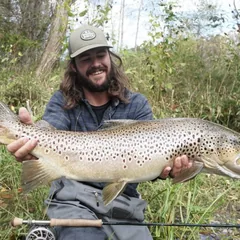
Fall is the best time to catch a genuinely big wild brown trout on Noontootla Creek. As water temperatures drop back into the 50s and the days shorten, the creek's brown trout enter their pre-spawn period and turn aggressively territorial. Fish that spent the summer tucked under cover move into faster, more open water and start chasing — which is exactly what makes a streamer effective.
What changes in the fall, and how to time it:
- Early-to-mid October. Cooling water reactivates the whole fishery. Fish that fed only at the edges of the day in August feed across more of the day. Small streamers (size 6–10) start producing, and there's still enough Blue Wing Olive and October Caddis activity to fish a dry on milder afternoons.
- Late October–November. The peak streamer window. Pre-spawn browns are at their most aggressive. This is when the year's biggest fish — the 16- to 20-inch wild browns that are nearly impossible to fool in summer — make a mistake. Fish larger streamers (Wooly Buggers and sculpin patterns, size 4–8) on slow, methodical strips through the deeper runs and along undercut banks.
- All of fall. Midday warms up better than in summer, so the productive window shifts back toward the middle of the day — the opposite of July and August timing.
Fall fishing comes with a responsibility. Browns spawn in late October and November, building redds — light-colored gravel nests — in shallow, clean gravel runs. Do not wade through obvious gravel beds during this window, and don't target fish that are actively spawning on a redd. Protecting the spawn is the whole reason Noontootla's wild population stays healthy enough to be worth fishing. The same pre-spawn aggression that makes fall the best big-fish season is exactly why ethical timing matters. For more on how spawning shapes the regulations and the catch-and-release rules on this water, see our breakdown of the Noontootla special regulations.
Fall also brings the year's most reliable foliage and the lowest bug pressure, which makes the long walk to the better water genuinely pleasant. Just remember that the trade for a shot at a trophy is a lower catch count — fall on Noontootla is a quality-over-quantity season.
Winter on Noontootla: technical, quiet, and worth it (December–March)
Winter is the slowest season on Noontootla by catch count, but it offers solitude and a real chance at a quality fish for anglers who fish it well. Cold water slows the trout's metabolism, so they feed less often and hold in the deepest, slowest water. The fishing is technical and the days are short, but the pressure is near zero — you can have miles of wild-trout creek to yourself on a January weekday.
How to time and fish the winter window:
- Fish the warmest hours. The opposite of summer. The productive window is roughly 11 a.m. to 3 p.m., when the sun has had time to nudge water temps up a degree or two. Mornings and evenings are usually dead.
- Go small and slow. Midges (size 18–22) and small Blue Wing Olives are the winter hatches. Most of the eating happens subsurface — fish small nymphs and midge larvae deep and slow through the heads and tailouts of the bigger pools.
- Cover less water, more carefully. In cold water you're not searching; you're picking apart the few prime lies where a fish will be holding. Three or four good runs fished thoroughly beats a mile of fast walking.
- Watch the conditions. Forest Service roads can ice or close, and a hard cold snap shuts the bite down entirely. Check road and trail status on the U.S. Forest Service Chattahoochee-Oconee National Forest site before driving up, especially after snow.
Winter rewards patience and punishes anglers who expect a numbers day. But a 15-inch wild brown caught on a size-20 midge in 40-degree water in an empty canyon is one of the more satisfying fish you can land in North Georgia.
What about time of day? Match the hour to the season
The best hour to fish Noontootla flips with the season — warm months reward the cool ends of the day, cold months reward midday. Getting the hour right matters as much as getting the month right, because on a small wild-trout creek the difference between feeding and sulking fish is often a few degrees of water temperature.
| Season | Best window | Why | Avoid |
|---|---|---|---|
| Spring | 11 a.m.–5 p.m. | Afternoon warmth triggers hatches | Cold early mornings |
| Summer | Dawn–10 a.m. & 5–9 p.m. | Cool water = willing fish | Hot midday on upper stretches |
| Fall | 10 a.m.–4 p.m. | Midday warmth, pre-spawn movement | Frosty first light |
| Winter | 11 a.m.–3 p.m. | Only warm window of the day | Morning and evening cold |
A few cross-season truths hold no matter the month. Overcast, stable days fish better than bright, high-pressure bluebird days — low light makes wild trout less wary and extends the feeding windows. A falling barometer ahead of a front often triggers an aggressive bite. And the hour after a summer thunderstorm clears, when terrestrials and dislodged nymphs are washing through, can be the best 60 minutes of the week.
How weather and flow change the timing
Rain, drought, and temperature swings move the fishing windows around the seasonal averages, and reading them is the difference between a planned trip that produces and one that doesn't. Noontootla has no dedicated public USGS gauge, so anglers read it by recent rainfall and by proxy gauges on the nearby upper Toccoa and Cartecay, which respond to the same weather systems.
Use these rules of thumb to time a trip around conditions:
- After 0.25 inches of rain in 24 hours. Often ideal. The creek bumps slightly, stains, and the fish feed with their guard down. This is a "go now" condition in any season.
- After 0.5–1.0 inches in 24 hours. Higher and faster. Streamer fishing improves and bottom-bounced nymphs stay productive, but dry-fly fishing gets tough. Fish the softer edges and seams.
- After 1-plus inches in 24 hours. Usually blown out for 24 to 48 hours. Wait for clarity to return rather than fighting muddy, dangerous water.
- During a long drought (no meaningful rain in 14-plus days). Low and gin-clear. Sight-fishing becomes possible but the fish are at their spookiest. Fish first light or last light, lengthen your leader, and slow your approach way down.
- During a heat wave. Move to the spring-influenced middle creek and the deepest shaded pools, fish dawn and dusk only, and skip the smallest headwater tributaries where water can warm into the trout-stress zone.
Because Noontootla's character changes from headwaters to mouth, you can often save a marginal day by changing elevation. In a summer heat wave, drop to the shaded middle pools. In a high-water event, climb to the smaller, clearer tributaries that drop and clear faster than the main stem.
Best time to fish Noontootla by goal
The right season depends entirely on what you're after, so match the month to the goal rather than chasing a single "best" answer. Here's the quick decision guide:
- Want the most fish and dry-fly eats? Go in late April or May. Peak hatches, willing fish, comfortable wading.
- Want a shot at a 20-inch wild brown? Go in late October or November. Pre-spawn aggression and big streamers.
- Want solitude? Go on a weekday in January or February, or a late-summer evening. Near-zero pressure.
- Want easy conditions for a first wild-trout trip? Go in May or September. Mild weather, stable flows, and fish spread across the day.
- Want terrestrial dry-fly fun? Go from mid-June through August, fishing the early and late windows with beetles and inchworms.
- Want fall colors with your fishing? Go in late October. Peak foliage overlaps the trophy streamer window.
For the complete picture of access points, regulations, gear, and what a guided day looks like on this water, start with our complete guide to fly fishing Noontootla Creek.
What a guided trip adds to timing the season
A guide's biggest value on Noontootla is reading the day you actually drew, not the seasonal average. The hatch chart says May means Sulphurs, but the hatch chart can't tell you that last night's cold front pushed the fish deep, or that a midday cloud bank just opened a two-hour Blue Wing Olive window, or which of a dozen pools is holding the biggest fish this week. That real-time read is the difference between fishing the season and fishing the conditions.
Bowman offers Noontootla as a half day or a full day. The guide watches local rainfall, Forest Service road conditions, and water clarity in the days before your trip, and will call ahead if conditions warrant a change of plan or water. On the creek, the guide rotates through the runs that are fishing best for the current season and conditions, switches rigs as the bug activity changes, and coaches the low, slow approach that wild trout in clear water demand.
If you're planning your first trip and want the season, the hatch, and the water read for you, you can book a guided fly fishing trip and fish the right window the first time. To compare Noontootla against Bowman's other home waters and find the trip that fits your dates, use the trip finder.
Frequently Asked Questions
What is the best month to fish Noontootla Creek?
May is the best single month. Water temperatures sit in the low-to-mid 50s, the Sulphur and caddis hatches peak, the wild browns feed aggressively after winter, and the wading weather is comfortable. Late April runs a close second. If your goal is a trophy fish rather than numbers, late October and November are the best months for big pre-spawn browns on streamers.
When are the hatches best on Noontootla Creek?
The richest hatch window is mid-April through May. The progression runs Quill Gordons and Blue Quills in early April, Hendricksons in mid-April, Sulphurs and March Browns into May, then Light Cahills and Yellow Sallies into early June. Fall brings Blue Wing Olives and October Caddis on milder afternoons. Winter is limited to midges and small Blue Wing Olives.
Can you fish Noontootla Creek in winter?
Yes. Noontootla's special-regulations water is open year-round, and winter offers solitude and a real shot at a quality fish. The fishing is technical and slow — fish small midges and nymphs deep through the warmest hours, roughly 11 a.m. to 3 p.m. Catch counts are low, but pressure is near zero. Check Forest Service road conditions before driving up after snow or ice.
Is summer too hot to fish Noontootla?
No, but timing matters. The dense canopy and spring-influenced flow keep the middle creek cool enough to fish through summer, unlike larger exposed rivers. Fish the cool ends of the day — dawn to mid-morning and late afternoon to dusk — and target terrestrials like inchworms and beetles. Avoid hot midday on the smallest headwater tributaries, where water can warm into the trout-stress zone.
What is the best time of day to fish Noontootla Creek?
It depends on the season. In spring, fish the warm afternoon (11 a.m.–5 p.m.) when hatches pop. In summer, fish dawn and dusk when the water is coolest. In fall, midday (10 a.m.–4 p.m.) is best as the water warms and pre-spawn browns move. In winter, the only productive window is the warmest part of the day, roughly 11 a.m. to 3 p.m.
When is the best time to catch a big brown trout on Noontootla?
Late October through November. As water cools into the 50s, Noontootla's wild brown trout enter their pre-spawn period and turn aggressively territorial, which makes them chase larger streamers fished slowly through deep runs and along undercut banks. This is when the year's biggest fish — 16 to 20 inches — are most catchable. Avoid wading through spawning gravel and never target fish actively on a redd.
How does rain affect the timing of a Noontootla trip?
A light rain of about 0.25 inches in 24 hours is often ideal — the creek bumps, stains, and the fish feed with their guard down. Half an inch to an inch pushes flows up and favors streamers and deep nymphing over dry flies. More than an inch usually blows the creek out for 24 to 48 hours, so wait for clarity. A long drought makes the water low and gin-clear, demanding a stealthier approach.
Do I need a guide to fish Noontootla in the off-season?
Not required, but a guide adds the most value exactly when conditions are toughest — winter, drought, or post-front days when the hatch chart can't tell you where the fish are. A guide reads the live conditions, knows which runs are holding fish for the current season, and coaches the careful approach that clear-water wild trout demand. For a first trip in any season, a guided day is the fastest way to fish the right water at the right time.
Time your Noontootla trip right
Book a guided wild-trout day on Noontootla — we read the water, the hatch, and the season so you fish the right window.
Noontootla Creek wade trip, from $450 · 4.9 stars on Google
See the trip or Reserve Your Trip →