Seasons & Conditions
Toccoa River Fall Fly Fishing: Browns on Streamers
 Daniel Bowman
Updated October 1, 2026
14 min read
Daniel Bowman
Updated October 1, 2026
14 min read

The short version
Fall is the trophy-brown window on the Toccoa River tailwater, and October through mid-November is the stretch every serious angler circles on the calendar. Unlike the region's freestone rivers, the Toccoa runs cold all year because Blue Ridge Dam releases water from the bottom of Lake Blue Ridge — so the fall bite isn't about water finally cooling down, it's about brown trout staging for their late-fall spawn and turning aggressive on streamers. Fish articulated streamers (4-6 inches) in olive, brown, and black on a sink-tip in the low-light windows, and back them with blue-winged olives (size 18-22) and tan caddis on cloudy afternoons. The catch that makes the Toccoa hard: TVA's generation schedule still changes daily, so you check it the morning of, fish the runs and seams below the dam, and either wade before generation starts or float through it in a drift boat. Target October for the most aggressive browns; November for the spawn itself, fished carefully around redds.
What changes on the Toccoa when fall arrives?
Fall is the best time to fly fish the Toccoa because the tailwater's wild and holdover brown trout stage for their late-fall spawn and become genuinely catchable for the first time all year. On a freestone river, fall fishing is a story about cooling water — fish that hid from summer heat finally spread out and feed. The Toccoa is different. The tailwater stays in the low 50s through July and August because Blue Ridge Dam pulls cold water from deep in the reservoir, so the river never gets the summer reset that the Etowah or the upper Chattahoochee do. What changes in fall is the fish behavior, not the water temperature.
Once the days shorten and the nights turn cold, three things shift in your favor on this tailwater:
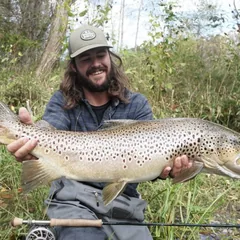
- Pre-spawn brown trout get aggressive. Browns that spent the year hidden in the deepest runs and behind the biggest boulders move toward spawning gravel, defend territory, and feed up before the spawn. This is the one window of the year when the river's biggest fish — the 22-to-26-inch wild browns the Toccoa produces every season — will chase a streamer in daylight.
- Surface activity returns. Blue-winged olives come back as a reliable fall hatch, and tan and olive caddis linger into October. On overcast afternoons the dry-fly fishing can be excellent, which it rarely is in the dog days of summer.
- Pressure drops. The summer float crowds thin out, weekday access points are quiet, and the fish are less educated than they were in the May caddis circus.
One thing does not change with the season: the dam still runs the day. A cool October morning is no safer for wading than a July one if TVA starts a release. Still, for the best shot at a big Toccoa brown, October and November are the months to plan around. New to this river? The complete guide to fly fishing the Toccoa River lays out the whole tailwater, and the North Georgia fall fly fishing guide compares the Toccoa, Soque and Etowah through the autumn.
When exactly does the fall bite turn on?
The fall streamer bite on the Toccoa keys off the calendar and the photoperiod more than water temperature, because the tailwater is already cold. Here's how the window breaks down month by month.
| Period | What's happening | Primary tactic |
|---|---|---|
| Mid-September | Browns begin pre-staging in deeper runs. Olives start to return. Fish still cautious. | Nymphs + dawn/dusk streamers |
| October | Peak pre-spawn aggression. Biggest fish willing to chase in daylight. Fall colors on the river. | Articulated streamers, low light |
| Early-to-mid November | Browns actively spawning. Fish around redds, never on them. Olives and midges on warm days. | Streamers in deep runs; egg patterns below redds |
| Late November | Post-spawn fish recovering, feeding opportunistically. Crowds gone entirely. | Nymphs, small streamers, midges |
If you only get one trip, October is the sweet spot — you get the aggression without the ethical tightrope of fishing over actively spawning fish. By November the spawn is on, and while the fishing can be spectacular, you have to know what a redd looks like and stay off it. (More on that below.) The October trophy-brown pattern isn't unique to the Toccoa, either; it runs across the region, and the dedicated October trophy-brown season guide covers how it plays out on the Soque, Etowah, and Noontootla as well.
The generation schedule still rules the fall day
Plan the fall day around the release schedule first and the fly box second. TVA sets Blue Ridge Dam's releases one day at a time, and you cannot wade safely while it is generating. Cold weather changes none of that.
The dam has one generating unit. TVA runs it according to power demand and the lake level, and when it comes on, the river below can climb about 3 feet in an hour. In fall that matters even more: the days are short and the water is cold, so a slip or a soaking costs more than it does in summer.
How to read the river before you commit to wading:
- Check TVA's Blue Ridge Dam lake-level page the morning of the trip for the scheduled releases.
- Then look at what the dam is actually doing. TVA's observed Blue Ridge outflow shows the release hour by hour. Roughly 150 to 200 cfs means the unit is off and the river is wadeable. Around 1,650 cfs means it is running, and the day belongs to a boat.
- Watch the gauge trend, not just the number. A flow that's climbing is a dam that just turned on. Get off the gravel.
On your own, pick one of two plans. Wade the quiet early hours before a release, or give the whole day to a float on generating water. Avoid the in-between day, when the unit starts while you are thigh-deep swinging a streamer. That is the classic way people get hurt here. The Toccoa generation schedule guide explains how to read TVA's numbers in more detail.
What fall flies actually work on the Toccoa
The fall fly box on the Toccoa is streamer-forward, with a supporting cast of subsurface and dry patterns for when the browns won't commit to a big meal. Lead with the streamers and adjust down.
Streamers (the fall workhorses):
- Articulated streamers, 4-6 inches, in olive, brown, or black — the proven trophy-brown pattern on this river
- Sculpin imitations dredged through deep runs and boulder pockets
- Woolly buggers (size 4-8) when fish want a smaller, more castable profile
- Sink-tip line to get the fly down fast in the deeper slots where big browns hold
Subsurface (when the chase is off):
- Sowbugs (size 16-18) — a tailwater staple year-round
- Zebra midges (size 18-20) in the slower, deeper water
- Pheasant tails (size 16-18) as a searching nymph
- Egg patterns drifted below spawning redds in November, never over them
Dries (overcast fall afternoons):
- Blue-winged olives (size 18-22) — the reliable fall surface hatch
- Tan and olive caddis (size 14-16) lingering from the warm season
- Midges (size 18-22) on slow pools when nothing else is moving
The tactical theme for fall is "big and aggressive first, small and technical second." Start the day swinging or stripping a streamer through the best holding water. If the browns flash but won't eat — a common fall frustration on bluebird days — downsize to a smaller streamer, then drop to nymphs under an indicator, and save the dries for the cloudiest, calmest part of the afternoon. The Toccoa's fish are well-fed and well-pressured, so reading the mood and adjusting fast is the difference between a slow day and a memorable one.
The fall streamer game — how to actually fish it
The fall streamer game on the Toccoa is about putting a big fly in front of a big fish in low light and giving it a reason to commit. The mechanics matter as much as the fly choice. Browns aren't sipping in fall — they're ambush predators, and they want a target that triggers a reaction.
Here's the approach that produces:
- Fish the low-light windows. First light (roughly 6:30-8:30 a.m. in fall) and the last hour before dark are when the biggest browns leave cover to hunt. Mid-day fall sun pushes them back under the rocks.
- Target the structure. The deepest runs, the seams beside the largest boulders, undercut banks, and the heads of pools where current delivers food. These are the lies where a 24-inch fish lives.
- Get deep, fast. A sink-tip and a heavy fly let you fish the bottom third of the water column where these fish hold. A streamer riding two feet over their heads gets ignored.
- Vary the retrieve until something works. Strip fast, then faster, then pause and let it sink, then a sharp jerk. The pause-and-drop often draws the eat — a brown that followed will pounce when the fly looks wounded.
- Cover water. Fall browns are spread out and territorial. Make a few casts to each prime lie, then move. This is where a drift-boat float earns its keep — you reach far more good water in a day than you can on foot.
Hooking a trophy brown is one thing; landing it is another. Use a stout leader (1X-2X is not excessive with streamers), keep the fish out of the heavy current and away from the boulders it will try to break you off on, and have a big net ready. The Toccoa's best browns are a multi-trip pursuit for most anglers — a guided fall streamer day stacks the odds for a one-day attempt. For the full trophy-hunting playbook on this water, the Toccoa trophy brown trout guide breaks down the river's biggest-fish runs in detail.
Wade or float the Toccoa in fall?
Both wade and float fishing produce in fall, and the right choice comes down to the generation schedule and how much water you want to cover. Each has a clear case.
| Compared on | Wade fishing | Drift-boat float |
|---|---|---|
| Best when | Generation is off (early morning) | Generation is on, or you want to cover water |
| Water covered | A few hundred yards of accessible runs | 5-9 miles in a half or full day |
| Generation safety | Dangerous during a release — must time it | Safe through generation; you're in the boat |
| Cost (per trip, 1-2 anglers) | Standard guided wade rate | $425 half-day / $575 full-day float |
| Big-fish reach | Limited to wadeable lies | Reaches mid-river slots wading can't |
| Fall edge | Quiet weekday access, intimate fishing | Cover more low-light water, hit more big-fish lies |
A float suits fall well. It lets you swing streamers through the dim early and late hours down a long stretch of river, and a release doesn't end your day. Fish one deep run, slide down to the next, and keep covering water, which is the approach big fall browns tend to reward. On a Bowman Toccoa float the guide rows while one or two anglers fish. It costs $425 for a half day and $575 for a full day per boat in 2026. The Toccoa drift-boat float trip guide walks through a float day from start to finish.
Wading still has a place in fall on mornings when the unit is off. The runs and pocket water near the public access points below the dam hold fish, and weekdays get quiet once the leaves turn. Wade the early window, then be on the bank, or in a boat, before the scheduled release.
Where the Toccoa fishes best in fall
The lower tailwater below Blue Ridge Dam is the fall water, because that's where the cold release, the holdover browns, and the spawning gravel all line up. The upper Toccoa above Lake Blue Ridge and the small Cohutta Wilderness streams have their own appeal, but the tailwater is where the trophy-brown game happens.
What to look for as the season turns:
- The deepest runs and boulder seams — fall browns hold in the heaviest, deepest water they can find, and move to the edges of it to feed in low light.
- Spawning gravel in November — clean gravel in moderate current is where browns build redds. In October it's where they're staging nearby; in November it's where you fish around them, never on them.
- The deep runs with holdover fish: the tailwater has no catch-and-release section by rule, but its deep runs hold the big holdovers. It's fished hard, but the big browns are there.
- Tributary mouths and current breaks — where cold feeder creeks and seams concentrate food and fish.
The catch-and-release water deserves a specific note for fall: because it protects the biggest holdovers and sees no harvest, it concentrates exactly the class of fish you're hunting in October and November. It also sees the most pressure, so fish it at first light or last light when the crowds aren't there and the big fish are out.
Fall spawn ethics on the Toccoa
Fishing the Toccoa in late fall means fishing over spawning brown trout, and how you handle that defines whether you're an asset or a liability to the fishery. Browns spawn in the Toccoa from roughly late October into early December, building redds — clean, oval depressions of swept gravel — in moderate-current riffles and tailouts. A redd looks like a noticeably lighter patch of gravel, often with a fish or a pair hovering over it.
The rules that protect the resource:
- Never wade through a redd. Walking across spawning gravel crushes the eggs buried in it. Learn to spot redds and step around them — this is the single most damaging thing an angler can do in fall.
- Don't target fish actively on redds. Sight-fishing to a brown sitting on its spawning bed is easy and unsporting, and it pulls the fish off the nest. Leave spawning fish alone.
- Do fish below the redds. Trout stack up below spawning gravel to eat dislodged eggs — that's where an egg pattern earns its keep, and where you can fish hard without harming the spawn.
- Handle every fish like it matters. Wet hands, a quick photo, and a careful release. Pre-spawn and spawning fish are stressed; minimize it.
This isn't about being precious — it's about the math of a wild fishery. The eggs in this fall's redds are the trophy browns of three and four years from now. North Georgia trout fishing leans on both wild reproduction and the coldwater stocking that comes out of the federal national fish hatchery system, so protecting the redds you wade past is the half of the equation an angler actually controls — and it's what keeps rivers like the Toccoa producing big wild fish at all. Fish the fall with that in mind and the river rewards you for years.
How to plan your fall Toccoa day
A productive fall day on the Toccoa is built backward from the generation schedule and the low-light windows. Put the pieces together the night before and the morning of.
- Check generation the night before and again at dawn. Pull TVA's schedule and the USGS gauge. Decide wade-or-float based on what the dam is doing.
- Plan around first and last light. The biggest browns hunt in low light. Be in the water — or floating into the best run — when the sun is lowest.
- Dress for cold tailwater and cold mornings. Fall air plus 50-degree water means waders and thermal layers. Fingerless gloves and a buff help on the early float.
- Rig for streamers first. Sink-tip line, a stout leader, and a big articulated fly on the rod when you start. Carry a second rod or a quick-change setup for nymphs and dries.
- Cover water, then slow down. Hit the prime lies fast at first light, then slow down and work the productive runs more thoroughly as the sun comes up and the chase bite fades.
- Book a guide for the first fall trip. The Toccoa is the most logistics-heavy river in North Georgia to fish self-guided — generation, access, and the drift boat all reward local knowledge. A guided fall day is the highest-percentage shot at a trophy brown.
If you're weighing the Toccoa against the region's other fall option — the private-water browns of the Soque — the Toccoa is the bigger-water, streamer-and-float fishery, while the Soque is intimate, sight-fishing private water. Most anglers chasing a true trophy brown in October pick the Toccoa for the float access alone.
Frequently Asked Questions
When is the best time to fly fish the Toccoa River in fall?
October through mid-November is the best fall window on the Toccoa. October offers peak pre-spawn brown trout aggression with fish willing to chase streamers in daylight, while early-to-mid November is the spawn itself — spectacular fishing, but it requires fishing carefully around redds and never over them. If you only get one trip, target October.
What flies should I use for fall fishing on the Toccoa?
Lead with articulated streamers (4-6 inches) in olive, brown, and black on a sink-tip line — the proven trophy-brown pattern. Back them with sowbugs (16-18), zebra midges (18-20), and pheasant tails (16-18) when the chase is off, plus blue-winged olives (18-22) and tan caddis (14-16) for overcast afternoons. Egg patterns drifted below redds produce in November.
Is the Toccoa good for streamer fishing in fall?
Yes — fall is the prime streamer season on the Toccoa. Pre-spawn brown trout become aggressive and territorial, and the river's biggest fish (22-26 inches) will chase a streamer in the low-light windows of October and November. Fish a sink-tip and a big fly through the deepest runs and boulder seams at first and last light.
Do I still need to check the generation schedule in fall?
Yes. TVA plans Blue Ridge Dam's releases a day at a time all year, and standing in the river during one is dangerous in any month, because the water can climb about 3 feet in an hour. Check the next-day schedule, which TVA usually posts by 6 p.m., then confirm the real release on TVA's observed outflow. About 150 to 200 cfs means no generation; around 1,650 cfs means you belong in a boat.
Should I wade or float the Toccoa in fall?
It depends on the generation schedule and how much water you want to cover. Wade the early-morning no-generation window for intimate fishing and light weekday pressure. Float when generation is on or when you want to cover more low-light streamer water — a drift-boat float reaches mid-river lies wading can't, and runs $425 half-day / $575 full-day for one or two anglers.
Can I keep fishing the Toccoa once the browns are spawning?
Yes, but ethically. Brown trout spawn from roughly late October into early December. Never wade through a redd (the swept gravel where eggs are buried), don't target fish sitting on redds, and instead fish below spawning gravel where trout stack to eat dislodged eggs. Protecting the spawn is what keeps the river producing big wild browns.
How cold does the Toccoa get in fall, and how should I dress?
The tailwater stays in the low 50s year-round because Blue Ridge Dam releases cold water from deep in the reservoir, so fall water temperature barely changes — it's the air that gets cold. Dress for cold mornings and cold water: waders, thermal base layers, fingerless gloves, and a buff for the early float. The water won't warm up the way it would on a freestone river.
Is a guide worth it for a fall Toccoa trip?
For a first fall trip, yes. The Toccoa is the most logistics-heavy river in North Georgia to fish self-guided — generation schedules, access points, and drift-boat floats all reward local knowledge, and the fall trophy-brown window is short. A guided fall day handles the logistics and puts you on the river's best low-light streamer water, which is the highest-percentage shot at a trophy brown in a single day.
Fish the Toccoa this fall
Cold tailwater, aggressive pre-spawn browns, and the year's best streamer window — book a guided wade or float on the Toccoa.
Toccoa River float trip, from $425 per boat · 4.9 stars on Google
See the trip or See Fall Private Water Trips →