North Georgia Rivers
Private Water vs Public Water Fly Fishing in 2026: Is Private Worth It?
 Daniel Bowman
Updated October 2, 2026
10 min read
Daniel Bowman
Updated October 2, 2026
10 min read

The short version
Private water in North Georgia means river stretches that are either privately owned or leased exclusively to outfitters — limited rotations, less pressure, more and bigger fish. Public water is open to anyone with a fishing license but sees heavy pressure on weekends and stocking days. Private water bundled into a guided trip ($400–$675 half-day at Bowman) costs more than public water DIY ($25 license), but the catch rates and fish quality differential are real — fish that see few anglers feed more freely and grow larger. For a one-trip-a-year visitor, private water is worth the premium. For locals fishing weekly, mixing private and public makes sense — private water for the marquee trips, public water for the regular practice.
What private water actually means
Three distinct types of "private water" exist in the Southeast:
1. Privately-owned land with the river running through it. Common on the Soque, parts of the Etowah, and many smaller tributaries. The landowner owns the land and the river bottom; access is at the landowner's discretion.
2. Outfitter-leased water. An outfitter pays a landowner for exclusive guiding rights on a stretch of river. Bowman holds leases on Etowah vineyard private water and segments of the Soque. Clients access through booked guided trips only.
3. Private water clubs. Membership-based access where members pay annual dues for fishing rights. Less common in North Georgia than in Western states. A few exist on the Soque and adjacent waters; membership lists are typically closed.
Public water is the inverse — owned by the state or federal government (Forest Service land, state parks, WMA stretches), or rivers where the bottom is privately owned but Georgia's "navigable waters" doctrine permits angler access from the river itself.
Why private water fishes differently
Three structural reasons private water produces more and bigger fish per angler-day:
1. Lower pressure
Public water on a Saturday in May sees dozens of anglers per mile in popular stretches. Each angler casts to the same trout from slightly different angles; by the third or fourth cast a trout has seen, the fish is "educated" and refuses everything until it forgets — which can take hours.
Private water on the same Saturday sees only the outfitter's own clients. Trout get long rests between visits. The same fly that public-water trout refuse, private-water trout eat aggressively.
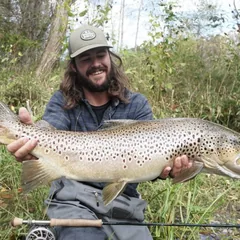
That difference in pressure is the core of it. Bowman's own explanation for its private water is limited pressure plus catch and release, which, in Bowman's words, "allows the fish to grow much larger than you would typically find on public streams."
2. Better water management
On private leases, outfitters typically practice catch-and-release exclusively. No trout get harvested. Holdover fish that survive a season are still in the river the following year, larger.
On public stretches that allow harvest (which is most of them), stocked rainbow trout get caught and kept within a few weeks of stocking. Holdover percentages drop. Average fish size stays small because larger fish are removed.
The compound effect over multiple seasons: private water average size grows; public water average size resets each spring.
3. Habitat preservation
Private landowners often invest in stream habitat — bank stabilization, riparian planting, large-wood additions, in-stream structure. The motivation is fishing quality on their own water; the result is better trout habitat than equivalent unmanaged public stretches.
Public stretches rely on state habitat work (which exists but is variable) and angler-volunteer projects through groups like Trout Unlimited Georgia chapters. Habitat quality on public water varies meaningfully.
What public water gets right
Private water isn't universally better. Public water has genuine advantages:
1. Cost. A Georgia license + trout stamp is $25 for a non-resident day. A Georgia resident can fish public water for a year on $25 (annual license plus trout license). Private water guided trips run $400–$675 per half-day.
2. Schedule flexibility. Public water doesn't require a guide booking. You can fish on a Tuesday whim, a Saturday morning impulse, or a 3-hour window between commitments.
3. Exploration value. Walking unfamiliar public water and figuring out where the fish are is a different and rewarding experience. Some anglers prefer the challenge of "earning" their fish on hard public water.
4. Solitude in the right spots. Lesser-known public stretches see almost no pressure. Walking 30 minutes from a trailhead on Forest Service land typically puts you on water with 0–2 angler days per week.
5. Long-term skill development. Anglers who can catch fish on pressured public water are objectively better technical anglers than those who only fish private water. Public water forces refinement.
6. The aesthetic. Forest Service trails, Wilderness boundaries, Cohutta canyons. Some of the most beautiful North Georgia water is public — the upper Noontootla, certain Chattahoochee tailwater stretches, parts of the Conasauga.
For complete details on the Etowah's mix of public and private water, see the dedicated guide.
The cost math, honestly compared
A side-by-side breakdown for a typical North Georgia trip:
Public water DIY day (Etowah at Castleberry Bridge):
- License + trout stamp: $25
- Gas (Atlanta to Etowah): $25
- Lunch: pack ($10)
- Total: $60
- Expected catch (May Saturday): 4–10 fish, possibly fewer behind heavy pressure
Private water guided day (Etowah vineyard with Bowman):
- Guided half-day (1 angler): $400
- License + trout stamp: $25
- Gas: $25
- Tip (17%): $70
- Total: $520
- Average fish: often 17 inches or more (Bowman)
Cost per fish:
- Public water: $6–$15 per fish
Cost per fish over 12 inches:
- Public water: $30–$75 per fish (most are smaller)
The marginal cost per fish is similar; the marginal cost per quality fish is comparable; the experience is dramatically different.
When private water is worth the premium
Private water is the right choice when:
1. You have one shot at a trip. Visitors flying into Atlanta for a single day or weekend can't risk a public-water bust. Private water dramatically increases the probability of a great day.
2. You're chasing trophy fish. The Soque trophy population, the Toccoa tailwater's big holdover browns, and the Bowman Dragonfly beat all hold fish that public water rarely produces. If a 20+ inch wild brown is on the goal list, private water is the answer.
3. You're booking a milestone trip. Anniversary, retirement, milestone birthday, gift trip. The reliability of private water matters more for these occasions than for routine fishing days.
4. You have a tight time window. Four hours on a busy public stretch can be slow, while the same four hours on lightly fished private water gives you far more chances. If your time is constrained, the private premium pays for itself.
5. You're hosting clients or guests. Corporate retreats, client entertainment, family visitors. The social cost of a slow fishing day with a boss or in-law is real; private water reduces that risk.
6. You're a beginner. Beginners on public water often catch zero fish; beginners on private water with a guide almost always catch fish. The catch rate differential is much larger for new anglers.
For trophy water specifically, see the dedicated trip page.
When public water is the right choice
Public water makes sense when:
1. You fish frequently. Weekly or bi-weekly anglers can't justify guided trip rates every outing. Public water DIY for routine fishing, private water for the marquee trips.
2. You're learning to read water. Public water forces water-reading skills that private water (with a guide pointing) doesn't. For long-term skill development, public water is the teacher.
3. You enjoy exploration. Walking unfamiliar public stretches, finding underfished pools, building personal water knowledge — these are real values that private water doesn't replicate.
4. Budget is tight. $25 a year for public access vs $400+ per private trip is a real difference. Public water keeps the sport accessible.
5. You want maximum solitude. Walked-in public stretches often produce more solitude than scheduled private trips with a guide companion. For anglers who want time alone with the river, public is sometimes better.
6. Specific public-only experiences. The Chattahoochee tailwater below Buford Dam, the Noontootla special-regulations stretch, and certain Smokies streams offer experiences that no private water can replicate.
How North Georgia rivers split between public and private
A rough breakdown:
- Soque River: ~85% private. Marquee trout water is almost entirely private. Public access exists but is limited.
- Toccoa River: Mixed. The trophy section is mostly catch-and-release public; the rest is a mix of public access points and private guided water.
- Etowah River: Mixed. Multiple public access points; the Etowah vineyard private water is Bowman's marquee Etowah lease.
- Noontootla Creek: ~90% public. Forest Service land on the Blue Ridge WMA, under special regulations.
- Tuckasegee River: Public. Drift boat access from public boat launches; the delayed-harvest framework is the management tool, not private leasing.
For complete coverage of Toccoa public and private water, see the river guide. For the Soque's public-private breakdown, see the dedicated guide.
What the access fee actually buys
When you book a private-water guided trip, the rod fee component breaks down roughly as:
- Habitat investment: Stream improvement, bank stabilization, in-stream structure paid for by the lease holder
- Lease payment to landowner: Direct compensation to the landowner for exclusive access
- Stocking supplements (on some leases): Beyond state stocking
- Limited rotation enforcement: Reservation systems that cap angler-days per week
- Access infrastructure: Parking, gates, paths, occasionally cabins or facilities
The rod fee is real economic value, not just exclusion. The water fishes better because of the dollars that flow through this system.
Verifying public water rules before fishing
If you fish public water DIY, regulation compliance is on you:
- Verify current trout regulations at Georgia Wildlife Resources Division regulations
- Some stretches have special regulations (slot limits, gear restrictions, seasonal closures)
- Some stretches require WMA permits beyond the standard fishing license
- Tribal water (Cherokee/Qualla in NC) has separate licensing
- Forest Service land has additional rules in Wilderness areas
Bowman guides handle all regulatory compliance on guided trips. For DIY public fishing, read the regulations before you fish; ignorance is not a defense if a warden checks your gear.
Why Georgia has so much private trout water
In Georgia, a landowner can own both banks and the entire bed of a stream that isn't navigable, and the only legal way to fish that water is with the owner's permission. That rule is why so much of the state's best small-river trout water is private. It is also why a guided trip on leased water includes access you could not buy any other way.
Common decision mistakes
Patterns that lead anglers to pick wrong:
1. Assuming "free" public water is actually free. Gas, time, license, gear, and the opportunity cost of unproductive fishing all add up. The honest comparison includes everything, not just the dollar number.
2. Picking by river name reputation. "Famous" rivers don't always fit the goal. The Toccoa is famous; the Soque is famous; the Etowah is less famous but often produces a better day for first-time clients.
3. Skipping private water as "for elite anglers." Beginners benefit more from private water than experts do. The catch rate differential is larger for new anglers.
4. Booking private water expecting it to "guarantee" trophies. Private water meaningfully increases the probability of trophy fish but doesn't guarantee them. Some days the bite is slow even on the best water.
5. Fishing public water on Saturday morning at peak times. Pressure peaks at the same hours and days for everyone. Tuesday afternoon public water often fishes like Saturday-morning private water.
6. Treating private water as a once-in-a-lifetime decision. It's not. Many anglers do 1–2 private water trips per year alongside regular public-water fishing. The two complement each other.
7. Forgetting trip finder comparison tools. The booking interface lets you compare available water types and guides side by side; many anglers book without checking the comparison.
Frequently Asked Questions
Is private water fly fishing worth the cost?
For a one-trip-a-year visitor or a milestone trip, yes — the catch rate differential and fish quality difference make the premium worth it. For weekly local anglers, mixing private water for marquee trips with public water for routine fishing is the more sustainable pattern.
What does "private water" mean in fly fishing?
Three things: (1) river stretches that flow through privately-owned land where the owner controls access, (2) river stretches an outfitter has leased exclusively for guided fishing, or (3) members-only fishing club water. In North Georgia, most "private water" is type 1 or 2 — landowner-controlled or outfitter-leased. Bowman accesses private water through long-standing leases on the Etowah vineyard, segments of the Soque, and the Dragonfly trophy beat.
Can I fish private water without a guide?
Generally no. Private water is private precisely because access is restricted. Most landowners and outfitters do not sell direct access to non-guided anglers. Booking through a guided outfitter is the practical access path. A few large clubs sell day passes, but the cost is comparable to a guided trip.
What's the difference between private water and trophy water?
Private water is about access; trophy water is about fish quality. Most trophy water is private (Soque, Bowman Dragonfly beat) because trophy populations require pressure management. But not all private water is trophy — some private leases produce stocked-fish quality with low pressure, which is great fishing but not trophy by size. The Bowman trophy water page details specific trophy beats.
How much more do you catch on private vs public water?
Usually yes, though nobody publishes a reliable multiplier. The difference narrows when public water has low pressure (weekday off-peak, walked-in remote stretches). The differential widens during peak weekends and post-stocking days when public pressure is highest.
Are private water fish bigger than public water fish?
On average yes, for two reasons: catch-and-release management on private water keeps holdover fish in the system longer (resulting in larger average size), and habitat investment on managed leases produces conditions that support larger fish. Public water fish average smaller because harvest removes larger fish and habitat is variable.
Is fishing private water more ethical than public water?
Both are ethical when conducted within regulations. Private water funds habitat investment and pressure management that benefit the broader ecosystem. Public water keeps the sport accessible to anglers across income levels. The "right" answer depends on your goals and values; many anglers do both across a year. Conservation organizations like Trout Unlimited support both private-water habitat work and public-water access projects.
Is all of Bowman's private water catch and release?
Yes. Every fish on Bowman's leased Etowah and Soque water is released, which is a big part of why the fish there grow so large.
Ready to fish private water?
Book a guided trip on Bowman's leased private water — Soque, Etowah vineyard, or Dragonfly trophy beat.
Private water trophy trout trip, from $400 · 4.9 stars on Google
See the trip or Find Your Trip →