Trip Planning
Guided Fly Fishing for Experienced Anglers: Worth It?
 Daniel Bowman
Updated October 1, 2026
14 min read
Daniel Bowman
Updated October 1, 2026
14 min read

The short version
For an experienced fly angler, a guided trip is worth it when you're buying something you can't get on your own — private water access, local water-reading on unfamiliar rivers, and a fast track to bigger fish. It's not worth it when you already know the river, have your own access, and just want to fish solo. The honest split: hire a guide for trophy private water (the Soque and our leased beats hold wild and holdover browns to 28 inches that public anglers never touch), for a new river where local intel saves you a wasted day, and for a single big-fish day built around a personal best. Skip the guide for water you already know well. A good guide for an experienced angler is not a teacher — it's a force multiplier who runs the logistics, owns the access, and reads water you've never seen so you spend the whole day with your fly in the right place. Bowman half-days start at $400 (1 angler); full days at $550.
Is a guided fly fishing trip worth it for an experienced angler?
Yes — but only for the right reasons. If you can already cast 50 feet into the wind, mend a drag-free drift, and tie your own rigs, you are not paying a guide to teach you any of that. You're paying for three things you genuinely cannot manufacture on your own: access to water you can't legally reach, local knowledge of a river you don't fish, and the logistics that turn eight hours into eight hours of fishing instead of six hours of fishing and two hours of figuring out where to park.
The mistake experienced anglers make is judging a guide trip by whether they "needed help." That's the beginner's metric. The experienced angler's metric is simpler: did the guide put me on better fish than I'd have found alone, and did it free me up to fish? On private trophy water with a guide who knows the beats, the answer is almost always yes. On public water you already know cold, the answer is usually no.
Below is the honest case — both directions — so you can spend the money where it actually moves the needle.
What an experienced angler is actually buying
A guide trip isn't one product. It's a bundle, and the value of each piece changes depending on your skill level. For a beginner, instruction is 60% of the value. For you, instruction is close to zero — and the rest of the bundle is where the money goes.
| What's in the bundle | Value to a beginner | Value to an experienced angler |
|---|---|---|
| Casting and rigging instruction | High | Low — you don't need it |
| Private water access | Medium | High — the main reason to book |
| Local water-reading on an unfamiliar river | Medium | High — saves a wasted day |
| Rig selection and fly choice for the day | High | Medium — confirms or sharpens your own read |
| Logistics (access, parking, float shuttle, gear) | Medium | High — buys you fishing time |
| Drift-boat rowing on float trips | Medium | High — you can't row and fish |
| A second set of eyes on the water | Low | Medium — catches what you missed |
The pattern is clear. The instruction line — the thing beginners pay for — is dead weight for you. Everything else is live. A guide who understands that will get out of your way on the casting and lean hard into the things you actually can't replicate: where the fish are, how to reach water you can't otherwise touch, and handling the boat or the shuttle so you fish all day.
That's also the tell for a good guide versus a bad one. A guide who keeps correcting an accomplished angler's loop is reading from a beginner script and wasting your day. A guide who hands you the river and says "the bank seam below that rootwad held an 18-incher Tuesday" is selling you the thing you came for.
The three trips that are worth it for experienced anglers
Not every guided day is worth your money. These three are.
1. Private trophy water you can't otherwise reach
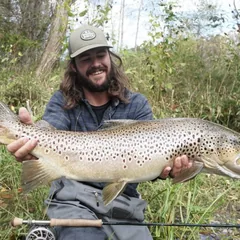
This is the strongest case, full stop. In North Georgia, the biggest trout don't live in the water you can drive up to. They live on leased private beats, lightly pressured and fished catch and release, where Bowman says the fish grow much larger than on public streams.
The Soque River is the headline example. The fishable trophy stretch is almost entirely private, accessed through outfitters with leased water rights. On Bowman's leases the fish average 18 inches or better, with trout up to 28 inches, because every fish is released and few anglers fish the water. You cannot legally fish that water without an outfitter who holds the lease, no matter how good you are. Skill doesn't get you past a property line. A trip does. That's the cleanest "worth it" there is: you're not buying instruction, you're buying the only key to the door.
If you've never thought hard about why private access matters, the breakdown of private vs public water lays out exactly what the lease buys you — and it's mostly fish density and the absence of a crowd.
2. A river you don't know
A river you've never fished can eat a whole day before you find the productive water. Where's the put-in? Which runs hold fish at this flow? What's hatching this week versus the bug chart from a magazine? An experienced angler can solve all of that — given two or three trips to learn the water. A guide solves it on day one.
This is the highest-ROI guide trip for a traveling angler. You're not paying for technique; you're paying to compress a learning curve. On the Toccoa tailwater, generation schedules dictate everything — a guide knows which beat fishes at which release. On a small wild stream like Noontootla, the seam edges and the hike-in runs that the trailhead crowd skips are local knowledge, not skill. You'd find it eventually. The guide hands it to you before lunch.
3. A single big-fish day built around a personal best
Sometimes you don't want a learning trip or a new-river trip. You want one day, the best water available, your A-game, and a real shot at the biggest trout of your life. That's a guided trophy-water day with a top beat and an experienced guide who'll position you and then leave you alone to fish.
This is the trip for a milestone — a 40th birthday, a retirement, an anniversary, or just a season where you've been grinding stocked water and want one day that's different. Pair it with the October trophy-brown window, when pre-spawn browns turn aggressive on streamers, and you've stacked the best water, the best season, and a guide who knows where the big males stage. That's a day worth paying for even if you could technically fish a river by yourself.
The two trips that are NOT worth it for you
Be honest about these. A guide who'd sell you either of them isn't worth booking.
- Water you already know well. If you've fished a stretch of the Chattahoochee delayed-harvest twenty times and you know every run, a guide adds almost nothing. You have the access (it's public), you have the local knowledge (you earned it), and you don't need instruction. Save your money and fish it solo.
- A "lesson" you don't need. Some operations sell experienced anglers a half-day that's functionally a casting clinic. If you can already fish, that's a waste. The fix is to be explicit at booking: tell the outfitter you're an experienced angler who wants access and water, not instruction. Any guide worth hiring will adjust the whole day around that. If they can't, book someone who can.
The dividing line is access and information. When the guide controls something you can't get yourself — the water, the local read, the boat — it's worth it. When you already have all three, it isn't.
How an experienced-angler trip should actually run
A guided day for an accomplished angler should look different from a beginner's day. If it doesn't, the guide is running the wrong script. Here's the shape of a good one:
- A real conditions briefing, peer to peer. Not "this is a nymph." The guide tells you the flow, the hatch this week, what moved fish yesterday, and where the better lies are. You're being read into the local intel, fast.
- Your rig, sharpened — not replaced. A good guide confirms or tweaks what you'd already rig: tippet size, dropper depth, the one fly that's been working that you wouldn't have guessed. Small edges, not a rebuild.
- Access and positioning. This is the core deliverable. The guide walks you into water you couldn't reach, points you at the productive seams, and then steps back.
- The guide gets out of the way. Once you're on fish, a guide for an experienced angler shuts up and lets you fish. The best ones are nearly silent until they see something you can't — a refusal, a better lie upstream, a fish that just moved.
- Local secrets you'd never find. The undercut bank that doesn't look like anything. The back eddy that holds the biggest fish in the run. This is the stuff that takes locals years to learn and that you're renting for a day.
If you've never booked a guide before and want the full play-by-play of how a day unfolds, the rundown of what to expect on a guided trip covers the mechanics start to finish — it's written for first-timers, but the day-shape is the same and it'll tell you exactly what's included.
A note on etiquette, because experienced anglers occasionally get this wrong: even when you don't need the help, listen to the local read. Mainstream outdoor coverage of fly fishing fundamentals makes the same point repeatedly — matching your approach to the water in front of you beats defaulting to whatever worked on your home river. The fastest way to waste a guide who knows the water is to fish it like you already do, ignoring the local intel you paid for. Confidence is good. Stubbornness on someone else's home river costs you fish.
Worked example: should you book one?
Run your situation through this and the answer usually falls out.
- You're traveling to North Georgia from out of state, never fished here. Book it. New river, no access, no local read — this is the textbook worth-it trip. One guided day pays for itself in the days you don't waste.
- You're a strong local angler who's fished public water for years and wants a shot at a 25-inch brown. Book a trophy private-water day. You have the skill; what you're missing is the access and the beat knowledge that puts you on a fish that size.
- You fish the same delayed-harvest stretch every weekend and know it cold. Don't book. You already have everything a guide would sell you.
- You want a drift-boat float and you'd be fishing solo. Book it. You physically cannot row a technical river and fish it well at the same time. The guide on the oars is worth the fee by itself.
- You're rusty after a few years off and want one day to knock the dust off on good water. Book a private-water day and tell the guide you're experienced but rusty. You'll get access plus a light tune-up — the best of both.
The throughline: book when the guide controls the access, the boat, or the local knowledge. Pass when you already own all three.
What it costs — and how to read the price
Pricing for an experienced-angler trip is the same as any guided trip; you're just allocating the value differently. Here's the Bowman structure so you can see what your money buys.
| Trip type | 1 angler | 2 anglers | 3 anglers |
|---|---|---|---|
| Half-day wade | from $400 | from $550 | from $675 |
| Full-day wade | from $550 | from $725 | from $900 |
| Drift-boat float (per 1–2 anglers) | $425 half / $575 full | — | — |
| Corporate / group (per person) | $190 half / $260 full | — | — |
A few honest notes on reading those numbers as an experienced angler. The per-angler rate drops fast when you bring a fishing partner, so a two-rod trophy day is the efficient buy if you have someone to split with. The float trip is the cheapest way to get a guide on the oars while you fish all day — strong value for an angler who wants to cover water. And premium trophy beats run higher than the standard rates above; the Soque's Dragonfly water, for instance, sits above the standard private-water price because, in Bowman's words, it offers even more exclusive access and larger fish. If a specific beat or seasonal rate matters to your trip, confirm it at booking — rates shift by water and time of year. The full breakdown of what a guided trip costs walks through what's included and what isn't.
The thing not to do is price-shop a trophy-water day against a stocked-river day. They're different products. You're not paying more for a fancier version of the same fishing — you're paying for access to fish that don't exist on the cheaper water. It helps to remember where you're fishing: the Gainesville and northeast Georgia region sits at the gateway to some of the Southeast's best wild and trophy trout water, and the private leases above town hold the biggest fish in it. Lightly pressured beats grow trout the public stockers can't, and the price reflects the fish, not the polish.
How to get the most out of a guide when you don't need teaching
You'll get a better day if you set it up right. A few moves that separate a great experienced-angler trip from an average one:
- Say "experienced" at booking, specifically. Tell them what you can do — cast, mend, tie your own rigs — so the guide skips the clinic and builds the day around access and water.
- Ask for the hardest water, not the easiest. Beginners get put on forgiving runs. Tell the guide you want the technical lies and the big-fish water. That's where your skill earns its keep.
- Pick your guide's brain on the local read. You're renting years of river knowledge for a day. Ask what's been working, why the fish hold where they do, the seams you'd have skipped. That intel outlasts the trip.
- Let them position you, then take over. Use the guide for access and the read; do the fishing yourself. The division of labor that works best is guide-on-logistics, you-on-the-rod.
- Bring your own confidence fly. You know what's worked for you. A good guide will tell you whether it'll work here — and that conversation, expert to expert, is half the fun.
Done right, an experienced-angler trip isn't a guided lesson with the lesson removed. It's a partnership: you bring the skill, the guide brings the water and the local intel, and the two of you go put a hook in a fish neither of you could reach alone.
Frequently Asked Questions
Is a fly fishing guide worth it if I already know how to fly fish?
Yes, when the guide is selling access, local water-reading, or boat handling rather than instruction. An experienced angler isn't paying to learn to cast — you're paying to fish private trophy water you can't otherwise reach, to skip the learning curve on a new river, or to have a guide on the oars while you fish a float. It's not worth it on water you already know well and can access yourself. The honest test: does the guide control something you can't get on your own? If yes, book it. If no, fish solo.
What's the difference between a beginner trip and an experienced-angler trip?
The instruction. A beginner's day is roughly 60% coaching — casting, rigging, fighting fish. An experienced angler's day should be close to zero coaching and heavy on access, positioning, and local intel. A good guide reads the difference and adjusts: get out of the way on technique, lean hard into where the fish are and how to reach them. If a guide keeps correcting your loop on a day you booked as an experienced angler, they're running the wrong script.
Will a guide just hover and tell me how to fish?
A good one won't. The best guides for accomplished anglers position you, share the local read, then go nearly silent and let you fish — speaking up only when they see something you can't, like a refusal pattern or a better lie upstream. The way to guarantee this is to be explicit at booking: tell them you're experienced and want access and water, not a casting clinic. Any guide worth hiring builds the whole day around that.
Is private water access really worth the higher price?
For an experienced angler chasing big fish, it's the single best reason to book. The largest trout in North Georgia live on lightly pressured private beats — on Bowman's Soque leases the average fish is 18 inches or better. You cannot legally fish that water without an outfitter who holds the lease, no matter how skilled you are. Skill doesn't cross a property line; a trip does. You're not buying a fancier version of public fishing — you're buying the only access to fish that don't exist on the cheaper water.
Should I tip a guide if I didn't need any instruction?
Yes. The tip is for the service — the access, the local read, the logistics, the long day on the water — not for whether you needed a lesson. Standard is 15–20% of the trip cost. An experienced angler who fished a guide's private water, picked their brain all day, and landed a personal best got more value than a beginner who needed hand-holding, not less. Tip on the value delivered.
When is a guide NOT worth it for an experienced angler?
When you already have all three of the things a guide sells: access (public water you can reach), local knowledge (a river you know cold), and you don't need instruction. Fishing your home delayed-harvest stretch for the fortieth time is a solo day, not a guide day. The dividing line is whether the guide controls the access, the boat, or the local read. If you own all three, save your money.
Can I bring my own gear and flies on a guided trip?
Yes, and most experienced anglers do. Bring the rod you trust and your confidence flies. A good guide will tell you whether your fly will work on their water and may suggest a local pattern you wouldn't have guessed — that expert-to-expert conversation is part of the value. Guides supply everything if you'd rather travel light, but there's no rule against fishing your own setup. Just confirm any private-water fly restrictions at booking.
What's the best trip for an experienced angler who wants the biggest possible fish?
A single big-fish day on premium private trophy water, ideally timed to the season. In North Georgia that means a top Soque beat or comparable leased water, paired with the October–November pre-spawn window when big browns turn aggressive on streamers. You bring the skill to capitalize; the guide brings the beat knowledge to put you on a staging male. That's the trip built around a personal best — best water, best season, a guide who positions you and then lets you fish.
You already know how to fish. Let's put you on bigger ones.
Private trophy water, local intel, and a guide who'll get out of your way — book a North Georgia trip built for anglers who don't need a casting lesson.
Etowah River private water trip, from $400 · 4.9 stars on Google
See the trip or See Trophy Water Trips →