North Georgia Rivers
Why the Soque River Grows Such Big Brown Trout
 Daniel Bowman
Updated October 2, 2026
10 min read
Daniel Bowman
Updated October 2, 2026
10 min read

The short version
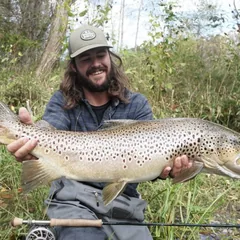
Bowman Fly Fishing's Soque water is known for very big brown trout, and Bowman's own explanation is simple: private access, catch and release, and light fishing pressure. Georgia lets landowners own the bed of a stream that isn't navigable, so most of the Soque is private. Bowman leases more than 4 miles across 7 properties, releases every fish, and keeps pressure low, which, as Bowman puts it, "allows the fish to grow much larger than you would typically find on public streams." On that water, fish average 18 inches or better, browns reach 27 inches and up, and Bowman lists trout up to 28 inches.
Why does the Soque grow such big trout?
Ask Bowman why its Soque browns get so big and the answer comes back to three things that work together over years.
- Private water. Georgia hands both banks and the riverbed of a non-navigable stream to whoever owns the land beside it, and fishing there needs that owner's say-so. Most of the Soque is private, so most of it never sees a public angler.
- Every fish goes back. On Bowman's leased water, all fishing is catch and release. A trout that is caught on Tuesday is still in the river on Wednesday, still feeding and still growing.
- Light pressure. Bowman limits how many anglers fish its water. Fish that are rarely bothered spend more of their time feeding and less of it hiding.
Put those together and a trout gets something most public-water trout never get: time. Years of feeding without being kept, in water that few people fish, is how a fish reaches 24 inches and beyond.
On Bowman's Soque water, the fish average 18 inches or better, and Bowman lists trout up to 28 inches.
How does private access work on the Soque?
The Soque rises near Batesville and runs south to the Chattahoochee at Clarkesville. Bowman puts the access question plainly: "The vast majority of this river lies on private land making access difficult for most fishermen."
Over the last 10 years, Bowman has leased access on a number of Soque properties. That adds up to more than 4 miles of private river across 7 different properties. A guided trip with Bowman includes that access in the price; there is no separate rod fee to arrange. For the full explanation of how leases work, see how private water access works on the Soque.
That access is what makes everything else possible. Without it, catch and release and light pressure would only apply to the fish you happened to catch.
Why does catch and release matter so much?
A trout's size is mostly a question of age and food. Each year it survives, it gets bigger. On public water, many trout are kept within weeks or months of being stocked, so few live long enough to grow large. On Bowman's Soque water, every fish is released, so the same fish can be caught, photographed and let go many times over several seasons.
That changes the whole population. Instead of a river where most fish are recent arrivals, you get one where a real share of the fish have been there for years. Those are the fish anglers travel for.
It also means you have a part to play. Wet your hands before touching a fish, keep it in the water as much as you can, and let the guide handle the hook. A quick photo and a careful release keep that fish in the river for the next angler, and for you on your next trip.
How does light pressure produce bigger fish?
Pressure is about how many people fish a stretch, and how often. On a busy public run, trout see a steady parade of anglers, flies and wading boots. They spend energy hiding, they feed less boldly, and many are caught out.
Bowman says it limits fishing pressure on its leased water. With fewer anglers on each stretch, the fish settle into their best feeding spots and stay there. Two results follow. The fish grow larger, because they feed more and live longer. And they stay catchable, because they haven't been hammered into refusing every fly. They still notice a sloppy cast or a dragging fly, so a careful approach pays, but a good drift gets eaten.
What size trout can you expect on the Soque?
These are Bowman's figures:
| Bowman's Soque water | |
|---|---|
| Average size | 18 inches or better |
| Rainbows | Average around 17 to 18 inches, with some much larger |
| Browns | About the same, with fish up to 27 inches and more possible |
| Largest listed | Trout up to 28 inches |
What those numbers mean on the water: an ordinary fish here is a big trout, and a genuine giant is possible on any cast. And Bowman says even first-timers on its Soque water have great success catching both quantity and big fish.
Client reviews give a feel for it. One client wrote: "Daniel put me on a 20-inch and 22-inch brown today."
What about the Dragonfly beat?
The Dragonfly is Bowman's premium property on the upper Soque, near the headwaters. Bowman describes it as "even more exclusive access and larger fish," with more wild, naturally reproducing fish than its other Soque properties. Groups there are capped at 10 anglers, against 12 on the standard Soque water, and Bowman notes that the calendar on the property is limited, so it's worth asking early.
The Dragonfly costs more: from $520 for a half day for one angler up to $1,150 for a full day for three. Standard Soque water runs from $400 to $900 for the same range. Bowman's gift certificates can't be used on the Dragonfly, because its access costs more.
When do the biggest fish show up?
Bowman names its peak seasons and its big-fish season separately:
- Spring, March to May, and fall, October and November, are the peak seasons, when water levels and temperatures keep the fish most active.
- Winter, December to February: Bowman singles out these months as bringing some of the biggest trout it sees.
- June 10 until September 20: no Bowman trips on the Soque while the water is warm.
So a trophy hunter has two good answers. Fall brings pre-spawn browns that turn aggressive and chase streamers. Winter is slower and colder, but it is the season Bowman itself links to the biggest fish. For the month-by-month detail, see the best time to fish the Soque.
How do you catch a Soque trophy brown?
The method follows the season.
In fall, big browns get territorial before they spawn, and they will chase a streamer. Swap to a stiffer rod and a sinking line, and swim a sculpin, an articulated streamer or a Woolly Bugger through the deep runs. See how to strip a streamer.
In spring, the water is clear and the hatches bring fish up, which sets up the Soque's best-known style: sight fishing. You spot a fish, watch it feed, and drift a fly to it. Sight fishing the Soque walks through the steps.
In winter, slow, small nymphs bumped along the bottom, and a streamer kept rigged for the occasional gray, mild afternoon.
In every season, the difference between a shot and a landed fish is usually the drift. A fly that drags gets refused. A fly that drifts naturally gets eaten. A guide's read on which fish to target and which fly to show it is a large part of turning chances into fish in the net.
Is the Soque a good choice for a first-timer who wants a big fish?
Yes. Bowman calls the Soque "great for all skill levels," marks it beginner friendly, and guides complete beginners as well as experienced anglers. All gear is provided, and the guide teaches the cast, the drift and the hook-set as the day goes.
A beginner should expect the guide to coach every drift closely, and the fish they catch can be the biggest they will ever see. For most first trips, the standard Soque water is the usual choice, and the Dragonfly suits a milestone.
What does a Soque trophy trip cost?
From Bowman's rates page:
| Trip | 1 angler | 2 anglers | 3 anglers |
|---|---|---|---|
| Soque half day (4 hours) | $400 | $550 | $675 |
| Soque full day (8 hours, lunch) | $550 | $725 | $900 |
| Dragonfly half day | $520 | $720 | $920 |
| Dragonfly full day | $645 | $900 | $1,150 |
Bowman pairs one to three anglers with each guide, ideally two. Every trip includes rods, reels, waders, boots and flies. Licenses are on you: Georgia's fishing and trout licenses, both sold through Go Outdoors Georgia. The tip is customary and separate.
What gear handles a big Soque brown?
On a guided trip, the guide brings the right rods and flies for the day, so you can arrive with nothing. If you fish your own gear, plan for the season. For fall streamers, a 6- or 7-weight rod with a sinking line and a short, strong leader turns big flies over and handles a heavy fish. For spring sight fishing, a 9-foot 4- or 5-weight with a long, fine leader presents small flies in clear water. In both cases, a good drag and a calm fight matter more than strength. Let the rod bend, keep the line tight, and let the guide net the fish.
How a trophy day on the Soque usually goes
It helps to know the rhythm before you go, because big-fish water feels different from a busy stocked stream.
The guide meets you at the river, gets everyone into gear, and starts by looking rather than casting. On clear water, finding the fish comes first. The guide may point out a shape holding near the bottom of a run, or a fish moving to feed, and set you up downstream of it.
Then comes the part that decides the day: the first cast to a good fish. Big trout often give you one or two chances before they notice something is wrong. The guide will tell you where to land the fly and when to lift. A missed fish is normal, and the guide will move you to the next one.
Even beginners, Bowman says, land plenty of fish here and big ones too. With an average fish of 18 inches or better, every hookup is worth paying attention to.
When a big fish is hooked, the guide takes over the coaching: rod up, line tight, let it run when it wants to, and steer it away from snags. Then the net, a careful photo and a release. Bowman lists photos as included, which matters on a day when one fish can be the story you tell for years.
Questions to ask before you book
A few questions help match the trip to your goal:
- Is size or numbers more important? For size, the Soque is the place. For a busy day with more fish, Bowman points to its Toccoa and Tuckasegee floats, which it calls a good option for chasing quantity of fish in a day, and which suit beginners well.
- Standard water or the Dragonfly? The Dragonfly has larger fish and more wild trout, costs more, and has a limited calendar.
- Half day or full day? More hours mean more chances at a big fish, and a full day includes lunch.
- Which season? Fall for aggressive pre-spawn browns, winter for the biggest fish, spring for hatches and sight fishing.
- Who is coming? Guides take one to three anglers each, ideally two, so tell Bowman your group size.
Protecting the river
Big fish depend on cold, clean water and a healthy river around them. The Soque River Watershed Association works to keep the river that way. Anglers help by releasing fish carefully, staying off spawning beds in fall and winter, and leaving the banks as they found them. On private water, that care is also part of the arrangement that keeps the access open for the next angler.
Frequently Asked Questions
Why does the Soque River have such big trout?
Bowman's explanation is private access, catch and release, and light fishing pressure. Most of the Soque is private because Georgia lets landowners own the bed of a non-navigable stream. Bowman leases more than 4 miles, releases every fish and limits pressure, which, Bowman says, lets the fish grow much larger than on public streams.
How big do brown trout get on the Soque River?
On Bowman's Soque water, fish average 18 inches or better. Browns reach 27 inches and more, and Bowman lists trout up to 28 inches.
When are the biggest fish caught?
Bowman says the winter months, December to February, can often bring some of the largest fish of the year. Fall, October and November, is also strong, as pre-spawn browns chase streamers. Bowman doesn't fish the Soque from June 10 to September 20.
What's the difference between the standard Soque water and the Dragonfly?
The Dragonfly is Bowman's premium property on the upper Soque, with even more exclusive access, larger fish and more wild, naturally reproducing trout. It takes groups of up to 10, its calendar is limited, and it costs more, from $520 for a half day for one angler.
Is the Soque good for a beginner?
Yes. Bowman calls it great for all skill levels and guides complete beginners. Bowman says first-timers there catch both quantity and big fish.
Is all the fishing catch and release?
Yes, on Bowman's leased Soque water. Every fish is released, which is a large part of why the fish there grow so big.
Do I need a license on private water?
Yes. Every angler 16 or older needs a Georgia fishing license plus the trout license, even on private water with a guide.
How far is the Soque from Atlanta?
The river is in Habersham County, about 90 minutes north of Atlanta. Bowman's guide sends exact directions and a meeting time the day before the trip.
Are the Soque's big trout wild or stocked?
Both kinds live in the river. Bowman says its Dragonfly property on the upper Soque has more wild, naturally reproducing fish than its other Soque locations. Whatever their start, every fish on Bowman's leases is released, so the trout that live there get years to grow. That time in the river, more than where a fish began, is what turns an ordinary trout into a big one.
How do I book a Soque trip?
Use the trip finder or call (706) 963-0435. Bowman texts or calls within 24 hours, confirms your date and time, and collects payment to lock in the trip.
Chase a Georgia giant
Bowman's private Soque water averages 18-inch-plus fish, with trout up to 28 inches. Book the beat, we handle the rest.
Soque River private water trip, from $400 · 4.9 stars on Google
See the trip or See Trophy Water Trips →