North Georgia Rivers
Best Time to Fly Fish the Soque River (by Season)
 Daniel Bowman
Updated October 2, 2026
10 min read
Daniel Bowman
Updated October 2, 2026
10 min read

The short version
The best times to fly fish the Soque River are spring, March through May, and fall, October and November. Those are the two seasons Bowman Fly Fishing calls peak, because the water level and temperature keep the trout at their most active. Winter, December through February, fishes slower but, in Bowman's words, can often bring some of the largest fish of the year. Bowman rests the Soque from June 10 to September 20, when the water runs warm. Full river detail is in the Soque River guide.
When is the best time to fish the Soque River?
Bowman's Soque season runs from late September to early June, and inside it there are three different trips you can book. Spring and fall are the two peaks. Winter is the quiet season with the biggest-fish reputation. Summer is off the calendar entirely.
- March to May: peak season. The trout are active, the spring hatches are on, and the clear water suits sight fishing.
- October and November: the second peak. The water cools after the summer break and the browns feed hard ahead of the spawn.
- December to February: fewer bites and colder hands, but Bowman says winter often brings some of the largest fish it sees all year.
- June 10 to September 20: no Soque trips. The water runs warm, so Bowman fishes the cold Toccoa tailwater instead.
Spring and fall are the Soque's two peak seasons, and winter is when some of the year's biggest fish show up.
The Soque month-by-month
The fishing changes through the year, so it helps to know what each month looks like before you pick a date:
| Month | What's working | What to expect |
|---|---|---|
| Jan–Feb | Midges (18–22), sowbugs (14–18), San Juan worms | Slow and technical, with a real chance at one of the year's largest fish |
| March | Blue-winged olives in the afternoon, sowbugs, midges | Spring peak begins; stoneflies start and streamers pick up |
| April | Caddis (14–16) mid-month, olives, early sulphurs | Peak season; sight fishing improves as the water clears |
| May | Caddis, sulphurs (14–16), light cahills | Peak season; the most surface action of the spring |
| June 1–10 | Sulphurs | The last days before the summer rest |
| June 10–Sept 20 | No Soque trips | The water runs warm; book a Toccoa float instead |
| Late Sept | Olives return; streamers start | Fishing resumes after September 20 |
| Oct–Nov | Streamers (articulated, sculpins, Woolly Buggers) | Fall peak; pre-spawn browns chase big flies |
| Dec | Streamers, midges in the slow runs | Winter begins; fish around spawning beds with care |
The pattern-by-pattern detail is in best flies for the Soque. On a guided trip, the guide picks the flies for the day.
Why is spring a peak season on the Soque?
From March through May, the river and the fish line up. Bowman puts it simply: in spring, water levels and water temperature make the fish the most active they are all year. Active fish feed more, move more and take a well-presented fly more often.
The insects help too. Blue-winged olives start in March, caddis come on in April, and sulphurs and light cahills follow into May. Those hatches bring trout up in the water, where you can see them. And because the Soque is clear, spring is when its famous sight fishing works best: you find a fish, watch it feed, and put the fly in front of it. The sight fishing the Soque guide covers that technique step by step.
What that means on the water:
- More fish moving: a spring day usually means more shots at fish than a winter day.
- Surface action: dries and dry-droppers work, which is easier for a newer angler than a stripped streamer.
- Comfortable weather: mild days on the bank, for anglers and guests alike.
Why is fall the Soque's other peak?
When the summer rest ends on September 20, the river cools and the fishing builds through October and November. Bowman lists fall alongside spring as a peak season, again because the water level and temperature put the trout in feeding mode.
Fall has its own character. The brown trout get ready to spawn, and before the spawn they turn territorial and aggressive. That is when a big brown will chase a streamer it would ignore in July. Fall days lean on heavier rods, sinking lines and larger flies such as sculpins, articulated streamers and Woolly Buggers in olive, brown and black. It is a more physical way to fish, with longer casts and steady stripping, and it suits an angler who wants a shot at a big brown more than a long list of fish.
- Pre-spawn browns: aggressive, territorial and willing to chase.
- Streamer fishing: fewer fish, often bigger ones.
- Cool, clear days: some of the nicest weather of the year to be outside.
If the fish matters more than the count, the Soque trophy brown trout breakdown explains why this river grows them so large.
Why can winter bring the biggest fish?
Winter is the season most anglers skip, and Bowman's own advice is a reason to reconsider. Bowman says the winter months, December through February, can often bring some of the largest fish it sees all year.
The trade is pace. Cold water means fewer bites, so a winter day is slow and technical: small midges and sowbugs drifted carefully through the slower runs, with a streamer ready for a mild, overcast afternoon. In return you often have the river to yourself, and any one of those few bites could be a fish of a lifetime. Dress in warm layers, keep your expectations about numbers low, and stay ready.
Why does Bowman rest the Soque in summer?
From June 10 to September 20, Bowman doesn't fish the Soque at all, because the water runs warm. Warm water is hard on trout, and a fish caught and released in it is more stressed than the same fish in cold water. Because all fishing on Bowman's Soque water is catch and release, resting it through the warm months protects the fish that make the river worth fishing.
Summer trips still happen, just on different water. The Toccoa tailwater below Blue Ridge Dam is fed from deep in the lake and stays cold all summer, which makes it the summer trout trip. For more summer options, see summer fly fishing in North Georgia.
When should you book your Soque trip?
Match the date to what you want from the day:
- The most action and sight fishing: spring, March through May.
- A fall streamer day for pre-spawn browns: October and November.
- Solitude and a shot at the biggest fish: winter, December through February.
- One trip a year: pick spring or fall, the two peak seasons.
- Two trips a year: split them between spring and fall, or add a winter trip for the big-fish chance.
Peak-season weekends are the first to go, so request dates early. Most of the Soque is private water, so you fish it with a guide; how private water access works explains why. You also need a Georgia fishing license with the trout license from Go Outdoors Georgia. The Soque River Watershed Association does the conservation work that keeps the river cold and clean.
What does a Soque trip cost in any season?
The price doesn't change with the season. Bowman prices the Soque per party, from the rates page:
| Trip | 1 angler | 2 anglers | 3 anglers |
|---|---|---|---|
| Soque half day (4 hours) | $400 | $550 | $675 |
| Soque full day (8 hours, lunch) | $550 | $725 | $900 |
| Dragonfly half day | $520 | $720 | $920 |
| Dragonfly full day | $645 | $900 | $1,150 |
The Dragonfly is the headwater beat, with more big wild trout. The standard Soque water takes groups of up to 12 anglers, and the Dragonfly up to 10. All gear, flies, leaders and tippet are included.
What gear and flies suit each Soque season?
The setup changes with the season, which is part of choosing your window:
- Spring (March–May): a 9-foot 4- or 5-weight for dries, nymphs and dry-droppers. Caddis and sulphurs in 14 to 16, light cahills, a few mayfly nymphs and sowbugs, and fine tippet for clear water.
- Fall (October–November): a heavier 6- or 7-weight with a sinking tip for streamers. Sculpins, articulated patterns and Woolly Buggers in olive, brown and black, on strong tippet.
- Winter (December–February): back to the lighter rod for slow nymphing. Midges in 18 to 22, sowbugs and San Juan worms, plus one streamer for a warm, gray afternoon.
On a guided trip you don't need to own any of it. Bowman provides rods, reels, waders and boots, and the guide brings the flies for the day. If you have your own rod or waders and want to use them, bring them.
What does a guided Soque day look like?
The shape of the day is the same in every season. What changes is the fishing inside it.
- The night before: your guide sends exact directions and a meeting time. Trips usually meet at the river around 8 a.m.
- At the water: anyone who needs gear gets fitted with rods, reels, waders and boots. The guide brings the flies, leaders and tippet.
- On the river: a half day is 4 hours of fishing and a full day is 8. Every Soque trip is a wade trip, not a float.
- Lunch: full days include a riverside lunch.
- The fish go back: all fishing on Bowman's Soque water is catch and release.
What to bring changes a little with the calendar. In spring, pack polarized sunglasses for sight fishing, sunscreen, and a light layer for cool mornings. In fall, add a warmer layer, since the days start cold even when the afternoons are mild. In winter, dress in real cold-weather layers, with a hat and gloves for the time between fish. Every season needs a Georgia fishing license with the trout license, bought before the trip.
Spring, fall or winter: which suits you?
Spring is the most forgiving choice. More fish are moving, the hatches bring them up, and a dry fly or dry-dropper is easier to fish well than a streamer. It is the natural pick for a newer angler, a couple, or a group that wants an active day.
Fall is for the angler who likes to hunt. You throw bigger flies with a heavier rod and may move fewer fish, but the pre-spawn browns are bold and the fish you do move can be big ones.
Winter is the long-odds, big-reward trip. It is slow and cold, and the bites are rare. But by Bowman's own account, it is when some of the year's largest fish come to the net.
How do conditions change the day?
Day-to-day conditions shift the fishing inside any season:
- Rain: Bowman fishes rain or shine, and light rain often makes the fishing better. As a high river drops and clears, sowbugs, San Juan worms and streamers all fish well.
- Dangerous weather: Bowman only cancels or reschedules for conditions like lightning, flooding or extreme cold.
- Mild, overcast winter days: the best winter windows, when midges and streamers both produce.
- Steady spring flows: the easiest sight-fishing days of the year.
Planning your Soque trip around the season
A little planning for the season makes the day better. In spring, expect the guide to start with nymphs or a dry-dropper and switch to dries when the hatch comes off. Move slowly and stay low, because clear water shows you to the fish as easily as it shows the fish to you. In fall, expect a more physical day of casting and stripping, and judge it by the quality of the fish rather than the count. In winter, dress warm, settle in for slow fishing and treat every take as the one that might count.
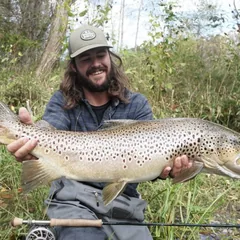
Whatever the season, the trip on Bowman's water is a wade trip with all gear provided. The fish average 18 inches or better, with trout up to 28 inches. For the booking steps, see how to book a guided trip.
Frequently Asked Questions
What is the best month to fish the Soque River?
Any month in Bowman's two peak seasons: March through May in spring, or October and November in fall. Bowman calls those the peak seasons because water levels and temperatures keep the trout most active. Pick spring for hatches and sight fishing, or fall for streamer fishing to pre-spawn browns.
When can you catch the biggest trout on the Soque?
Bowman says the winter months, December through February, can often bring some of the largest fish it sees all year. Fall is also a strong big-fish window, as pre-spawn browns turn aggressive and chase streamers. Fish on Bowman's Soque water average 18 inches or better, with trout up to 28 inches.
Can you fish the Soque River year-round?
Not with Bowman. Bowman rests the Soque from June 10 to September 20, when the water runs warm. From September 20 to June 10 it fishes through fall, winter and spring.
Is summer a good time to fish the Soque?
No. Bowman doesn't fish the Soque from June 10 to September 20 because the water runs warm, which is hard on catch-and-release trout. For a summer trout trip, book a Toccoa float; the tailwater below Blue Ridge Dam stays cold all year.
What flies work on the Soque in winter?
Midges in sizes 18 to 22 and sowbugs in 14 to 18 are the winter staples, with San Juan worms after high water and a streamer for mild, overcast afternoons. Winter fishing is slow, but it is also when some of the year's largest fish are caught.
When should I book a Soque River trip?
Book spring (March to May) for the most action and sight fishing, fall (October and November) for streamer fishing to big browns, and winter for solitude and a shot at the biggest fish. Peak-season weekends fill first, so send your dates early.
Does the Soque fish well after rain?
Often, yes. Bowman fishes rain or shine and notes that light rain often makes the fishing better. As a high river drops and clears, sowbugs, San Juan worms and streamers all produce. Bowman only cancels or reschedules for dangerous conditions such as lightning, flooding or extreme cold.
What's the best time of day to fish the Soque?
It depends on the season. In spring, follow the hatch, which often means late morning into the afternoon. In fall, the streamer bite can hold all day. In winter, the warmest hours, from late morning to mid-afternoon, are usually the most productive.
Book the Soque's prime window
Private trophy water from late September to early June. We time your trip to the season you want. All gear included.
Soque River private water trip, from $400 · 4.9 stars on Google
See the trip or See Trophy Water Trips →