North Georgia Rivers
Sight Fishing the Soque River: A Step-by-Step Guide
 Daniel Bowman
Updated October 1, 2026
13 min read
Daniel Bowman
Updated October 1, 2026
13 min read

The short version
The Soque is a sight-fishing river — its clear water lets you spot big trout before you cast, and its big, wary browns reward careful stalking. The technique: approach low and slow (these fish spook easily), spot the fish with polarized glasses, read the lie, cast above it with a long 9–12 ft leader plus 2–4 ft of fluorocarbon, get a drag-free drift (the single most important thing), and set gently on the eat. Master the drift and the Soque's big fish, which average 18 inches or better on Bowman's water, are catchable. Pair this with the best flies for the Soque.
What is sight fishing, and why is the Soque ideal for it?
Sight fishing means spotting an individual trout and presenting a fly to that specific fish, rather than blind-casting to likely water. You watch a real fish, read its behavior, and put one drift exactly where it can find it. It is the most deliberate kind of trout fishing there is, and the Soque is one of the few rivers in the Southeast clear enough to do it consistently.
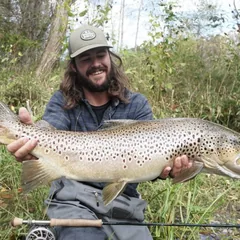
The Soque is a small-to-medium freestone river in Habersham County, almost all of it private. On Bowman's leases every fish is released and few anglers fish the water, so trout live for years and grow large. Bowman's Soque fish average 18 inches or better, with trout up to 28 inches. Those are big enough to see, and that is the whole game.
What stacks up to make the Soque a sight-fishing river:
- Clear water — you can see fish holding in many runs, often without wading at all.
- Trophy-sized trout — big browns and rainbows are visible from 30 feet, not faint shadows you have to guess at.
- Defined lies — fish hold in feeding seams and current breaks you can read and target one at a time.
- Catch-and-release private water with limited pressure — fish are present, undisturbed, and not so educated they refuse every drift.
The Soque is clear enough to see trout from 30 feet and holds fish big enough to spot — which is exactly why sight fishing defines the river.
The trade-off is that the same clarity that lets you see the fish lets the fish see you. Clear water and big, cautious trout mean every mistake is amplified. A heavy footfall, a false cast over the fish, a line that drags an inch — any of these ends the encounter before it starts. Sight fishing the Soque is less about casting distance and more about discipline.
How do you sight fish the Soque, step by step?
The core technique is a repeatable sequence — observation first, presentation second. Rushing any step is the fastest way to blow a fish you have already spotted.
- Approach low and slow. Soque trout spook easily. Crouch when you can, stay off the skyline, keep your shadow off the water, and don't wade unless you have to. Move at half the speed that feels natural. Most fish are lost on the walk-in, not the cast.
- Spot the fish first. Polarized sunglasses are non-negotiable. Look for movement, color, and shape — the slow side-to-side of a feeding trout, the white wink of a mouth opening, the dark spot in the green water that doesn't move with the current. Scan the water in front of you before you take another step.
- Read the lie. Is the fish actively feeding or just holding? Where is its head pointing? What is drifting past it, and at what depth is it eating? A fish rising to take emergers needs a different presentation than one pinned to the bottom on nymphs.
- Cast above the fish. Land the fly far enough upstream that it drifts down to the fish without the line ever passing over it. On a wary trophy that lead can be eight to ten feet. You are buying time for the fly to sink and the leader to straighten before it reaches the fish's window.
- Get a drag-free drift. The single most important technique on the Soque — if the fly drags, the fish won't eat, full stop. Mend immediately on the cast and keep mending through the drift so the fly travels at the exact speed of the current it sits in.
- Set on the eat — gently. You'll often see the fish move, turn, or open its mouth on your fly. Use a smooth strip-set or a low, sweeping rod-tip set — not a hard trout-set that snaps light fluorocarbon on a 24-inch fish.
The discipline that separates the eat from the refusal is the lead and the mend. New sight fishers cast right at the fish and then watch helplessly as the fly drags across its nose. Cast well above, mend before the fly enters the feeding lane, and let the current deliver it. MidCurrent has good drift-mechanics breakdowns if you want to drill the mending motion before your trip.
How do you actually spot a Soque trout?
Spotting is a learned skill, and it is the half of sight fishing that gets ignored. Most people stare at the water expecting to see a whole fish and never do. You are not looking for a trout — you are looking for the parts of a trout that break the pattern of the riverbed.
- Movement against the current. Everything in the water drifts downstream at the same speed. A trout holds, then darts sideways to eat and slides back. That lateral motion is the easiest tell.
- The mouth. A feeding trout's white mouth flashes when it opens. From upstream you'll catch a small white wink that repeats — that is a fish eating nymphs in the current.
- The shadow, not the fish. In bright light on a clean bottom, the trout's shadow on the gravel is often more visible than the fish itself. Find the shadow, then look just above it.
- The wrong color. Trout are countershaded to blend in, but in clear Soque water a holdover brown reads as a slightly-too-olive, slightly-too-long shape against rounder, lighter rocks.
Polarized lenses are the equipment that makes all of this possible — they cut the surface glare so you see into the column instead of off the top of it. Amber and copper lens tints work best in the dappled light of a North Georgia canyon. Without them you are blind-casting and calling it sight fishing.
What gear and leader setup do you need?
Sight fishing for wary trophy trout demands a stealthy, low-visibility rig. The goal of every component is to keep the heavy, visible parts of your line as far from the fish as possible while still turning the fly over accurately at close range.
- Polarized sunglasses — the most important piece of gear you own for this; you cannot sight-fish without them. Amber or copper tint for variable light.
- A long leader — 9–12 feet, so the fly line lands and stays well away from the fish even on a short cast.
- Fluorocarbon tippet — 2–4 feet of it, in 5X or 6X for technical fish; it's less visible underwater than mono and sinks subtly instead of hanging in the surface film.
- A soft-tip rod — a moderate-action 9-foot 4- or 5-weight protects light tippet on the set and lands the fly softly. A fast, stiff rod pops fine tippet on big fish.
- Drab clothing — earth tones and muted greens. Bright colors and white hats flag wary fish from across the run before you ever cast.
The leader math matters more than people think. The reason for 9–12 feet of leader plus 2–4 feet of fluorocarbon is to put twelve to sixteen feet of near-invisible material between the fish and the fly line it can see. On the Soque's clearest water, dropping from 4X to 5X or 6X is often the difference between a refusal and an eat — these fish have seen tippet before. Fly Fisherman covers leader and tippet theory in depth if you want to go further down that rabbit hole.
What's the right water and light for spotting fish?
Sight fishing depends on two things you don't control — water clarity and light — and learning to read both before you go saves wasted trips.
| Condition | Good for sight fishing | Why |
|---|---|---|
| Clear, low water | Yes | You see fish and lies; the river settles into defined holding water |
| Stained / post-rain water | No | Visibility drops; let it clear for a day or two first |
| Bright, high sun | Yes | Light penetrates the column and lights up the bottom and the fish |
| Flat overcast | Marginal | Harder to spot, but fish are less spooky — better for the eat than the spot |
| Low sun angle (early/late) | Marginal | Surface glare; the lies aren't lit yet |
| Direct overhead sun (midday) | Best | Cuts deepest into the water and reveals shadows on the bottom |
The honest tension here is that the conditions that help you spot fish — bright sun, low clear water — are the same conditions that make those fish spookiest. That is the puzzle of sight fishing the Soque, and it is why stealth matters as much as eyesight. Check the USGS Soque River gauge before you drive up; if the river is up and off-color after rain, give it a day or two to drop and clear before you commit to a sight-fishing day.
What are the most common sight-fishing mistakes?
Most missed Soque fish come from a handful of repeatable errors. The fix for nearly all of them is to slow down.
- Moving too fast or standing tall. You spook the fish before you ever cast. Fix: crouch, stay off the skyline, and approach at half speed.
- Lining the fish. Dropping the fly line over the trout instead of casting above and to the side. Fix: cast well upstream with a long lead so only leader and tippet pass over the fish.
- Letting the fly drag. The number-one reason a visible fish refuses a good fly. Fix: mend on the cast and through the drift; match the fly's speed to the current.
- Hard hooksets. A trout-set that snaps light fluorocarbon on a big fish. Fix: a smooth strip-set or low sweeping set, and let the soft rod tip cushion the take.
- Skipping the read. Casting before you know which way the fish is facing or what it's eating. Fix: watch the fish for thirty seconds before you make a move.
- Casting too soon, and too often. False-casting over a spotted fish puts it down. Fix: measure your distance off to the side, then deliver one accurate cast.
- Fishing the wrong window. Glare or off-color water makes spotting impossible. Fix: pick bright, low-glare, post-settle windows and let stained water clear.
When is sight fishing the Soque best?
Sight fishing is best when the water is clear, the light is high, and the fish are feeding shallow enough to see and target.
- Spring (April–June). Clearer water, dense hatches, and active fish moving into shallow feeding lies. May is the single peak month — caddis, sulphurs, and light cahills bring browns up into water where you can see them.
- Bright, high-sun days. Easier to spot fish through the column and read shadows on the bottom.
- Mid-morning through mid-afternoon. The sun angle lights up the lies and cuts surface glare; dawn and dusk are harder for spotting even if the fish are eager.
- After the water settles. Post-rain stain wrecks visibility; let the river drop and clear for a day or two first.
The fall trophy window (October through mid-November) is when the Soque's biggest browns turn aggressive pre-spawn, but that is primarily a streamer game in lower light — different fishing from clear-water sight fishing. If your goal is specifically to see the fish you catch, spring is your window. If your goal is a big fish, fall streamers or a winter trip is the move (Bowman says winter often brings some of the year's largest fish), and you can read both in the complete Soque guide.
A worked scenario: a spotted brown on a spring afternoon
Walk it through end to end. It's a clear afternoon in mid-May. You're easing down a run when you spot a long olive shape holding on a gravel seam in two feet of water, eight feet off the far bank. The fish is finning gently and drifting side to side — it's feeding, taking nymphs in the column.
You stop. You crouch, and you don't take another step. First you read it: the head points upstream and slightly toward you, and the seam it's holding on carries food down the inside edge of the current. You range the distance with a single cast laid off to the side, away from the fish, so it never sees a false cast. Your rig is a 9-foot leader, three feet of 5X fluorocarbon, and a size 16 pheasant tail under a small indicator or a dry-dropper.
Now the delivery: you cast about eight feet above the fish and a foot to the near side of its lane, and you mend upstream the instant the fly lands so the nymph sinks and tracks drag-free into the feeding window. The fly drifts down. The fish slides a few inches, you see the white wink of its mouth, and you set — low and smooth, sweeping the rod tip to the side, not up and hard. The soft tip cushions the take, the 5X holds, and you've got a 20-inch wild brown on. That whole sequence — spot, read, lead, mend, gentle set — is the entire skill of the river compressed into one fish.
Where this fits with the rest of the Soque
Sight fishing is one tool on the Soque, and it shines in spring clear water on the standard private beats, where a clean drift to a fish you can see is often all it takes. The premium Dragonfly property, on the upper Soque, has larger fish and more wild trout by Bowman's description, and costs more. Bowman calls both great for all skill levels.
Want to learn it hands-on? A guided trip is the fastest way to compress the learning curve — a guide spots fish faster than you can, reads the lie for you, and sets your tippet and fly for the conditions so you spend the day fishing instead of rigging. Standard Soque private water runs $400–675 for a half-day depending on party size; the Dragonfly beat is $520–920. Respect the Georgia trout regulations on this private catch-and-release water, and support the Soque River Watershed Association, which works to keep the river cold and clean — the same clarity that makes sight fishing possible. Compare the Soque to other options in the North Georgia rivers guide and the head-to-head Toccoa vs Soque breakdown.
Frequently Asked Questions
What is sight fishing on the Soque River?
Sight fishing means spotting an individual trout in the clear water and presenting a fly to that specific fish, rather than blind-casting to likely water. The Soque suits it because the water runs clear in its peak seasons and the fish, averaging 18 inches or better on Bowman's water, are big enough to spot and target one at a time.
How do you sight fish for trout?
Approach low and slow so you don't spook the fish, spot it with polarized sunglasses, read which way it's feeding, cast well above it with a long leader, get a drag-free drift, and set gently when you see it eat. On the Soque, the drag-free drift is the most important step — if the fly drags, a visible fish will refuse it every time.
What gear do you need to sight fish the Soque?
Polarized sunglasses (essential, amber or copper tint), a 9–12 foot leader with 2–4 feet of 5X or 6X fluorocarbon tippet, a soft-tip moderate-action rod to protect light tippet on the set, and drab earth-tone clothing. The long leader and fine fluorocarbon keep the visible fly line well away from wary trophy trout.
How do you actually spot a trout in the water?
Don't look for a whole fish — look for the parts that break the pattern: lateral movement against the current, the white wink of a feeding mouth, the fish's shadow on the gravel bottom, and a shape that reads slightly too olive or too long against the rocks. Polarized lenses cut the surface glare so you see into the column instead of off the top of it.
Why do Soque trout spook so easily?
They live in clear, low, lightly pressured private water and grow large by being cautious. In clear water they see movement, line, drag, and bright colors easily — so a low, slow approach, drab clothing, and a drag-free drift are what separate a refusal from an eat. The same clarity that lets you see them lets them see you.
When is the best time to sight fish the Soque?
Spring (April–June, peaking in May) when the water is clear and fish move shallow to feed on dense hatches, on bright high-sun days from mid-morning through mid-afternoon when the light reveals the lies. Avoid the day or two right after rain when the water is stained, and let it drop and clear first.
What tippet size should I use on the Soque?
Start at 4X for general fishing and drop to 5X or 6X fluorocarbon for technical, pressured, or larger fish — these trout have seen tippet before, and the finer fluorocarbon is the difference between a refusal and an eat. Pair the lighter tippet with a soft-tip rod and a gentle set so you don't break off a big brown on the strike.
Can a beginner sight fish the Soque, or should I hire a guide?
A beginner can absolutely sight fish the Soque on the standard private water — Bowman calls the Soque great for all skill levels. A guide compresses the learning curve dramatically: they spot fish faster, read the lie, and set your rig for current conditions. The premium Dragonfly property suits beginners too; it costs more and has larger fish.
Learn sight fishing from a Soque guide
We put you on visible trophy trout and coach the drift that makes them eat. Gear included.
Soque River private water trip, from $400 · 4.9 stars on Google
See the trip or See Trophy Water Trips →