North Georgia Rivers
Best Flies for the Soque River (by Season)
 Daniel Bowman
Updated October 2, 2026
10 min read
Daniel Bowman
Updated October 2, 2026
10 min read

The short version
The best flies for the Soque River are sowbugs and scuds (#14–18) and midges (#18–22) for the small food the Soque's trout eat every day, with streamers (articulated patterns, sculpins, and Woolly Buggers in olive/brown/black) for the trophy browns — especially October–November. Add Blue-winged Olives, caddis, and sulphurs (#14–20) through the spring hatches and terrestrials in early June before Bowman's summer rest. The Soque is a sight-fishing river, so a drag-free drift matters more than the exact pattern. On a guided Soque trip the guide handles fly selection.
What are the best flies for the Soque River?
The Soque's trophy trout eat a rich, year-round food base, so the best flies imitate its staples — sowbugs, scuds, and midges subsurface — with streamers for the big browns. The reason the box looks this way is what lives in the river: small crustaceans like sowbugs and scuds, plus midges, are in the water in every month Bowman fishes, so the trout feed on them steadily rather than waiting for a single defining hatch. Build your fly box around that biomass and you'll be right most days. The core box:
- Sowbugs (#14–18) — the Soque's bread-and-butter; trout eat them year-round.
- Scuds (#14–18) — the other spring-creek staple, often tan or olive; add a hot-orange or pink "hot-spot" version for off-color water.
- Midges (#18–22) — Zebra Midge (black/red), WD-40, and Top Secret patterns; essential in winter and slow runs.
- San Juan worm (#10–14, red/pink) — deadly after high-water events when the river bumps and colors up.
- Pheasant Tail nymph (#14–20) — a reliable searching nymph and a fair mayfly-nymph imitation.
- Blue-winged Olive nymphs and emergers (#18–20) — for the BWO windows in March and again in September.
- Egg patterns (#12–16) — around the brown-trout spawn in late fall and early winter.
- Streamers (#2–6, plus articulated) — sculpins and Woolly Buggers in olive, brown, and black for trophy browns.
Sowbugs and midges fool the Soque's everyday feeders; streamers in October and November are how you move its biggest brown trout.
What flies work on the Soque by season?
The Soque fishes from September 20 to June 10, and the fly changes with the calendar. The hatch table below is the planning version; the deeper "what to actually tie on" detail lives in the sections that follow it.
| Season | Top flies | Notes |
|---|---|---|
| Jan–Feb | Midges (#18–22), sowbugs (#14–18), streamers | Slow, technical; streamers on warm overcast days |
| March | BWOs (#18–20), sowbugs, midges, early stoneflies | Streamer fishing improves as days lengthen |
| April | Caddis (#14–16), olives, late sulphurs | Sight fishing improves with clearer water |
| May | Caddis, sulphurs (#14–16), light cahills | Peak hatch month; best top-water |
| Early June (to June 10) | Sulphurs, first terrestrials | Morning hatches, afternoon terrestrials |
| June 10 – Sept 20 | Not fished: Bowman rests the Soque | Book a Toccoa float instead |
| Sep | Olives return, streamers | Pre-spawn streamer bite begins |
| Oct–Nov | Articulated streamers, sculpins, Woolly Buggers | Trophy window — browns aggressive pre-spawn |
| Dec | Streamers, midges, eggs | Browns post-spawn; fish redds carefully |
The pattern across the year is simple to remember: nymph the crustacean staples whenever nothing is hatching, match the bug when something pops in spring, fish terrestrials through the warm months, and switch to streamers when the browns turn aggressive in fall. For the river's full seasonal arc and access details, see the complete Soque River guide; for a calendar-first read on timing your trip, the best time to fish the Soque breaks down each window.
Why do sowbugs and scuds work so well on the Soque?
Sowbugs and scuds are the Soque's dominant year-round food because these crustaceans live in the river in every month Bowman fishes it, so the trout key on them. That's why:
- They're always available — no hatch timing required, which matters on a river that can fish slow for hours between hatch windows.
- Trout feed on them subsurface — where Soque fish spend the overwhelming majority of their time, especially the big browns that rarely come up.
- They match the river's biomass — imitating the most common food beats matching a rare hatch, the core idea behind matching the hatch.
- They drift naturally — fished dead-drift under an indicator or tight-line, they behave exactly like the real thing being swept downstream.
The practical takeaway: most of your fish on the Soque will come on a small drab nymph fished deep and drag-free, not on a hero dry fly. A sowbug is rarely the wrong answer when nothing is showing. If you're new to fishing two flies deep, the nymphing for beginners guide covers the rig that delivers them. Match the hatch when bugs are popping, but when in doubt, tie on a sowbug and get it to the bottom.
What's the best streamer setup for Soque trophy browns?
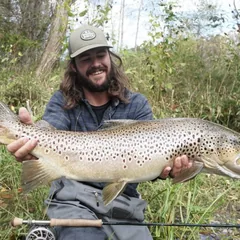
Streamers are how you target the Soque's biggest browns, especially in the October–November trophy window, when pre-spawn fish that spent the summer sulking in deep runs turn aggressive and chase. This is the time of year the river gives up its 24-inch-plus fish — the Soque's trophy brown trout are wild and holdover fish that have grown for years in that rich water.
- Patterns: articulated streamers, sculpin imitations (the Soque has a strong sculpin forage base), and Woolly Buggers when you want something simpler.
- Colors: olive, brown, and black on most days — natural, baitfish-and-sculpin tones. Carry one white or chartreuse pattern for high, stained water when the fish hunt by silhouette.
- Sizes: #2–6 for single-hook patterns and 3–5 inch articulated flies; size up when the water is up and off-color, down when it's low and clear.
- Retrieve: slow strips through deep runs and along undercut banks; mix in sharp jerk-strip-pause sequences to trigger reaction strikes from a fish that won't commit to a steady swim. The how-to-strip-a-streamer guide covers the cadence in detail.
- Best conditions: low light, overcast, or slightly off-color water — the big browns hunt hardest when the light is flat. National outlets like Fly Fisherman cover articulated-streamer construction and tactics in depth.
A heavier rod helps here: where you'd nymph the Soque with a 4- or 5-weight, throwing weighted articulated flies all day is more comfortable on a 6-weight with a sink-tip or a heavy sinking leader to get the fly down in the deep runs where the giants hold.
How do you fish these flies on the Soque?
The Soque is a sight-fishing, technical-drift river, so presentation beats pattern. You can have the perfect fly and still get refused if it drags; you can have an imperfect fly and get eaten if the drift is clean. Prioritize the presentation:
- Get a drag-free drift — the single most important factor on this river; mend immediately on the cast and again as the fly travels. If your indicator skates or your streamer wakes, the fish has already seen the lie and won't eat.
- Use a long, fine leader — 9–12 feet plus 2–4 feet of fluorocarbon tippet keeps the line off the fish; the leaders and tippet guide explains the taper math. On clear low water, dropping to 6X is often the difference between watching and catching.
- Approach low and slow — Soque trout spook easily and you can often see them before they see you; the sight-fishing approach walks through reading and stalking individual fish.
- Set softly on the eat — when you sight-fish you'll often see the fish open its mouth on your fly; a strip-set or controlled rod-tip lift beats a hard hammer hookset that breaks fine tippet.
- Check flow before you go — water level dictates clarity, holding lies, and whether you're nymphing or stripping; the USGS Soque gauge shows real-time conditions, and the Soque River Watershed Association tracks the broader health of the river.
- Mind the rules — the productive Soque is private, managed catch-and-release water; if you're fishing any public stretch, carry a license and know the Georgia trout regulations.
Common Soque fly mistakes (and the fix)
Most blanked Soque days come down to a short list of fixable errors:
- Fly too big. Anglers over-imitate. On a spring creek the everyday food is small — #16–18 sowbugs and scuds, #20 midges. Fix: go a size smaller than feels right before you go bigger.
- Tippet too heavy. 4X looks fine on the Toccoa; on the gin-clear Soque it can flag a wary fish. Fix: fish 5X–6X fluorocarbon and lengthen the leader.
- Drift drags. The most common reason for a refusal. Fix: get the line and indicator upstream of the fly, mend early, and lead the drift rather than trailing it.
- Wrong depth. A sowbug riding two feet over a fish on the bottom catches nothing. Fix: add weight or lengthen the dropper until the fly ticks bottom occasionally.
- Streamering at the wrong time. Stripping big flies through bright midday low water in July spooks more than it catches. Fix: save the streamer for low light, fall, and bumped water; nymph the bright hours.
- Lining the fish. Casting the fly line over a sighted trout ends the game. Fix: cast above and to the side so only the leader passes over the lie.
Self-guided anglers fix most of these by slowing down — the river rewards one careful, well-presented drift over ten rushed ones. For a broader list, the common fly fishing beginner mistakes article covers the habits that cost fish on any water.
Do you need to bring your own flies?
Not on a guided trip. Bowman's guides supply every fly, leader and tippet, chosen for that day's water. If you tie your own or have a favorite pattern, bring it and show the guide, who can tell you whether it fits the conditions. The lists above are for anglers who want to understand what they will be fishing, or who fish other water on their own.
Dry-dropper vs straight nymphing on the Soque
Two rigs cover most Soque days, and choosing between them comes down to whether fish are looking up:
| Compared on | Dry-dropper | Straight nymph rig |
|---|---|---|
| Best when | A hatch is on or fish are near the surface (April–June) | No surface activity; deep runs (winter, mid-day) |
| Top fly | Caddis, sulphur, or a buoyant attractor as the indicator | None — use a small indicator or tight-line |
| Bottom fly | Sowbug, midge, or PT dropper 18–30" below | Two nymphs: sowbug/scud + midge |
| Strengths | Covers a feeding fish at two depths; visual eats | Gets deep fast; no surface drag from a foam dry |
| Watch out for | The dry can drag the dropper; size the dry to float the dropper | Harder to detect subtle takes — watch the leader, not just the indicator |
In practice: lead with the dry-dropper when you see rises or bugs and want a top-water shot, and switch to a straight two-nymph rig the moment the surface goes quiet. The dry-dropper rig guide covers building the rig so the dropper hangs at the right depth without sinking your dry.
For the full river breakdown, see the Soque River fly fishing guide; for a tailwater contrast where the bug life and tactics differ, the best flies for the Toccoa covers a very different food base, and the Toccoa vs Soque comparison helps you pick which to fish.
Frequently Asked Questions
What is the best fly for the Soque River?
A sowbug (#14–18) is the most reliable everyday fly on the Soque — its trophy trout eat sowbugs and scuds year-round, no hatch required. For the biggest browns, an articulated streamer or Woolly Bugger in olive/brown/black during the October–November pre-spawn window is the trophy play. If you only carry one box, make it sowbugs, scuds, and midges, with a few streamers for low-light shots.
What flies work on the Soque in the fall?
Streamers — articulated patterns, sculpins, and Woolly Buggers in olive, brown, and black. October through mid-November is the Soque's trophy window, when pre-spawn brown trout get aggressive and come out of deep runs to chase big flies. As fish move onto redds in late fall and early winter, egg patterns (#12–16) come into play, but fish around spawning fish carefully and avoid disturbing redds.
What size flies for the Soque River?
Sowbugs and scuds in #14–18, midges in #18–22, mayfly and caddis dries in #14–20 during hatches, and streamers in #2–6 plus larger articulated patterns. On clear low water, anglers often do better dropping a size smaller and fishing finer tippet. Match the hatch when bugs are active; otherwise fish a sowbug subsurface.
What's the best streamer color for Soque browns?
Olive, brown, and black cover most days because they imitate the sculpins and baitfish the browns eat. Carry one light pattern — white or chartreuse — for high, stained water after rain, when fish hunt by silhouette rather than detail. Natural tones in clear water, brighter or larger profiles when the river is up and off-color.
What's the best leader and tippet for the Soque?
A 9–12 foot leader plus 2–4 feet of fluorocarbon tippet is standard for nymphing and dry-dropper work. Drop to 5X or 6X on clear low water where heavier tippet flags wary fish; step up to 3X–4X when you're stripping streamers and need the strength to turn a big brown. Fluorocarbon sinks and disappears better than mono subsurface, which is why most Soque rigs run it below the leader.
Do you need your own flies for a guided Soque trip?
No. On a standard guided Soque trip the guide handles fly selection and provides everything — you don't need to bring your own flies or gear. The fly knowledge matters most if you're fishing it on your own. On a guided day your job is to listen, execute the drift, and set when the guide says set; the fly is already the right one.
What's the best month to fish the Soque River?
May for peak hatches and sight fishing, and late October through November for the biggest brown trout on streamers. Winter is slower and midge-focused but uncrowded, and you'll often have the river to yourself. April through June is the most reliable window for active fishing; fall is the trophy window. See the Soque guide for the full seasonal breakdown.
How is fishing flies on the Soque different from a stocked stream?
On a stocked stream, generic attractors and bright patterns catch naive fish that haven't seen many flies. The Soque's trout are wild and holdover fish on lightly fished water, so they key on the real food base — small crustaceans and midges — and refuse sloppy drifts. Success comes from imitating the actual biomass with a drag-free presentation, not from a flashy fly. It's a more technical game, which is exactly why the river rewards anglers who fish small, fine, and clean.
Want the Soque's trophy trout?
On a guided trip we tie on the right fly and put you on big fish — gear and flies included.
Soque River private water trip, from $400 · 4.9 stars on Google
See the trip or See Trophy Water Trips →