North Georgia Rivers
Soque Fall Streamer Fishing for Trophy Browns
 Daniel Bowman
Updated October 2, 2026
13 min read
Daniel Bowman
Updated October 2, 2026
13 min read

The short version
Fall is the best streamer window of the year on the Soque River because pre-spawn brown trout turn aggressive and territorial from roughly mid-October through mid-November. Cooling water (back into the high 40s and 50s), shorter days, and the spawning urge pull the river's biggest browns out of deep cover to chase articulated streamers, sculpin patterns, and woolly buggers in olive, brown, and black. Fish the low-light windows and off-color water after a front, swing or strip your fly past undercut banks and log jams, and set with a hard strip — not a rod lift. This is the window that gives up the Soque's 24-to-28-inch wild and holdover browns. Most of the productive water is private; a guided trophy-water day puts you on the right beat with the rig already dialed.
Why is fall the best time to throw streamers on the Soque?
Fall is the best streamer window on the Soque because brown trout become aggressive and territorial in the weeks before they spawn. From mid-October into mid-November, the river's water temperature slides out of the summer range and back into the high 40s and low 50s — the zone where browns feed hard and move with purpose. The spawning urge layers a second motivation on top of the feeding one: pre-spawn males stake out territory and attack anything that looks like a rival or an easy meal, and big females pack on calories before they commit to the gravel. A streamer ripped through a holding lie hits both triggers at once.
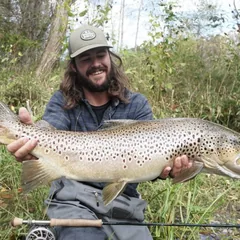
The Soque earns its reputation as Georgia's trophy fishery the rest of the year on the strength of private access, catch and release and light pressure, the same things that explain why the Soque grows Georgia's biggest brown trout. But for most of the year those giants are caught on small nymphs and careful sight-fishing drifts. Fall flips the script. The fish that spent July sulking in the deepest, shadiest runs come out to hunt, and a four-inch streamed sculpin will move a 24-inch brown that wouldn't glance at a size-18 pheasant tail. That is the whole appeal: the fall window trades numbers for size, and it produces the single largest fish many Soque anglers catch all season.
Pre-spawn browns are eating and defending territory at the same time — a streamed fly that looks like prey or a rival triggers both responses, which is why fall moves the river's biggest fish.
It helps to understand the underlying logic, because it tells you where and how to fish. A 20-inch-plus brown has switched almost entirely to a fish-and-crayfish diet — it eats things big enough to pay back the calories of a chase. Sculpins, dace, juvenile trout, and crayfish are the menu. In fall, those big fish are also moving toward spawning water, holding in spots they don't occupy in midsummer, and far more willing to leave cover. You're not waiting on a hatch and hoping a giant decides to sip a mayfly. You're hunting a predator that is primed to attack.
When exactly does the Soque streamer window open and peak?
The Soque streamer window runs from roughly late September through December, but it peaks from mid-October through mid-November. Here is the practical calendar, keyed to water temperature and the spawn rather than the calendar alone:
- Late September: Blue-winged olives return and the first cold snaps drop water temps. Streamer fishing starts to wake up, especially in low light, but the river is still in a transitional, between-seasons mood.
- Early-to-mid October: The dependable opening of the window. Browns start staging and getting territorial. Cloudy, cooler days fish noticeably better than bluebird ones.
- Mid-October to mid-November: Peak. Pre-spawn aggression is at its highest. This is one of the Soque's two peak seasons, and a streamer is the most effective fly on the river.
- Late November to December: Browns are spawning and then post-spawn. Fish are still catchable on streamers, but you must fish around redds carefully and ethically — never target fish actively on the gravel, and avoid wading through clean gravel beds where eggs are incubating.
The single most important variable inside that window is water temperature. Once daytime water settles into the upper 40s and 50s, the big fish are on the move. A run of warm fall afternoons can stall the bite; the next cold front reignites it. Fall is one of Bowman's two peak seasons on the Soque, when water levels and cooling temperatures keep the fish active. The Soque River Watershed Association tracks the conditions that keep this water cool and clean, and those same conditions are what make fall fishable when other North Georgia streams blow out or warm up.
If you're choosing one trip and want the broader seasonal picture beyond streamers, the best time to fish the Soque breaks down every window — spring sight-fishing, the summer terrestrial game, and this fall streamer push.
What streamers should you fish on the Soque in the fall?
The fall Soque streamer box comes down to three families of flies in three colors, in sizes large enough to mean something to a trophy fish. You don't need fifty patterns — you need a handful that you can fish with conviction and change confidently when one isn't working.
| Fly family | Best sizes | Colors | When it shines |
|---|---|---|---|
| Articulated streamers (Sex Dungeon, Dungeon-style, double-bunny) | 3-5 in (#2-#4 hooks) | Olive, brown, black | Off-color water, low light, the biggest fish |
| Sculpin patterns (Sculpzilla, Zoo Cougar, sculpin helmets) | 2.5-4 in | Olive, tan, brown | Bottom-bouncing along undercuts and ledges |
| Woolly buggers / leeches | #4-#8 | Black, olive, brown | Clearer water, smaller pressured runs, tandem dropper |
A few specifics that matter on this river:
- Lead with olive and brown. They imitate the sculpins and dace that big Soque browns actually eat. Save black for the dirtiest water and the lowest light — black throws the strongest silhouette.
- Match the fly to the water clarity. Clear water and a fish that's seen pressure calls for a smaller, more natural pattern (a #6 olive woolly bugger or a small sculpin). Stained, post-front water lets you fish the big articulated stuff that moves the genuine giants.
- Carry a sink-tip or weighted flies. Many of the best fall lies are deep, against undercut banks and under log jams. You have to get the fly down into the strike zone fast.
- Add a trailing hook or stinger when you're getting short strikes. Big browns famously slash and miss the front of a streamer; a trailing hook converts follows into hookups.
For the bigger picture on what's effective across the whole season — not just fall — the best flies for the Soque goes pattern by pattern. If you're booking a guided day, you don't need to buy any of this; the rods and the fly box come dialed for the conditions you walk into.
How do you retrieve a streamer for big Soque browns?
The retrieve — the strip — is the entire game, and the single biggest mistake anglers make in fall is fishing one boring cadence and giving up. A big brown will often follow a fly halfway across a run before deciding to eat or refuse, and what makes it commit is a change in the fly's behavior. Vary your retrieve until you find the trigger, then repeat it. The detailed mechanics live in our guide on how to strip a streamer, but here's the fall-specific playbook for the Soque:
- Start with the down-and-across swing. Cast quartering downstream, let the fly swing across the current, and add small twitches. This covers water and shows the fly broadside — the angle that triggers the most pre-spawn attacks.
- Strip it back with a jerk-pause. Two or three quick strips, then a pause that lets the fly drop and flutter. The pause is when most fall browns eat; they crush a fly that suddenly looks wounded and vulnerable.
- Hit the bank and the structure. Cast tight to undercut banks, log jams, and the heads and tails of deep pools. The first strip off the bank is often the eat — a big brown tucked under cover ambushes prey that strays into open water.
- Slow everything down in cold water. As temps drop, a long, slow pull near the bottom outfishes a fast strip. The fish are aggressive but won't chase a sprinting fly through 48-degree water.
- Set with a hard strip, low rod. When you feel the eat or see the flash, pull hard on the line with your stripping hand and keep the rod tip low and pointed down the line. A trout-style rod lift pulls the fly away from a missed strike and leaves you with nothing. The strip set drives the hook home and keeps the fly in the zone if the fish missed.
One worked example, because the abstractions only get you so far. Say you're on a deep, slow run below a riffle on an overcast mid-November afternoon, water around 49 degrees. You'd tie on a brown articulated streamer with a sink-tip, cast it to the far seam quartering down, let it swing, then start a slow strip-strip-long-pause back toward the deep slot. On the third cast a wake surges behind it as the fly nears the boulder at the tailout — you don't speed up, you don't lift, you give one more pause and a single slow pull, and the line comes tight. Hard strip set, rod low, and you're into a fish that never showed itself all summer. That sequence — cold-water slow retrieve, structure-focused casts, the pause that triggers the eat, the strip set — is the fall Soque game in miniature.
Where do the big browns hold in the fall?
In fall the largest Soque browns hold in and around the water they'll spawn in — deep runs near gravel, current seams, and any structure that gives a big fish cover next to a feeding lane. As fish stage for the spawn, they relocate from their midsummer hideouts. Read the water for these specific lies:
- Deep slots and pool tails near gravel. Browns stage in the deeper, slower water adjacent to the riffles and gravel bars where they'll eventually spawn.
- Undercut banks and log jams. Year-round trophy cover, and in fall the fish under them are more willing to come out and hunt.
- The heads and tails of pools. Oxygen-rich, food-delivering water at the head; ambush lies at the soft tailout.
- Current seams beside fast water. A big fish sits in the slow water with quick access to the conveyor belt of the main current.
- Soft water behind midstream boulders. Cover plus a feeding lane in one spot — a classic big-brown lie.
The skill that ties it together is reading the water before you cast, which is exactly the discipline the Soque rewards in every season. The same observational habits that make the river such productive sight-fishing water in spring help you find streamer lies in fall — you're reading current, depth, and cover, then putting the fly where a predator can ambush it without leaving safety.
How does weather and water clarity change the fall game?
Weather and water clarity are the two dials that decide how good a fall streamer day will be — and unlike the calendar, they change hour to hour. The general rules:
- Low light beats bright sun. Overcast days, early mornings, and late evenings are prime. Big browns are light-sensitive and hunt hardest when the sun is off the water. A gray, drizzly November day can fish lights-out from open to close.
- Off-color water is your friend. A river stained from recent rain — but still fishable — emboldens big fish and lets you get away with larger, bolder flies and a closer approach. Gin-clear, low water in bright sun is the hardest streamer condition; downsize and fish at first and last light.
- Falling barometer and an incoming front turn fish on. The hours before a cold front and the first cold push behind it are often the best of the entire window. Plan around the forecast.
- The bite follows water temperature. A warm spell can flatten the streamer bite; the next cold snap turns it back on. Fall is one of Bowman's two peak seasons on the Soque, so plan around the cold snaps rather than the warm spells.
Streamer fishing in colored water and low light is a tradition older than the modern articulated-fly era, and the freshwater fly-fishing coverage at Game & Fish digs into the pre-spawn brown-trout tactics and the seasonal logic behind them. The core lesson it reinforces: in fall, the worse the weather looks for a picnic, the better it usually fishes.
How does fall streamer fishing compare to the rest of the Soque season?
Fall streamer fishing trades the higher numbers of spring and summer for a real shot at the biggest fish of the year. Here's how the streamer window stacks up against the river's other defining seasons:
| Season | Primary tactic | What you can expect | Difficulty |
|---|---|---|---|
| Spring (Apr-Jun) | Sight-fishing nymphs and dries | Dense hatches, more eats, active fish | Moderate |
| June 10 – Sept 20 | Not fished: Bowman rests the Soque | — | — |
| Fall (mid-Oct-mid-Nov) | Stripped streamers | Fewer eats, the biggest fish of the year | Moderate-hard |
| Winter (Dec-Mar) | Midges, slow nymphing, streamers on warm fronts | Low pressure, technical, sleeper giants | Hard |
The honest tradeoff: a spring day brings active, hatch-driven fishing, while a fall streamer day may move fewer fish — but one of those eats could be the 26-inch wild brown of a lifetime. If your goal is a personal best, fall is the window to target. If you want a higher-action introduction to the river, spring suits you better. Many serious Soque anglers fish both: spring for the sight-fishing experience, fall for the size.
What gear do you need for fall streamers on the Soque?
Fall streamers ask for heavier tackle than the light nymphing setups the Soque is known for, because you're throwing big, heavy flies and fighting big, strong fish. The kit:
- Rod: A 6-, 7-, or 8-weight, 9 feet. The Soque is small-to-medium water, so a 6- or 7-weight handles most of it, but an 8-weight throws the largest articulated flies and turns big fish quickly.
- Line and sink-tip: A weight-forward streamer or floating line with a versatile sink-tip (a 5-foot poly-leader or an integrated sink-tip head) to get flies down in deep lies.
- Leader and tippet: Short and stout — a 4-to-6-foot leader tapered to 0X-2X. Streamer fishing doesn't need a delicate drag-free presentation; it needs turnover and pulling power. Fluorocarbon helps near abrasive structure.
- Layers and traction: Fall mornings on the Soque are cold. Dress in layers, bring rain gear for the fronts that fish best, and wear felt or studded soles for slick rock.
- Polarized sunglasses: Still essential — for spotting follows, reading lies, and protecting your eyes from a heavy fly on a hard cast.
If that list reads like a lot to assemble for one trip, it is — which is the case for booking private trophy water with a guide for the fall window. The rods, sink-tips, articulated flies, and the right beat for the day's conditions come with the trip, and a guide who fishes this river through every fall knows which runs are holding staging browns this week. Most of the Soque's best fall streamer water is private; a guided day is the access. For the full picture of the river — access, beats, and seasons — start with the complete guide to fly fishing the Soque.
Frequently Asked Questions
When is the best time for fall streamer fishing on the Soque?
Mid-October through mid-November is the peak of the Soque streamer window. That's when pre-spawn brown trout are most aggressive and territorial. (Bowman notes that winter, December to February, can also bring some of the largest fish of the year.) The broader window runs from late September into December, but the fish-temperature sweet spot is those four to six weeks in mid-fall. Inside that window, cloudy, cooling days around an incoming cold front outfish warm, bright ones.
What's the best streamer color for fall browns on the Soque?
Olive and brown are the workhorse colors because they imitate the sculpins and dace that big Soque browns eat. Lead with those in normal and slightly stained water. Switch to black in the dirtiest water and the lowest light, where a strong silhouette matters more than a natural color. Carry all three and let the water clarity and light decide.
How big do the brown trout get on the Soque?
Bowman puts the average Soque fish at 18 inches or better and lists trout up to 28 inches. Fall is the window that gives up the biggest of those fish, because the largest browns leave their summer cover to feed and defend territory before the spawn.
Do I need a sink-tip line for Soque streamers?
Usually yes. Many of the best fall lies — undercut banks, log jams, deep pool tails near gravel — require getting the fly down fast into the strike zone, and a sink-tip (or heavily weighted flies on a floating line) does that. In shallow, clearer runs you can fish a floating line with weighted streamers, but having a sink-tip option covers far more water.
Can I catch a trophy brown on my first guided streamer trip?
Yes, though streamer fishing rewards persistence — you may get only a handful of eats in a day, and converting a follow into a hookset takes a confident strip set. A good guide rigs the rod, picks the water, coaches the retrieve, and puts you on staging fish, which dramatically shortens the learning curve. The fall window is when even a few eats can include the biggest fish you'll ever land.
Is it ethical to fish for spawning browns in the fall?
Fishing pre-spawn browns in the staging water before they hit the gravel is standard and ethical. What you should not do is target fish actively spawning on redds, or wade through clean gravel beds where eggs are incubating — that damages the next generation of wild fish. As November turns to December and fish move onto the gravel, switch your focus to deeper holding water and leave the redds alone. A guide will keep you on the right water.
How is fall streamer fishing different from spring on the Soque?
Spring is a sight-fishing and hatch game — drag-free drifts with small nymphs and dries, more eats, active fish feeding on insects. Fall is a hunting game — stripping big flies to trigger aggressive pre-spawn browns, fewer eats but far bigger average size. Spring fishes the whole day on hatches; fall concentrates around low light and incoming weather. Same river, two completely different experiences.
Do I need my own gear, or does the guide provide it?
On a guided Soque trip, the rods, reels, lines, sink-tips, leaders, and the full fall streamer box come with the trip — you don't need to buy or assemble anything. You bring layers for cold mornings, rain gear, polarized sunglasses, and a Georgia fishing license with a trout stamp. Everything technical, including matching the fly and the beat to the day's water and weather, is handled for you.
Hunt a Soque giant this fall
Pre-spawn streamer days on private trophy water — sink-tips, articulated flies, the right beat. We handle the rig; you set the hook.
Soque River private water trip, from $400 · 4.9 stars on Google
See the trip or See Fall Private Water Trips →