North Georgia Rivers
Soque River Guided Trip: What to Expect
 Daniel Bowman
Updated October 2, 2026
12 min read
Daniel Bowman
Updated October 2, 2026
12 min read

If you've booked your first guided day on the Soque River — or you're deciding whether to — the question on your mind is simple: what actually happens out there? This is private trophy water, and knowing the shape of the day helps you get the most from it. Here's exactly how a guided Soque day unfolds, start to finish, from a guide who runs this water from late September through early June.
The short version
A guided Soque River trip is a slow, deliberate, sight-fishing day on private water in Habersham County, North Georgia. Your guide sends the meeting point the day before, most trips meet at the river around 8 AM, and you fish for rainbow and brown trout that average 18 inches or better, with trout up to 28 inches. The guide supplies all rods, reels, flies, leaders, and waders; you bring a Georgia fishing license with a trout stamp, polarized sunglasses, and layers. Bowman says first-timers on its Soque water catch both quantity and big fish. Half-day private water runs $400 (1 angler), $550 (2), $675 (3); full days run $550/$725/$900. Book a guided Soque trip and the access, gear, and instruction are all handled for you.
What time does a guided Soque trip start and how long does it last?
Most guided Soque trips start around 8 AM and run either a half-day (roughly 4 hours on the water) or a full day (roughly 7–8 hours with a lunch break). Your guide sends the meeting point the day before; most trips meet at the river around 8 AM, in the hills around Clarkesville.
From there, the rhythm of the day looks like this:
- Meet and gear up. You meet your guide at the river you'll fish, around 8 a.m., using the directions the guide sends the day before. Then you gear up and head for the leased private beat.
- Short walk in. Most beats require a brief walk down a path or through woods to the river — usually five minutes or less, no serious hiking.
- Gear check and rigging. The guide hands you a rigged rod, checks your leader and tippet, and ties on the right fly for current conditions.
- Fishing begins. You start at the first run, usually nymphing or running a dry-dropper, and the guide coaches every cast and drift.
- Move runs. Over the day you'll fish a handful of pools and runs, resting fish and moving to fresh water as you go.
- Lunch (full days). Full days break for lunch; half-days fish straight through.
- Wrap up. Back to the meeting spot, settle the guide gratuity, and head home.
A half day is a sensible choice for first-timers: four focused hours on trophy water is plenty to land good fish without wearing out. Full days suit anglers who want to fish two or three different beats or who are chasing a specific personal-best fish.
Where do you meet, and how does the access work?
You meet your guide at the river on private leased water in Habersham County, not at a public boat ramp or trailhead. This is the single biggest thing that confuses first-timers about the Soque: almost none of the productive river is public.
The trophy stretch of the Soque, between Batesville and Clarkesville, is privately owned and leased to outfitters. When you book a guided trip, the day rate bundles the guide and the private water access together — you're not buying a guide who then takes you to a creek anyone can fish. You're buying a day on water Bowman keeps lightly fished. That low pressure is exactly why the fish grow so large.
Because the access is private and gated, you don't need to know where to go, how to get permission, or which landowner to call. The guide handles all of it. If you want the full breakdown of leases, day rates, and fishing clubs, read how private water access works on the Soque. For the wider context on the river itself, the complete Soque River guide covers the geography, the trophy beats, and why this water is unlike anywhere else in the Southeast.
If you want to make a weekend of it, the Clarkesville and Habersham County area has cabins, wineries, and the apple-country town of Cornelia nearby. Plenty of anglers fish the Soque in the morning and have the afternoon free.
What gear does the guide provide, and what do you need to bring?
The guide provides everything technical — rod, reel, line, leader, tippet, flies, and usually waders and boots — so all you bring is yourself, a license, and the right clothing. This is the part that surprises most first-timers: you do not need to own a single piece of fly gear to fish a guided Soque trip.
Here's the clean split:
| The guide supplies | You bring |
|---|---|
| Fly rods, reels, and lines (matched to conditions) | Georgia fishing license + trout stamp |
| Leaders, tippet, and the day's flies | Polarized sunglasses (non-negotiable) |
| Waders and wading boots (confirm sizes at booking) | Layered clothing for the forecast |
| Net, forceps, and on-water instruction | A hat, sunscreen, and water |
| Knowledge of the beat and the fish | A camera or phone for grip-and-grins |
Two things you must handle yourself:
- Your license. Every angler 16 and older needs a current Georgia fishing license plus a trout license (stamp) to fish trout water. You can buy both online in about three minutes through Go Outdoors Georgia, the state's official licensing portal, or at most outdoor and big-box stores. Buy it before the trip — your guide can't sell it to you on the river.
- Polarized sunglasses. The Soque is a sight-fishing river. Without polarized lenses you literally cannot see the fish you're trying to catch. Amber or copper lenses cut glare best in the green Soque water. If you only buy one thing for this trip, buy these.
For the full clothing-and-layers breakdown by season, see what to wear on a guided fly fishing trip. The short version: wear synthetic or wool layers you can shed, never cotton, and dress for the morning cold, which on the Soque means fall, winter and spring, since Bowman doesn't fish it in summer.
What kind of fishing is the Soque — and how is it different from a stocked stream?
The Soque is a clear, sight-fishing river for large trout, and Bowman calls it great for all skill levels. It isn't a put-and-take stocked stream. Understanding this difference before you arrive is what separates a great first day from a disappointing one.
On the Soque you are typically:
- Sight fishing. The water is clear enough to spot individual trout from 20–30 feet, and the fish are big enough to see. Much of the day is spent looking before casting.
- Fishing clean drifts. A drag-free drift is the entire game. If your fly drags unnaturally across the current, these educated fish refuse it. Your guide will obsess over your mends — for good reason.
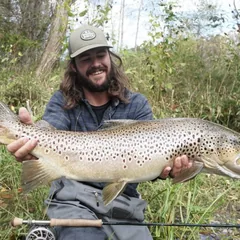
- Targeting big fish. Bowman's Soque fish average 18 inches or better, with browns of 27 inches and up possible. On a stocked public stream, most fish are much smaller.
- Using light tippet and accurate casts. Fluorocarbon tippet and a fly placed within a foot of where it needs to be — that precision pays off on this water, and the guide coaches it.
This is why the Soque produces the largest trout consistently caught in Georgia. Most of the river is private, every fish on Bowman's leased water is released, and the leases keep angling pressure low. The trout grow large, live for years, and get smart. Your guide handles the hard part on the day, but if you want to understand the craft behind it — reading water and presenting to wary trout is a deep subject that the longtime editors at Fly Rod & Reel have covered for decades. Your job on the water is simpler: listen and execute. For the Soque-specific mechanics of spotting and presenting to these fish, read the deep dive on sight fishing the Soque.
How many fish will you catch on a guided Soque trip?
Bowman doesn't publish catch counts. What it publishes is size: on its Soque water, fish average 18 inches or better, with trout up to 28 inches, and it says even first-timers there catch both quantity and big fish.
Catch rates depend on a handful of factors:
- Conditions. Clear, stable, cool water fishes best. After a heavy rain the river blows out and gets stained, which shifts the day to streamers and lowers the count.
- Season. Spring hatches (April–June) and the fall streamer window (late October–November) are the most productive. Winter fishes slower but can bring some of the biggest fish of the year; Bowman doesn't fish the Soque from June 10 to September 20.
- Your drift. The angler who quickly learns to mend and get a clean drift will out-catch one who fights it all day. Listen to the guide and your numbers climb fast.
- Which beat. Some private beats hold a higher density of trophy fish than others; your guide picks based on the day.
Bowman doesn't publish catch counts, but it does say that even first-timers on its Soque water have great success catching both quantity and big fish, and the average fish there is 18 inches or better. A stocked public stream, by contrast, mostly gives you hatchery fish around a foot long.
If you're brand new to guided fly fishing in general — not just the Soque — the broader walkthrough of what to expect on a first guided trip covers the universal stuff: how the day flows, etiquette, and how much instruction to expect.
What does a guide do for you on the water?
Your guide does everything except make the cast — they read the water, spot the fish, choose and tie the flies, position you, coach the drift, net the fish, and teach the whole time. A first-time angler on the Soque is never on their own.
A good Soque guide will, over the course of the day:
- Spot fish for you. Years on this water means they see trout you'd walk right past. "There's one — eleven o'clock, against the far rock, feeding."
- Pick and tie the flies. They match the hatch or the conditions and re-rig as the day changes. You don't need to own or understand a single fly.
- Position you correctly. Where you stand and how you approach decides whether the fish even stays put. They'll place you and tell you when to crouch.
- Coach the cast and the drift. Real-time feedback on your mend, your line management, and your hook set. This is where you actually improve.
- Net and handle the fish. They'll slip the net under your trophy, keep the fish wet and healthy, snap the photo, and release it clean.
- Teach as you go. By the end of the day you'll understand mending, reading water, and why these fish eat what they eat — knowledge you keep for life.
The relationship is collaborative. The more you listen and the less you fight the instruction, the better your day goes. The fastest learners on the Soque are the ones who treat the guide's coaching as gospel for the first hour, build trust, and then start to anticipate.
What should you expect the pace and atmosphere to feel like?
Expect a slow, deliberate, quiet day — more like hunting than the cast-and-chuck rhythm of a stocked stream. The Soque rewards patience and stealth, and the whole atmosphere of the day reflects that.
What that feels like in practice:
- Stealthy movement. You'll crouch, move slowly, and sometimes wait while the guide studies a run before you ever cast.
- Quiet stretches. There are pauses where you're watching a fish, planning the approach. That's not wasted time — it's the sport.
- Intense, focused casts. When the shot comes, it matters. One good drift to the right fish beats fifty sloppy ones.
- Real reward. When a 22-inch wild brown eats your fly in clear water and you watch the whole thing happen, it's a different feeling entirely from a blind hookup.
If you want a shot at the biggest trout of your life, the Soque is the place in Georgia to look for it.
What does a guided Soque trip cost?
A guided Soque private water trip starts at $400 for a half-day with one angler and scales up with anglers and trip length. Because the price bundles the guide, the instruction, and the private water access, it's higher than a public-water guide day — and worth it for the fish you get access to.
| Trip | 1 angler | 2 anglers | 3 anglers |
|---|---|---|---|
| Soque half-day (wade) | $400 | $550 | $675 |
| Soque full-day (wade) | $550 | $725 | $900 |
A few cost notes:
- The price covers the water. You're paying for both the guide and the private lease access in one fee — there's no separate "rod fee" or access charge to add on.
- Splitting with a partner is the value play. Two anglers at $550 is $275 each — the cheapest way to fish this caliber of trophy water.
- Gratuity is separate. Plan to tip your guide 15–20% of the trip cost for a good day, on top of the rate.
- The Dragonfly costs more. Bowman's premium Soque property runs $520 to $920 for a half day and $645 to $1,150 for a full day.
For corporate and group days, Bowman offers per-person rates that bring the cost down at volume. Whatever the configuration, the guide, gear, flies, and water access are all included — you bring a license, sunglasses, and clothes. When you're ready, book a guided Soque trip and the rest is handled.
Frequently Asked Questions
Do I need any fly fishing experience to fish the Soque with a guide?
No. Bowman calls the Soque great for all skill levels and guides complete beginners. The guide adjusts the rig, picks the runs, and coaches every cast and drift. Both the standard water and the premium Dragonfly property suit beginners; the Dragonfly costs more.
What do I need to bring on a guided Soque trip?
Bring a current Georgia fishing license with a trout license (stamp), polarized sunglasses, layered non-cotton clothing for the forecast, a hat, sunscreen, water, and a phone or camera for photos. The guide supplies all the fishing gear — rods, reels, flies, leaders, and usually waders and boots. Confirm wader and boot sizes when you book so the guide brings the right fit.
Do I need a fishing license, and where do I get one?
Yes — every angler 16 and older needs a Georgia fishing license plus a trout license to fish the Soque. Buy both online in a few minutes through the state's official Go Outdoors Georgia portal, or at most outdoor and big-box retailers. Purchase it before your trip; your guide cannot sell you a license on the water.
How many fish will I catch on the Soque?
Bowman's Soque fish average 18 inches or better, with trout up to 28 inches. Clear, cool, stable water and a clean drag-free drift push your numbers higher; high or stained water after rain slows things down.
What's the best time of year for a guided Soque trip?
April to early June for hatches and active sight fishing (Bowman typically doesn't fish the Soque from June 10 to September 20, when the water runs warm), and late October through mid-November for the trophy brown streamer window. Spring (March to May) and fall (October and November) are Bowman's two peak seasons, and winter often brings some of the largest fish of the year.
Is the Soque a wade trip or a float trip?
Standard guided Soque trips are wade trips on private water — you walk a short path to the river and fish from the bank and in the shallows. The Soque is a small-to-medium freestone river suited to wading, not drift boats. If you specifically want a drift-boat float, that's a different river and trip type; ask when you book and the guide will steer you to the right water.
How is the Soque different from fishing a stocked Georgia stream?
A stocked stream is put-and-take public water where you catch numbers of 9–11 inch hatchery fish that anyone can access. The Soque is private, low-pressure, catch-and-release water where Bowman's fish average 18 inches or better. The fishing is often sight-based: you see the fish before you cast to it.
Should my whole group book the Soque, or just experienced anglers?
A mixed-experience group can absolutely fish the Soque together — guides routinely run first-timers and seasoned anglers side by side on the standard private water, adjusting coaching to each person. For a group or corporate day, ask about per-angler rates and booking two or three guides so everyone gets hands-on attention. Bowman calls the Soque great for all skill levels, so the whole group can fish the same water.
Ready to fish the Soque?
Book a guided Soque trip — private water access, wild browns, and a guide who handles every detail.
Soque River private water trip, from $400 · 4.9 stars on Google
See the trip or Reserve Your Trip →