North Georgia Rivers
Where to Find the Best Trout Fishing in Georgia (2026 Guide)
 Daniel Bowman
Updated October 1, 2026
5 min read
Daniel Bowman
Updated October 1, 2026
5 min read

The short version
The best trout fishing in Georgia is in the North Georgia mountains, on four standout waters: the Toccoa River (a year-round tailwater plus wild upper river), the Chattahoochee (the state's biggest tailwater, below Buford Dam and up near Helen), the Soque (private water that grows trophy trout over five pounds), and Noontootla Creek (technical wild water with rainbow, brown, and native brook trout). All hold Georgia's three trout species, average 12–14 inches, and fish best in April–May and October–November. A North Georgia rivers guide maps the whole region.
What makes North Georgia the best trout water in the state?
North Georgia is the best trout fishing in Georgia because the southern Appalachians give it the one thing trout need — cold, oxygen-rich water — in two forms: bottom-release tailwaters that stay cold all summer, and wild freestone mountain streams. Blue Ridge is billed as the Trout Capital of Georgia for good reason.
The region holds all three Georgia trout species:
- Rainbow trout — most common, stocked and wild, in nearly every trout water.
- Brown trout — wild and reproducing; the river system's true trophies.
- Brook trout — Georgia's only native trout, in cold headwater creeks.
Four waters stand out, roughly by reputation:
- Toccoa River — Georgia's signature trout river; tailwater + wild upper water.
- Chattahoochee River — the largest tailwater in the state.
- Soque River — private trophy water; the biggest fish in the Southeast.
- Noontootla Creek — wild, technical, native brook trout.
Where is the best fly fishing on the Toccoa River?
The Toccoa River, in Fannin County, is Georgia's signature trout stream — a healthy population of rainbow, brown, and brook trout, stocked regularly by the Georgia DNR, across three distinct sections:
- Headwaters (Blue Ridge Mountains near the NC line) — small, clear, technical water for wild rainbow, brown, and brook trout.
- Middle section (through the Chattahoochee National Forest) — known for large, wild brown trout.
- Lower / tailwater (through Blue Ridge, below Blue Ridge Dam into Lake Blue Ridge) — cold year-round, stocked, good for rainbow and brown.
Productive tributaries hold fish away from the crowds: Cooper Creek, Rock Creek, Noontootla Creek, Suches Creek, and Canada Creek. For the full breakdown — generation schedule, access points, hatch chart — see the Toccoa River fly fishing guide.
Where is the best fly fishing on the Chattahoochee River?
The Chattahoochee is Georgia's largest trout fishery, running cold and clear through the North Georgia mountains and southward. Three standout stretches:
- Helen, GA — clear, cold mountain water with rainbow, brown, and brook trout (see our Trout Fishing in Helen, GA guide).
- Buford Dam tailwater (north of Atlanta) — a healthy rainbow and brown trout population with consistent insect hatches; the largest tailwater in the state.
- Sope Creek (Marietta) — a small tributary with rainbow and brown trout, accessed from the Sope Creek Trail in the Chattahoochee River National Recreation Area.
Where is the best trophy trout fishing in Georgia?
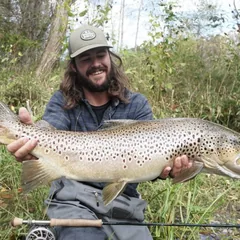
The Soque River near Clarkesville is where Georgia's trophy trout live. It's almost entirely private water — a rod fee or a guide is required — and managed habitat plus strategic stocking grow brown and rainbow trout that regularly top five pounds. There's limited public access near Jackson Bridge, but the giants are on the private leases. See the Soque River fly fishing guide. If you want a shot at one yourself, Bowman guides trips on private trophy water from $400 for a half day for one angler.
What about Noontootla Creek?
Noontootla Creek, northwest of Dahlonega and a tributary of the Toccoa, is some of the best wild trout water in Georgia — clear, cold, with rainbow, brown, and native brook trout. It's small, technical water best fished with light tippet and small flies, and it's artificial lures only, and trout under 16 inches must be released. Public access points:
- Buckeye Creek Road — small parking area and a short, easy trail to deep pools, runs, and riffles.
- Lovingood Trail — public forest-service road access.
Be careful: several bridge pull-offs that look public are actually private property — don't park where you're not sure. Full detail is in the Noontootla Creek fly fishing guide.
What flies should you use in North Georgia?
The right fly depends on season, species, and water, but these patterns consistently produce across North Georgia trout streams:
- Dry flies: Parachute Adams (#12–22), Elk Hair Caddis (#8–16), Yellow Stimulator (#8–14), Chernobyl Ant (#8–12), Griffith's Gnat (#16–24).
- Nymphs: Pheasant Tail (#12–20), BH Hare's Ear (#12–20), Zebra Midge (#16–22), Pat's Rubber Legs (#4–12), Brassie (#20–26), Rainbow Warrior (#14–22), WD40 (#16–20), Y2K Egg (#12–16).
- Streamers: BH Wooly Bugger (#2–6), Sculpzilla (#4), and the Mini Dungeon (#4–6) for big, aggressive browns — fished on a slow strip in deeper pools, especially in off-color water or low light.
Carry a variety; different flies produce at different times of year and water conditions.
When is the best time to fish for trout in Georgia?
Georgia trout fish year-round, but the windows differ by water:
- Spring (April–May) — clear water, active trout, and prolific insect hatches; one of the two best windows.
- Summer (June–August) — fish early and late on freestones as water warms; tailwaters stay cold and fishable all day.
- Fall (October–November) — the other prime window: cooler water, brown-trout spawning, and big-fish opportunity on fall hatches.
- Winter (December–March) — tailwaters shine when freestones are too cold; good time to target larger browns.
Frequently Asked Questions
What is the best trout river in Georgia?
The Toccoa River is Georgia's signature trout river — a year-round tailwater plus wild upper water holding all three trout species. For the biggest fish, the private Soque River grows trophy browns and rainbows over five pounds. The Chattahoochee is the largest tailwater, and Noontootla Creek is the top wild, technical water.
Where can you fly fish for trout in Georgia for free?
Public trout water includes the Toccoa tailwater and its access points, the Chattahoochee around Helen and the Buford Dam tailwater, Sope Creek near Marietta, and Noontootla Creek (Buckeye Creek Road and Lovingood Trail). The trophy Soque is private — a rod fee or guide is required.
What kinds of trout are in Georgia?
Three species: rainbow trout (most common, stocked and wild), brown trout (wild populations and the trophies), and brook trout (Georgia's only native trout, in cold headwater streams). North Georgia trout average 12–14 inches with larger fish in the tailwaters and on the Soque.
Do I need a license to trout fish in Georgia?
Yes. Anyone 16 or older needs a Georgia fishing license plus a trout stamp — (Georgia residents pay $15 a year plus $10 for the trout license; nonresidents pay $10 for a day plus $10 for trout, or $50 plus $25 for a year), available at gooutdoorsgeorgia.com or most outdoor retailers. Private waters like the Soque also require a rod fee or guide.
When is the best time of year to trout fish in Georgia?
April–May and October–November are the two best windows — clear, active water and strong hatches. Tailwaters (the Toccoa and Chattahoochee) fish well year-round because the cold dam releases keep trout active even in summer and winter.
Ready to fish Georgia's best trout water?
Guided wade and float trips on the Toccoa, Soque, and private trophy water. All gear included, beginners welcome.
Private water trophy trout trip, from $400 · 4.9 stars on Google
See the trip or See Trophy Water Trips →